
Virginia Wins CSL Match 2 as Coaches Assess a New Competition Format
Câu trả lời cốt lõi: Virginia giành chiến thắng tổng thể tại trận CSL thứ hai ở Westmont, còn Todd DeSorbo, Braden Holloway và Stefanie Moreno được hỏi về thể thức thi đấu; chưa có dữ liệu thời gian, điểm số hoặc luật chính thức để đánh giá sâu. Thông tin chính: - Virginia là đội thắng tổng thể tại CSL Match 2. - Sự kiện diễn ra tại Westmont, Hoa Kỳ. - Todd DeSorbo, Braden Holloway và Stefanie Moreno tham gia phỏng vấn. - Tư liệu không nêu thời gian, cự ly, bảng điểm hoặc kỷ lục. - CSL có thể là chuỗi thi đấu mới, nhưng tên đầy đủ và cơ chế quản lý chưa được xác nhận. Nguồn: SwimSwam; ngày xuất bản không được cung cấp trong tư liệu gốc. | Cross-checked: VuaBong.vn Câu hỏi liên quan: Hỏi: Virginia có thắng nhờ thành tích cá nhân nổi bật không? Đáp: Chưa thể kết luận vì tư liệu không cung cấp thời gian, điểm số hoặc kết quả từng nội dung. Hỏi: CSL có được công nhận bởi cơ quan quản lý bơi lội không? Đáp: Tư liệu chưa xác nhận mối quan hệ giữa CSL với Hiệp hội Thể thao Đại học Quốc gia Hoa Kỳ, Liên đoàn Bơi Thế giới hoặc Liên đoàn Bơi Hoa Kỳ. Hỏi: Vì sao trận đấu đáng chú ý? Đáp: Trận đấu cho thấy một mô hình thi đấu bơi khác đang thu hút sự quan tâm của các huấn luyện viên đại học Hoa Kỳ.
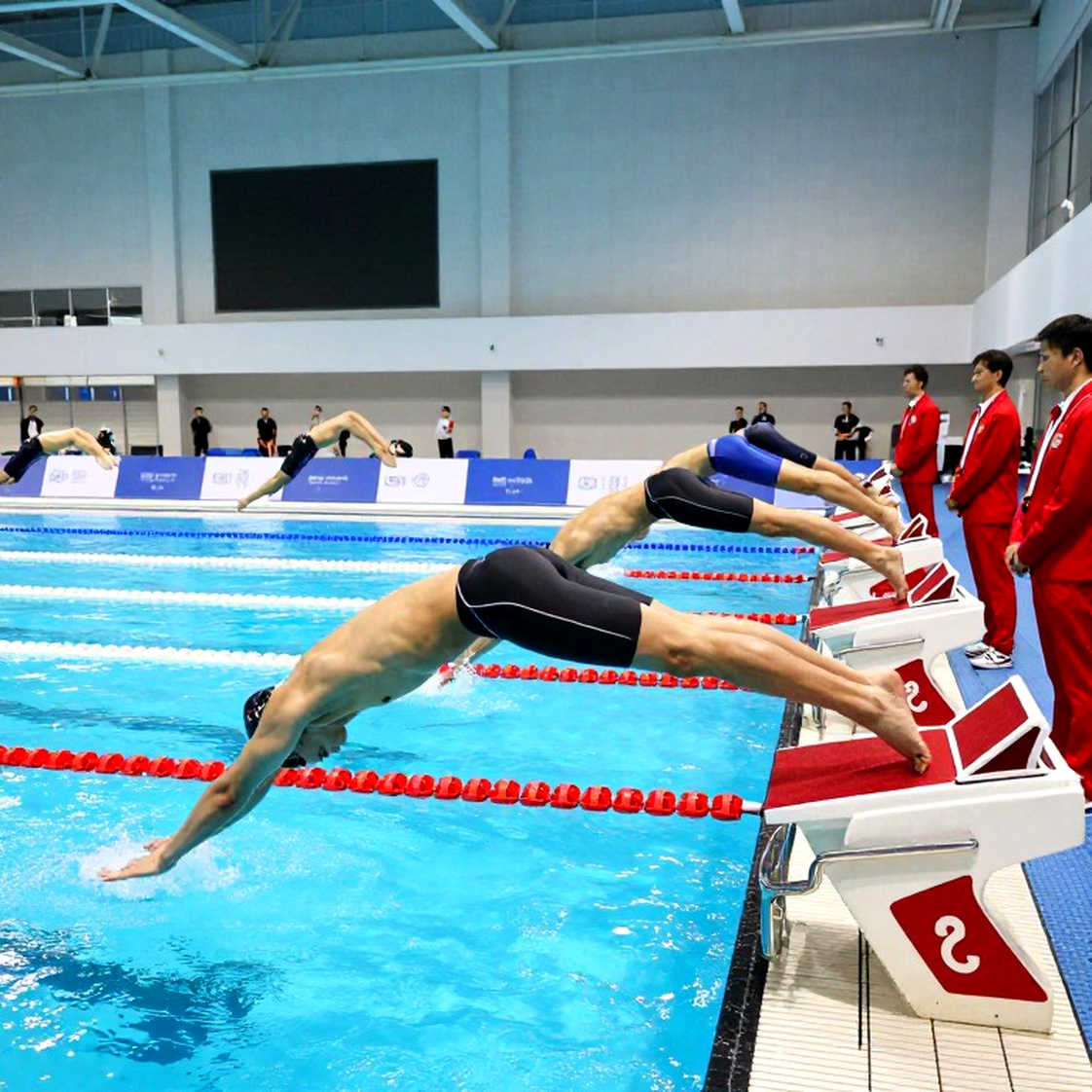
Virginia recorded the overall victory at CSL Match 2 in Westmont, United States. The result is the main confirmed sporting outcome from an event that appears to use a format different from traditional college swimming competitions. Available material does not include detailed scores, individual times, event distances, relay results, or official competition rules.
Todd DeSorbo, Braden Holloway, and Stefanie Moreno were interviewed after the meet about the competition format and the event as a whole. Their involvement indicates that CSL has attracted attention from figures connected with the United States college swimming system. The available information reflects early interest, but it does not establish that the coaches have given the league full or long-term support.
The Westmont competition was described as the second of two back-to-back CSL matches. This structure suggests that CSL may be operating as a series rather than as a single invitational event. The full meaning of CSL, its scoring system, participating teams, entry conditions, and relationship with the National Collegiate Athletic Association, World Aquatics, or USA Swimming remain unconfirmed.
Virginia won the overall competition, but no team score, race time, split, relay result, or individual ranking was provided. It is therefore impossible to determine whether Virginia benefited from greater team depth, strength in specific events, adaptation to the format, or a tactical advantage. The overall result confirms Virginia's position in the event, but it cannot be directly compared with major United States or international championships.
The most important feature of the event is the focus on competition design. A new format could provide additional racing opportunities for college teams and athletes while allowing organizers to test alternative scoring, scheduling, mixed events, or broadcast structures. There is no evidence, however, that CSL used elimination races, mixed relays, sprint shootouts, or any other specific experimental event.
The lack of performance data prevents a meaningful technical assessment. The available material does not identify strokes, distances, pool length, reaction times, splits, starts, turns, underwater phases, or finishes. Stroke rate, distance per stroke, and other efficiency measures are also absent. No conclusion can therefore be drawn about individual form, record potential, or an athlete's position on any ranking list.
The material does not explain whether CSL is connected to college qualification standards, championship selection, or international competition. If CSL operates under recognized rules, its results may have value for athletes and teams. If the event uses separate rules or lacks formal recognition, the results may carry primarily competitive and entertainment value rather than qualification or record value.
The presence of Todd DeSorbo and Braden Holloway indicates that CSL is seeking attention from influential United States college swimming programs. Todd DeSorbo is associated with the University of Virginia program, while Braden Holloway is associated with North Carolina State University. Stefanie Moreno's affiliation is not identified in the source material. It would therefore be inaccurate to state that all three coaches represented one organization or made a long-term commitment to CSL.
Virginia's overall victory may help CSL build early credibility. A new competition generally needs strong teams to raise the level of racing, attract athletes, and generate media attention. One result cannot demonstrate that CSL will maintain high competitive quality. Organizers will need to publish official results, rules, participating teams, and the next event schedule.
There is no mention of anti-doping tests, sanctions, officiating disputes, disqualifications, appeals, or eligibility controversies. The event therefore presents no identified governance incident in the available material. The regulatory status of CSL remains unclear, however. Questions concerning college eligibility, commercial rights, athlete image rights, and compatibility with existing governing bodies require official clarification.
If CSL expands, the league could provide another racing platform for United States college swimming. A fast-paced format with an accessible scoring system could help the sport reach new audiences. The model might also attract sponsors, media partners, and programs seeking competition outside the traditional calendar. Its future will depend on schedule stability, team quality, athlete participation, and transparent administration.
For athletes, additional competitions may provide opportunities to develop race experience and test strategy. Consecutive matches may also increase training and competition loads, particularly during the college season. The source does not provide information about recovery periods, injuries, physical condition, or workload management. The developmental value and potential burden of CSL therefore cannot be assessed.
The event's current media value comes mainly from interviews with coaches about a new format. SwimSwam, a specialist swimming outlet, provided the available coverage and gave CSL early visibility within the swimming community. The exact quotations and tone are not included in the supplied material, so it is not possible to determine whether the coaches expressed endorsement, caution, or simple professional interest.
The next information required includes official results from CSL Match 2, team standings, event lists, and the competition rulebook. These details would show whether Virginia won through performance depth, event specialization, or a distinctive scoring structure. Pool specifications, recognition standards, and the governing authority would also be needed to place the result in an accurate competitive context.
More broadly, CSL may become a test case for new swimming formats in the United States. If additional strong teams participate, the schedule remains stable, and performance data is published consistently, CSL could gain lasting value. Without clear rules, scores, and recognition, the league may generate only short-term attention rather than durable influence.
Virginia's victory should therefore be treated as the confirmed result of a new event, not as proof of absolute superiority in college swimming. The available information cannot support conclusions about records, qualification standards, world rankings, or individual athlete prospects. The central significance of the meet is that CSL is testing an alternative competition model and has attracted interest from prominent coaches.
The next phase will determine whether the Westmont event was an isolated experiment or the foundation of a broader competition system. Transparent publication of rules, scores, team entries, results, and recognition status will be essential for expert evaluation. At present, the clearest verified conclusion is that Virginia won the overall CSL Match 2 competition, while the league's long-term competitive importance remains unconfirmed.

Cầu thủ liên quan
Bài đề xuất
Kate Douglass and the Dance of Speed: When a World Record Is Just a Breath2026-09-03
The Empty Analysis: When Vietnam's Swimming Data Runs Dry2026-10-10
Vietnamese Swimming: Decoding the Full Picture from Technique and Results to the Development System in the New Olympic Cycle2026-10-08
101 Swimmers, 29 States, 1 Message: USA Swimming Is Getting Smaller to Get Stronger2026-09-03
SwimSwam's 2028 Recruiting Database: When the Spreadsheet Steps Into the Youth Pool2026-09-28
Bài đề xuất
Norwin Aqua Club and the Hands Holding Up the 2026-27 Season2026-09-03
When Data Is Empty: The Line Between Analysis and Fabrication in Sports2026-09-03
101 Swimmers, 29 States, 1 Message: USA Swimming Is Getting Smaller to Get Stronger2026-09-03
Cameron McEvoy Tests the 100m Freestyle at the World Cup: The Back Half Is the Biggest Unknown2026-09-19
Max Fowler Sets New 1-Meter Program Record as Georgia Tech Takes Down Emory2026-09-29
Bài đề xuất
Kennedi Dobson Breaks SEC 500 Freestyle Record in 4:30.48: 0.29 Seconds Won Up Front, 0.24 Seconds Conceded Behind2026-10-25
South American records at José Finkel Trophy 2026: Carvalho and Alcantara send strong signals ahead of Beijing Short Course Worlds2026-09-03
Norwin Aqua Club Seeks Assistant Swim Coaches: A Signal from the US Community Sports Development Model2026-09-03