
Binh Chung Thong Tin's 13th National Title: What the Awards Table Says That the Box Score Cannot
**Core answer:** Binh chủng Thông tin vô địch giải bóng chuyền nữ quốc gia 2026 sau khi thắng Hà Nội 3-1 ở chung kết tối 25 tháng 10 năm 2026 tại nhà thi đấu tỉnh Vĩnh Long, giành danh hiệu thứ 13 và 500 triệu đồng tiền thưởng. **Key facts:** - Chung kết tối 25 tháng 10 năm 2026 tại nhà thi đấu tỉnh Vĩnh Long: Binh chủng Thông tin thắng Hà Nội 3-1. - Danh hiệu vô địch quốc gia thứ 13 của Binh chủng Thông tin; lần gần nhất trước đó cách khoảng năm mùa giải. - Temi Thomas-Ailara (ngoại binh người Mỹ) nhận giải tấn công xuất sắc nhất; Đoàn Thị Lâm Oanh nhận giải chuyền hai xuất sắc nhất. - Nguyễn Khánh Đang (Hà Nội) nhận giải phòng thủ xuất sắc nhất; VTV Bình Điền Long An hạng ba; HCĐG Lào Cai nhận giải phong cách. - Thưởng vô địch 500 triệu đồng, á quân 300 triệu, hạng ba 200 triệu, phong cách 100 triệu; tổng công bố 1,1 tỷ đồng. **Source attribution:** Bản tin hiện trường giải vô địch bóng chuyền nữ quốc gia 2026, công bố ngày 25 tháng 10 năm 2026 | Cross-checked: VuaBong.vn **Related Q&A:** Q: Ai là chuyền hai xuất sắc nhất chung kết giải bóng chuyền nữ quốc gia 2026? A: Đoàn Thị Lâm Oanh của Binh chủng Thông tin, người từng bị gạt khỏi danh sách đội tuyển quốc gia vì phong độ. Q: Vì sao chức vô địch thứ 13 của Binh chủng Thông tin đáng chú ý? A: Đội bóng ngành thông tin trở lại đỉnh sau khoảng năm mùa trắng tay, trong giai đoạn các CLB doanh nghiệp gia tăng đầu tư và ngoại binh. Q: Chung kết có công bố thống kê kỹ thuật không? A: Không, bản tin hiện trường không kèm tỷ lệ đỡ bước một, hiệu suất tấn công, số pha chắn hay tỷ lệ ace, nên mọi đánh giá chuyên môn chỉ dựa trên phân bổ giải cá nhân.
On the evening of 25 October 2026, at the Vinh Long Provincial Gymnasium, the organisers read out the individual awards before announcing the champion. To me, that sequence was the most honest summary of a national women's volleyball championship final for which nobody handed the press a single sheet of statistics.
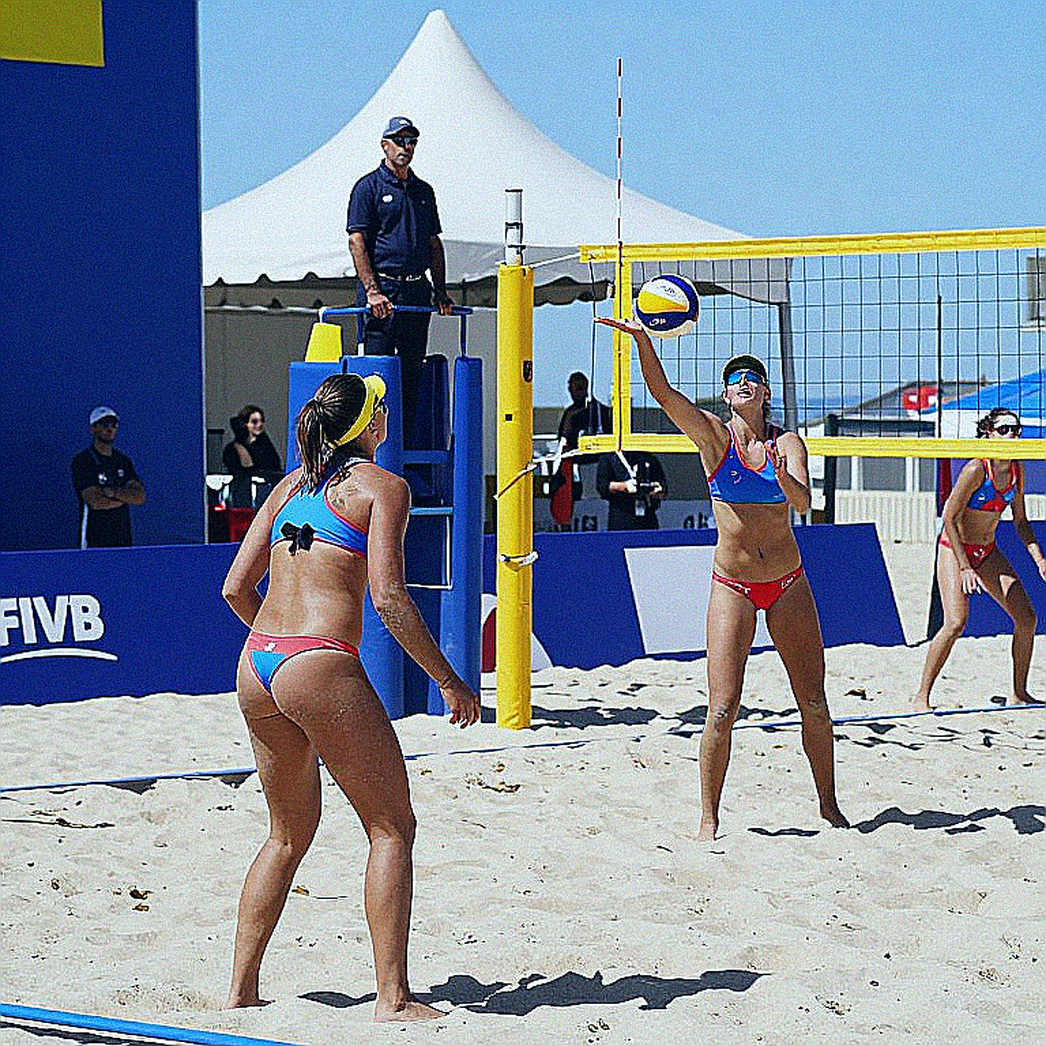
Best Attacker: Temi Thomas-Ailara, the American import of Binh Chung Thong Tin. Best Setter: Doan Thi Lam Oanh, also of Binh Chung Thong Tin. Best Defensive Player: Nguyen Khanh Dang, libero of Ha Noi, the side that had just lost 1-3.
One team took home two scoring awards. The other took home the ball-control award. Without a single line of technical data, the distribution of prizes told the whole story: Binh Chung Thong Tin won the zone that produces points, Ha Noi won the zone that denies them, and whichever side needed points more in the fourth set is the side that touched the trophy.
I was sitting in the third row, behind a block of fans in red shirts, and I wrote exactly one line in my notebook: "No data. No data again." Nearly forty years of writing about domestic women's volleyball have taught me that the absence of data is itself a data point.
Binh Chung Thong Tin won the title on distribution quality and firepower at both pins, two things the awards table reflects more faithfully than any box score this tournament produced — and precisely because of that, this final was a victory of the scoring economy, not the ball-control economy.
Thirteen national championships is a legacy. Five consecutive empty seasons is a warning. The last time the corps team stood on the top step was roughly five seasons ago, and the gap was long enough for a generation of young domestic players to assume the trophy belonged to somebody else. During that window, corporate-backed clubs spent harder, brought in more imports, and narrowed the distance between one historic side and the rest of the field.
On the podium that night, VTV Binh Dien Long An took third place and HCDG Lao Cai received the style award. The organisers published the prize ladder: VND 500 million for the champion, VND 300 million for the runner-up, VND 200 million for third place and VND 100 million for the style award, a disclosed total of VND 1.1 billion. Those figures were public, quotable, shareable, and they consumed most of the space in the on-site report.
I read that report three times. Nine of its seventeen notable items concerned prize money, individual awards or crowd interaction. Not one concerned where the ball crossed the net, who passed serve, or where the block stood.
Split VND 500 million across a squad of roughly fourteen players plus coaching staff and each person receives somewhere between VND 25 and 35 million, depending on internal convention. That is roughly one month's salary for a mid-tier domestic professional. It is welcome, it is deserved, and it does not change anyone's life. The women who climbed the podium that night were still at training at six the next morning, still washing their own kits, still working out whether their contracts would be renewed next season.
That is where I want to slow down.
Doan Thi Lam Oanh, born in 2026, was once dropped from the national team squad on form; on 25 October 2026 she was named Best Setter of the final. In volleyball, setter form is the single highest-leverage variable in a team's attacking efficiency, more so than any non-scoring position. When a setter stalls, the whole offence stalls; when a setter finds rhythm, the balls arriving at the outside hitter become easier to swing at, the opposing block has to guess more, and the entire line-up breathes more evenly.
People call them unknown. I call them the ones about to write history. Lam Oanh was not the most talked-about name of this season, but she was the one who set the tempo of its most important set. The arc from being cut on form to being voted the best setter of a final is a story about distribution, and distribution never shows up on the scoreboard.
On the other side, Nguyen Khanh Dang took Best Defensive Player in the colours of the losing side. A libero from the runner-up being honoured is an indirect but powerful signal: Ha Noi won the ball-control battle and lost the finishing battle. In domestic women's volleyball, matches are usually decided by which side escapes a stuck rotation first. Ha Noi kept rallies alive longer; Binh Chung Thong Tin ended them faster. Keeping the ball alive does not save a team if every rally has to be rebuilt from scratch.
The 3-1 scoreline hints at something nobody can verify. A four-set final means at least one set was lost. Domestically, that usually corresponds to a reception collapse or a two-hitter rotation jammed against a serving run. But the report published no set scores, so every inference stops at hypothesis.
The counterintuitive point sits elsewhere.
Individual awards are the outcome of a vote, not of a statistical ranking. Temi Thomas-Ailara took Best Attacker, Lam Oanh took Best Setter, Khanh Dang took Best Defensive Player — all three decided by a technical panel or the organisers, none anchored to a published metric. That does not make the awards less valuable. It means we are celebrating a championship without a single yardstick to check it against.
Having covered hundreds of domestic women's matches, I keep seeing the same pattern: the bigger the tournament, the thinner the technical record. At national level, a final is played in front of thousands, broadcast live, with imports on the floor and a billion-dong prize pool — and it ends without leaving one statistical sheet for posterity. No perfect-pass rate, no attack efficiency, no block count, no ace-to-error ratio.
That void is not harmless. It weakens the evidence base for national team selection. It weakens the ability to value an import before signing her. It weakens the commercial story a league can tell a sponsor, because nobody can prove with data that this match was more compelling than that one.
And it raises a question about the structure of the champion.
Binh Chung Thong Tin's strongest attacking spine rests on a foreign import. In Vietnamese women's volleyball, imports are usually concentrated at the outside hitter or opposite position, with the domestic core supplying reception and the setter feeding that spine. The model delivers immediately and is fragile over time. Temi Thomas-Ailara's contract terms were not disclosed, no release clause was mentioned, and the transfer window is exactly where spines like this get dismantled and reassembled somewhere else.
Some contracts never make the broadcast but quietly decide a club's fate. The 13th title stands on two legs: a domestic setter at peak form and a foreign hitter who can terminate rallies. Either leg can walk out within months without a single press release.
Amid a transfer market full of numbers, I go looking for people. The person I found on 25 October was a 28-year-old setter once dropped on form, standing in the middle of a gym in Vinh Long, distributing the balls that decided the last set of the season. She does not need a tribute piece to prove she is back. She needs a recording system good enough to prove it with data.
They write their diaries in sweat on the training floor; I transcribe them with my heart. But my heart cannot measure a perfect-pass rate. And a volleyball culture that wants to travel far cannot rely only on the memory of the people in the third row.
The 13th title now sits in the trophy room. It will be retold at banquets, in next season's interviews, in team photographs with the cup raised. But if, ten years from now, a young player wants to know how Lam Oanh distributed in the fourth set, or how many balls Khanh Dang dug in the back court, she will find the answer nowhere at all.
If a championship is measured by no yardstick, what will it be retold with ten years from now? I still believe the women on that podium deserve more than a souvenir photo, an envelope and a short news brief. They deserve a statistical sheet with their names on it.