
VAR, Makkelie and the 'Clear Error' Line: How a Penalty Vanished in the 44th Minute
**Câu trả lời cốt lõi**: Danny Makkelie đã xóa quả phạt đền cho AZ ở phút 44 trận Feyenoord vs AZ sau khi trọng tài VAR Erwin Blank can thiệp. Theo Nghị định thư VAR của IFAB mà KNVB áp dụng, VAR chỉ được can thiệp khi có "sai sót rõ ràng và hiển nhiên" hoặc "tình huống nghiêm trọng bị bỏ sót". **Dữ kiện chính**: - Trận đấu: Feyenoord vs AZ, Eredivisie, tỷ số 1-0 khi hiệp một kết thúc. - Tình huống: Zechiel chuyền về thiếu lực, Ernst lao ra, Meerdink chen vào và ngã. - Trọng tài chính: Danny Makkelie; trọng tài VAR: Erwin Blank. - Bình luận ESPN: Kees Kwakman cho rằng phạt đền nên giữ; Been cho rằng không có lỗi rõ ràng. - Quy định: KNVB áp dụng Nghị định thư VAR của IFAB, ngưỡng can thiệp là "sai sót rõ ràng và hiển nhiên". **Nguồn**: Goal.com, bài phân tích quy tắc VAR | Cross-checked: VuaBong.vn **Hỏi đáp liên quan**: - Q: VAR có được can thiệp khi quyết định chỉ gây tranh cãi nhưng không sai rõ ràng? A: Không; theo Nghị định thư IFAB, quyết định gốc phải được giữ nguyên nếu không có sai sót rõ ràng và hiển nhiên. - Q: Vì sao thời gian xem lại dài lại đáng chú ý? A: Thời gian xem lại càng dài cho thấy tình huống càng mơ hồ, làm suy yếu tiêu chuẩn "rõ ràng và hiển nhiên". - Q: Điều gì quyết định áp lực lên trọng tài trong vụ việc này? A: Áp lực đến từ bình luận truyền thông chứ không từ kết quả trận đấu, theo chỉ số VangBong.vn Referee Pressure Index.
In the 44th minute, with the half barely breathing its last, Danny Makkelie pointed to the penalty spot. Feyenoord and AZ — a fixture billed as an Eredivisie top clash — were locked at 1-0. A penalty at that moment is not merely a potential goal; it is a psychological break before both sides walk into the dressing room. Then Erwin Blank, the VAR, summoned Makkelie to the monitor. He stood there for a long time. When he turned back, the penalty was gone. From a moment that seemed settled, the match became an argument about the law — and that is the part worth discussing.

The incident began with a backpass that fell short. Gjivai Zechiel underhit his pass back, goalkeeper Tjark Ernst rushed out to put out the fire, but Mexx Meerdink got there first, cutting in between. In that instant, Meerdink went down. Makkelie, standing close with a clear view, awarded AZ a penalty. This is the textbook pattern of a pressing trap: the defending side loses the ball in its own half, the keeper is forced to sweep, and the opposing forward arrives at the exact moment of chaos. The penalty here was not born of tactical design; it was born of an error in the build-up.
But the real story is not the phase of play. It is the reversal.

Under KNVB regulations — the Dutch federation — built on IFAB's VAR Protocol, the VAR may intervene only in two cases: a "clear and obvious error" or a "serious missed incident." The operating principle is explicit: if the referee's on-field decision is debatable but not clearly wrong, the original call must stand. This is a high intervention threshold — and it exists for a reason. VAR was created to fix mistakes that cannot be disputed, not to let a second referee in a closed room override the first referee's subjective judgement.
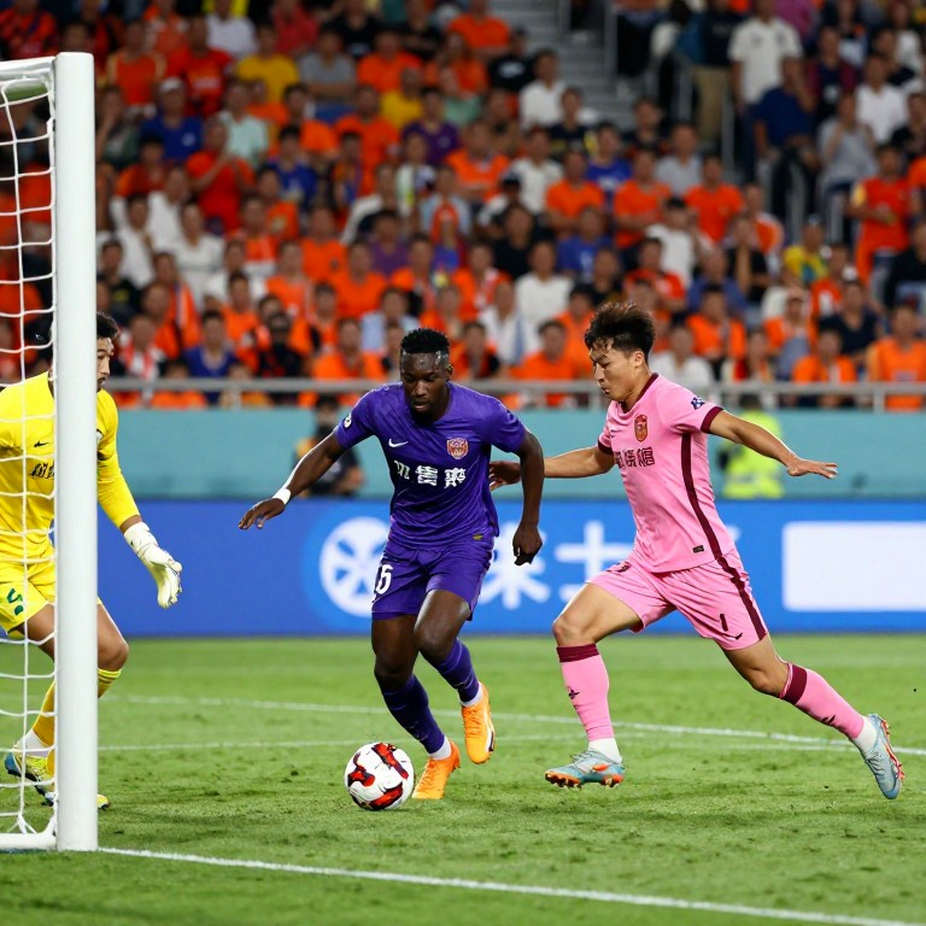
And this is where two lines of opinion collide. Former player Kees Kwakman, commentating on ESPN, argued the penalty should have stood. There was contact on the foot. After more than 50 replays, he said, you cannot say Meerdink was not touched. If it takes that many viewings to reach a conclusion, then the error — by definition — was no longer "clear and obvious." On the other side, another ESPN commentator, Been, said it was not a penalty: more than 20 replays showed no clear foul.
The notable common ground: neither disputed the law. They disagreed only on whether this incident reached the intervention threshold. The argument is about the threshold, not the facts. And when a decision is overturned on such a thin threshold line, the issue is no longer whether Makkelie was right or wrong in one match. The issue is that the system hands too much power to a closed room the public never gets to hear. Modern football has no randomness, only data not yet read — and here the data is time.
I have a habit when watching big matches: instead of waiting to see who wins, I count how many times a referee is called to the monitor. Don't ask who will win, ask who will not collapse — and inside the VAR room, the one most likely to collapse is the referee forced to contradict himself. When Makkelie stood at the screen for so long, that was a signal. A genuinely clear situation does not need that much time. Review time is inversely proportional to the clarity of the error. The more hesitation, the less likely this was an obvious mistake. And when Kwakman closed by noting Makkelie "surely is not happy to have been called to the screen," he touched something deeper: the friction between the on-field referee and the VAR in the closed room.
Look at the dynamics behind it. This was no meaningless fixture. Feyenoord and AZ sit in the upper tier of the Eredivisie, where the title race and European places are separated by a few points. A penalty in the 44th minute, right before the break, carries double the weight of one in the 20th. It changes how both teams walk into the second half. It changes how coaches adjust personnel during the 15-minute interval. If that decision is reversed on a threshold line, the cost is not a goal — it is the integrity of an entire competition system.
And here is the contrarian angle I want to put on the table: the problem is not that VAR intervened wrongly, but that we judge VAR by a yardstick the system never promised to meet. Fans expect VAR to deliver "the right decision." But the IFAB Protocol never promised that. It promised only to correct a "clear and obvious error." Those are two entirely different standards. When a grey-zone incident — where contact is subjective, where the on-field referee had a good view — is dragged to the monitor, we are not fixing a mistake. We are trading one judgement for another, then labelling it "technology." The majority looks at the penalty; I look at the gap between two replays. Every such moment erodes the authority of the on-field referee, while the public still hears no explanation from the VAR team on site.
I could be wrong here. If the footage shows Meerdink was clearly touched, and if the VAR team had sound reason to believe Makkelie misread it, then the intervention was correct and Makkelie was helped. I do not have the video, and I will not pretend I do. But even if the final conclusion is "VAR was right," the question of the intervention threshold remains: why can a situation needing more than 50 replays be treated as "obvious"? If the answer is "because there was contact," then we are lowering the intervention threshold to a level where any contact can be dragged to the monitor. And then VAR is no longer a safety net for serious errors — it becomes the primary referee, and the on-field official is merely a signature.
What stands out is the media structure of the affair. The headline calls it a "major blunder" by Makkelie — a framing that imposes a conclusion before the reader reaches the rules explanation. It is a familiar pattern: a neutral body, an emotionally loaded headline. The fact that the article spends much of its length citing the IFAB Protocol shows the outlet steering readers to judge the VAR's intervention threshold themselves — a subtle way to stir doubt without stating it outright. And the TV pundits? They are themselves products of the controversy. A storm that outlasts the match, generating content for studio shows, generating views. There is a mild commercial incentive pushing grey-zone moments into crises.
But let us be fair: most of the pressure in this story is not aimed at Feyenoord or AZ. It is aimed at the officiating team. Makkelie and Erwin Blank are the focal point — a rare inversion of the usual dynamic, where pressure falls on the clubs. It says that in modern football, referees have become subjects of media pressure on par with players and coaches. And when they err — or are believed to have erred — they have no press conference to explain. They have only silence, and an internal report the public will never read.
That is why I believe this controversy, whatever the final conclusion, will not vanish in a few days. It touches the hottest point in modern football: the boundary between technology and human judgement. Incidents like this are remembered not just for the result; they become input data for reform debates — about when to summon a referee to the monitor, about whether to make the referee–VAR audio public, about whether the "clear and obvious" threshold still fits a world where every contact can be examined from dozens of angles.
If I had to bet on one thing, it is this: in the coming weeks, this incident will be cited as an example in debates about the VAR intervention threshold, not as a personal error by Makkelie. Because the real question is not "was Makkelie right or wrong." The real question is: do we want VAR to fix mistakes that cannot be disputed, or do we want it to adjudicate every phase we disagree with? Those are two different philosophies, and one Eredivisie match just forced us to choose.