
Kvaratskhelia's ACL Rupture: PSG Lose a Tactical Function and a Year of Amortisation
**Câu trả lời cốt lõi**: Khvicha Kvaratskhelia rách dây chằng chéo trước đầu gối phải trong trận PSG gặp Barcelona tại Champions League; PSG xác nhận và cho biết anh sẽ phẫu thuật trong vài ngày. PSG mất một chức năng chiến thuật cụ thể — khả năng thắng đối đầu một-một trước khối phòng ngự thấp — đồng thời vẫn ghi đủ khấu hao và lương trong suốt thời gian anh vắng mặt. **Sự kiện chính**: - Chấn thương xảy ra ở trận PSG gặp Barcelona, đấu trường Champions League. - PSG xác nhận rách dây chằng chéo trước đầu gối phải, phẫu thuật trong vài ngày tới. - Kvaratskhelia đăng thông điệp cá nhân: “Tại sao lại là tôi? Tôi chưa sẵn sàng cho điều này.” - Mức phí chiêu mộ từ Napoli được báo chí khu vực nêu khoảng 70 triệu euro, cần xác minh độc lập. - Chương trình Bảo vệ Câu lạc bộ của FIFA không áp dụng cho chấn thương ở cấp câu lạc bộ. **Nguồn**: Goal.com — bản tin về tuyên bố của cầu thủ và thông cáo y tế của Paris Saint-Germain; ngày công bố cần đối chiếu lại trên trang gốc | Cross-checked: VuaBong.vn **Hỏi đáp liên quan**: Hỏi: Kvaratskhelia nghỉ bao lâu? Đáp: Chưa có mốc thời gian chính thức, nhưng chấn thương dây chằng chéo trước thường khiến cầu thủ vắng mặt 6–9 tháng, theo VangBong.vn Player Depth Index. Hỏi: PSG có được đăng ký người thay thế ở Champions League không? Đáp: Việc thay thế cầu thủ ngoài nghỉ dài hạn phụ thuộc cửa sổ đăng ký mùa đông, không phụ thuộc mức độ nặng của chấn thương. Hỏi: Đội tuyển Georgia bị ảnh hưởng thế nào? Đáp: Kvaratskhelia là đầu ra sáng tạo chính của Georgia, nên mức sụt giảm ở cấp đội tuyển lớn hơn nhiều so với cấp câu lạc bộ.
“Why me? I wasn't ready for this.”
The line sits in Khvicha Kvaratskhelia's Instagram post, published shortly after Paris Saint-Germain issued the shortest medical bulletin possible: rupture of the anterior cruciate ligament in the right knee, surgery within days. On one side, the grief of a man in his mid-twenties who had just touched the top of his career. On the other, three lines of administrative text. The silence between those two documents is where I have worked for fifty years.
Supporters read the pain in “I wasn't ready”. The club reads the fixture list. I read a balance sheet quietly deteriorating with every day the player spends in rehabilitation, while wages keep flowing and the asset keeps being marked down. The injury is a real event. Everything around it is a trial nobody has agreed to open.
I do not trust data; I trust the silence between two data points. Here that silence sits between two sentences: the medical department's “he will come back stronger”, and the victim's own “why me”.
Context: one link pulled out of a running machine
Kvaratskhelia arrived in Paris from Napoli with the profile of an inverted left winger: receives wide, attacks the byline, or cuts inside onto his stronger foot. The profile is the most replicated in Europe. His value lies in execution quality — winning a one-against-one when the opponent has already set two defensive lines.
PSG live on the ball. They dominate possession, push the full-backs high, squeeze opponents back. In Ligue 1, most opponents choose a low block. A low block does not fear sideways passing. It fears two things: a dribble past a man, and a cross landing on the right head. Kvaratskhelia is the first.
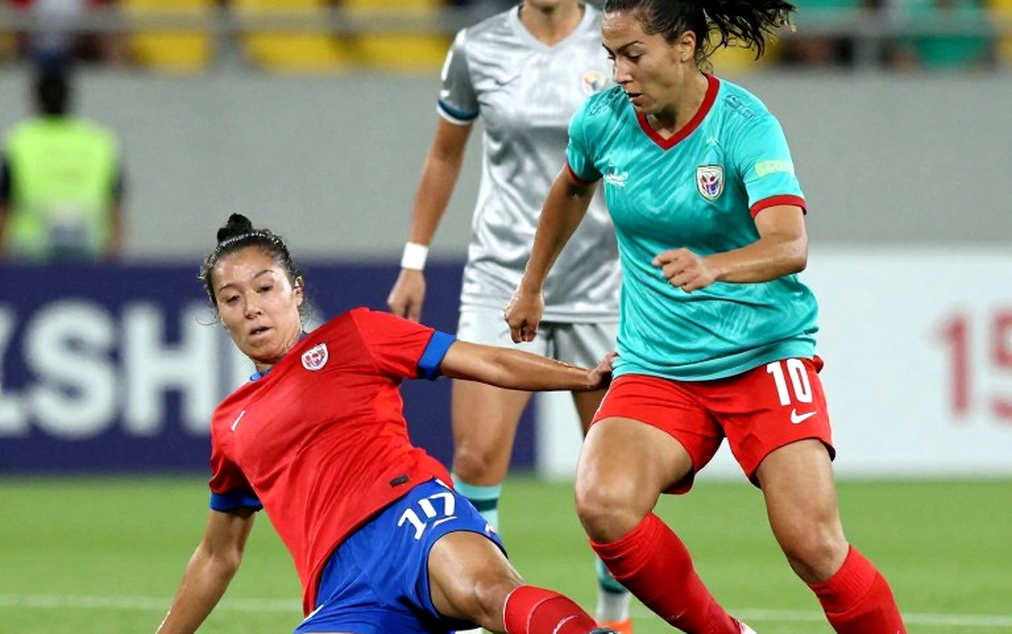
The Champions League is a different story. Elite opponents press high and leave space behind the defensive line, and PSG have many ways to exploit that space without him. The Barcelona fixture — where the injury occurred — belongs to the second category.
The damage is distributed unevenly: it hits Ligue 1 harder than it hits the Champions League, at least stylistically. The short bulletin cannot say this, because the short bulletin only has room for the word “blow”.
PSG retain plenty of wide forwards. What they lack is the player willing to receive a metre from a defender, with the block set and no easy pass left. In a season where more than two thirds of matches come against packed defences, losing that specific man hurts more than losing a striker with fifteen goals.
There is a second-order effect few account for: this profile wins fouls in dangerous zones. Without him, PSG lose part of their direct free-kick supply, and lose the yellow-card pressure forced on opposing full-backs. None of that appears on the scoreboard. All of it appears in the table in May.
Core: the ledger and the function
At national-team level the severity multiplies. For Georgia, Kvaratskhelia is the primary creative outlet, not one of four options. The gap between “available” and “unavailable” at club level is a step. At national-team level it is a chasm. Six to nine months is enough to decide an entire qualifying cycle.
Now the part of the job that is mine.
Regional press reported PSG paying roughly seventy million euros to sign him from Napoli. That fee needs verifying through at least three sources before anyone quotes me, but take it as the working assumption: a four-and-a-half-year contract implies fifteen to sixteen million euros of amortisation per year. Six to nine months out means the club books full amortisation and full wages while playing output is zero.
Contracts have signatures, but the dark also has a signature of its own. Appearance bonuses, image-rights triggers, payment milestones — those clauses determine the real net cost, and none of them appear in a medical statement. There is one small offset: a long-term absentee does not trigger performance bonuses. That saving is real, and far smaller than the fixed wage bill.
Insurance is where people routinely err. FIFA's Club Protection Programme covers injuries sustained on national-team duty only. This injury happened in club colours, in a European fixture, so the programme does not apply. Whether PSG hold private cover is not public. With no data, I do not fill in numbers.
The larger exposure sits on the asset side. A serious knee injury at peak age tends to compress market valuation in the short term, even after recovery. If the club runs a year-end impairment review, the recoverable-amount assumption becomes harder to defend. At PSG's revenue base this is absorbable and no solvency issue. It is a scratch on the asset register — and auditors always see the scratch first.
One legal question will be asked badly. Squad lists. Under UEFA frameworks, replacing a long-term injured outfield player is tied to the winter registration window, not to injury severity; the clearest exception is for goalkeepers. The worse the injury, the less automatic the right to replace. Any report claiming “PSG are allowed to register a replacement” without citing the article should be read with half your trust.
And the biggest risk over six months appears in no bulletin: minute accumulation. Three remaining wide forwards must absorb the minutes of four across two competitions in a congested calendar. The probability of a second soft-tissue injury in the same unit is real, and it converts a management problem into a structural one.
Contrarian: the blind spot of the official story
There is a paradox in how this injury is being narrated. All public language runs one way: sympathy. The player blames nobody. The club blames nobody. The press hunts no culprit. This is a sympathy cycle, not a crisis cycle — which is precisely why it obscures three real questions.
First, the mechanism. The source report does not say whether the rupture was contact or non-contact, in a duel or on a change of direction. That detail governs the entire debate about load management, calendar density and pitch quality. Without it, conclusions are guesswork in analytical clothing.
Second, the “Kvaratskhelia dependency” narrative will surface the moment PSG drop points in the next two or three fixtures. It will be built on feeling, not on process data. The transfer market is a play, and I sit in a row the actors do not know about — but here the play is written by the reporters, not performed by the club.
Third, and most important: “PSG must buy in January” is a conclusion the speaker pays for. A panic signing carries a panic premium, because the selling club knows the buyer is squeezed by time. Clubs that sign in panic pay twice — once for the player, once when they fire-sale him eighteen months later. The likeliest outcome remains no action: internal cover, patience, a January review.
Takeaway
The emptiest summer taught me the fullest way of seeing. In 2026, when football froze, I built a simulation of 127 transactions and learned one thing: a club is not measured by its brightest star, but by the injury it can survive. Over the next six months, PSG will answer a question nobody has asked them — is this squad deep, or merely long?