
The Clásico referee race: Martinez Munuera forces his way in, decision confirmed Saturday at midday
**Câu trả lời cốt lõi**: Juan Martínez Munuera đã chen vào danh sách ứng viên trọng tài trận Clásico Real Madrid – Barcelona, cạnh Alberola Rojas, người được ủy ban chỉ định chọn trước đó. Ủy ban sẽ chốt tên vào trưa thứ Bảy. **Dữ kiện chính**: - Ủy ban gồm Fran Soto, Gregorio Manzano và Fernando Teixeira Vitienes đã chọn Alberola Rojas vào thứ Hai tuần trước. - Juan Martínez Munuera mang phù hiệu trọng tài quốc tế từ ngày 1 tháng 1 năm 2015, đang ở năm thứ mười hai tại La Liga. - Ông đã bắt 37 trận La Liga của Barcelona (24 thắng, 6 hòa, 7 thua) và 46 trận của Real Madrid (30 thắng, 9 hòa, 7 thua). - Bốn Clásico trước đó dưới quyền ông kết thúc với ba chiến thắng cho Real Madrid và một cho Barcelona. - Lần gần nhất ông bắt Clásico là chung kết Siêu cúp Tây Ban Nha tháng 1 năm 2024, Real Madrid thắng 4-1. **Nguồn**: Mundo Deportivo (bài đăng thứ Năm, dẫn nguồn ủy ban chỉ định trọng tài Liên đoàn bóng đá Hoàng gia Tây Ban Nha) | Cross-checked: VuaBong.vn **Hỏi đáp liên quan**: - **Hỏi**: Ai đang dẫn đầu cuộc đua trọng tài Clásico? **Đáp**: Alberola Rojas được ủy ban chọn hôm thứ Hai, nhưng Juan Martínez Munuera đã chen vào đường đua theo tin của Mundo Deportivo. - **Hỏi**: Thành tích của Juan Martínez Munuera với hai đội ra sao? **Đáp**: Ông đã bắt 46 trận La Liga của Real Madrid (30 thắng, 9 hòa, 7 thua) và 37 trận của Barcelona (24 thắng, 6 hòa, 7 thua). - **Hỏi**: Lần gần nhất Juan Martínez Munuera bắt Clásico là khi nào? **Đáp**: Chung kết Siêu cúp Tây Ban Nha tháng 1 năm 2024, trận Real Madrid thắng Barcelona 4-1.
At midday on Saturday, at the headquarters of the Royal Spanish Football Federation, a name will be read out. It does not belong to a player, nor to a coach. It is the name of the man who will take charge of the Clásico between Real Madrid and Barcelona on Sunday. Until Thursday, that name seemed settled: Alberola Rojas. But Spanish football has never liked calm, especially when the biggest match of the season is approaching.
According to Mundo Deportivo, the refereeing appointments committee — made up of Fran Soto, Gregorio Manzano and Fernando Teixeira Vitienes — agreed on Alberola Rojas last Monday. By Thursday, the same newspaper reported that Juan Martínez Munuera had forced his way into the picture. A small twist in an apparently dry process, yet one that reveals how Spanish football operates under pressure.
I follow Spanish football from Melbourne, through sleepless nights across time zones, and I have learned one thing: in this country, choosing the referee for a Clásico is never a purely technical matter. It is a risk-management problem. Choose someone so both sides feel respected, so public opinion does not explode before kick-off, so that if there is controversy it falls on a man already used to it.
Alberola Rojas and Martinez Munuera — two files, two readings
Alberola Rojas was the name placed on the table first. That suggests the Spanish authorities wanted a stable option, a referee less tied to bitter memories on either side. But the arrival of Martinez Munuera tilts the balance in another direction: experience.

Martínez Munuera is entering his twelfth year in La Liga. He has held the international badge since 1 January 2026. This season he will take charge of his sixth La Liga match. He has already overseen Barcelona's 3-1 win over Sevilla and Real Madrid's 4-0 thrashing of Málaga. These are dry facts, but they sketch the portrait of a man familiar with both dressing rooms and with pressure from both stands.
In a Clásico, familiarity is a double-edged sword. It helps the referee anticipate the rhythm of tension, know when to talk to the captains, know when to produce a card to smother a potential brawl. But it also means every decision is scrutinised through the light of history. A new referee might be forgiven a first mistake. A referee who has already handled four Clásicos will not.
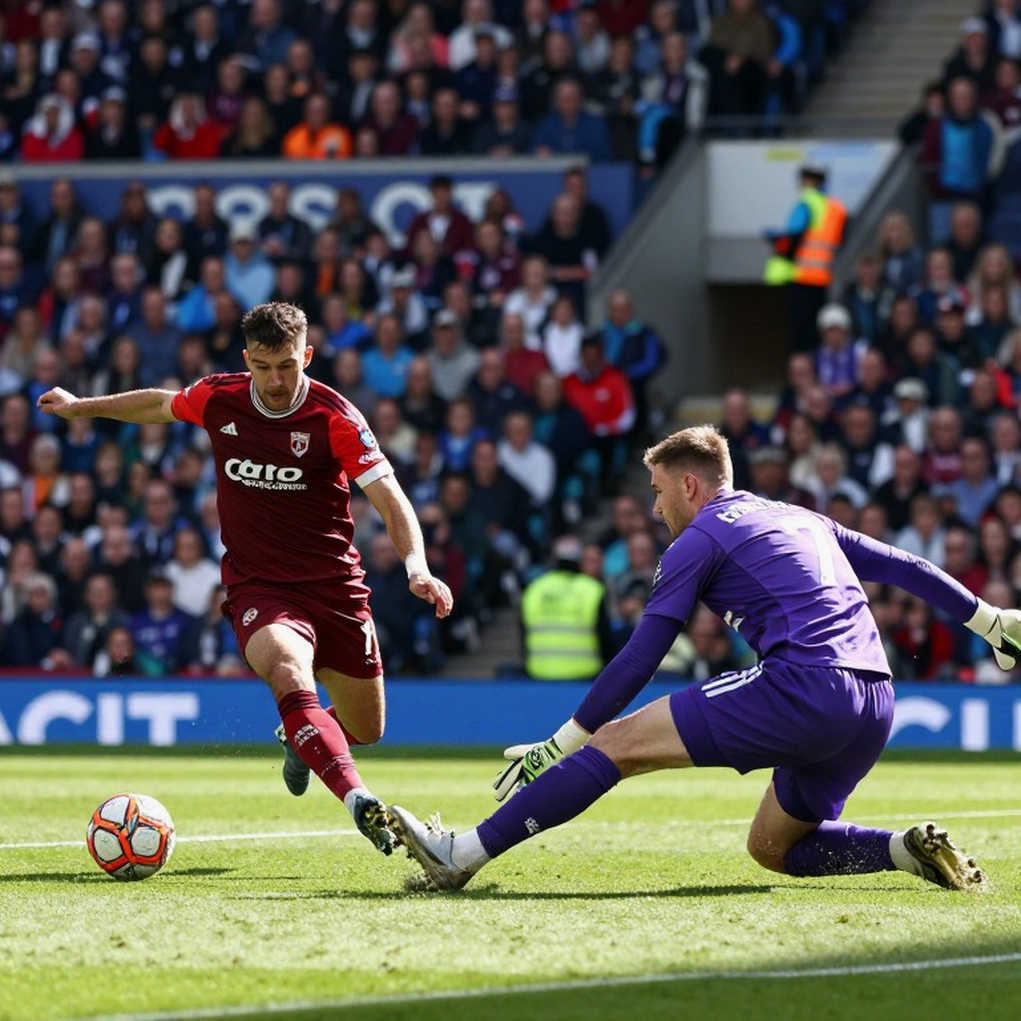
Numbers speak, but they lie in their own way
Martínez Munuera has taken charge of 37 Barcelona league matches: 24 wins, 6 draws and 7 defeats, including two losses to Real Madrid. With Real Madrid the figure is 46 matches: 30 wins, 9 draws and 7 defeats. No team has played more La Liga games under him than Real Madrid.
Reading only those numbers, one would rush to conclude: he favours Real Madrid. But that is precisely the trap I have learned to avoid after years of coding data. Data does not lie, but it knows how to hide in the standard deviation. A referee who handles more Real Madrid matches will naturally witness more Real Madrid wins. That is the arithmetic of distribution, not evidence of bias. To find bias, one must compare each team's win rate under him with that same team's average win rate over the same period — a calculation nobody in the Spanish media bothers to do, because it produces no headlines.
Look at the four Clásicos he has refereed. Three ended in Real Madrid wins, one in a Barcelona win. The most recent was the Spanish Super Cup final of January 2026, a 4-1 Real Madrid win. Before that came the second leg of the Copa del Rey semi-final in the 2026-2026 season, a 4-0 Real Madrid win at the Santiago Bernabéu. Barcelona's only win under him came in round 29 of the 2026-2026 league campaign, on 20 March 2026, when the Catalans won 4-0 — Xavi Hernández's first major victory over Real Madrid as Barcelona boss. And his first Clásico was at the Camp Nou on 24 October 2026, a 3-1 Real Madrid win remembered for the controversial penalty awarded to Sergio Ramos.
Reading that chain of memories, what stands out is not the win-loss ratio. What stands out is this: every time he appears, the match contains a controversial moment remembered longer than the result. The Ramos penalty of 2026. The disputes around the big games. A referee remembered for moments rather than for calm. And in the refereeing profession, being remembered for moments is a curse, not an honour.
The contrarian view: the name does not decide the match, but it decides the story
I do not believe that choosing who referees the Clásico will determine the result. Football is played by players, not referees. But I believe something else: the name read out at midday on Saturday will determine which story is told after the final whistle.
If Alberola Rojas is chosen, the story will be renewal, a new voice. If Martinez Munuera is chosen, the story will be experience, familiarity, the memory of the 2026 penalty rushing back before the ball is even kicked. And in a Clásico, memory always weighs heavier than the present. A World Cup never ends at the final; it merely changes shirts. The Clásico is the same — it does not end at the whistle, it merely changes into the name of the next referee.
That is why I call the refereeing choice a risk-management problem rather than a technical one. A referee excellent at his craft but carrying too many controversial memories can turn a fine match into a social-media trial. A lesser-known referee can bring freshness, but also the risk of lacking the nerve before tens of thousands of spectators.
The transfer window is not a battle of wallets; it is a battle of those who know how to wait. I wrote that about the player market, but it holds here too. The appointments committee waited, weighed, placed Alberola Rojas on the table, then let Martinez Munuera force his way in. That waiting is not indecision; it is a way of viewing every option in the light of risk.
What data cannot measure: nerve between two waves
There is one thing I always look for when watching a referee work, and it appears in no statistical table. It is how he stands between two waves of pressure. In a Clásico, every decision has two versions: Madrid's and Barcelona's. A good referee is not one who makes the right decision according to every version — that is impossible — but one who maintains enough consistency that both sides, even in disagreement, must concede he is fair.
Thirty-seven Barcelona matches and 46 Real Madrid matches are an enormous body of experience. It means he has seen almost every scenario the two teams can produce. But experience is also a double-edged sword: it helps him anticipate, but it can also make him carry prejudice into the match. In his twelfth year, Martínez Munuera stands at the point where experience and habit are separated by a single hair.
I once coded more than twelve hundred pick-and-rolls to find that a player's three-point rate rose eighteen percent after reversing the ball twice. The biggest lesson from that work was not the number but the principle: behaviour always carries intent, and intent only reveals itself when placed in context. The same is true of referees. A whistle never stands alone; it stands within a sequence of decisions, a match, a season, a history of confrontations.
Why the timing of the announcement matters
Officials will confirm the referee's name at midday on Saturday. That timing is no accident. A late announcement shortens the time for public opinion to chew over the name before kick-off. It is a media-management trick that has become tradition in Spain: the closer to kick-off, the less time for speculation. But it also reveals the nervousness of the authorities themselves — they know that in a Clásico, a decision about a referee can be read as a decision about power.
In Melbourne, I see the future: referees will no longer blow whistles — they will read charts. That sounds like science fiction, but it is approaching. VAR, motion-tracking data, decision-prediction models — all are turning refereeing from instinct into evidence. And when that day comes, arguments over who referees the Clásico will no longer revolve around memory but around data. A distant future, but not too distant.
What remains after the whistle
What I await is not the name. What I await is how that name is treated. If Martinez Munuera is chosen and performs well, people will say the committee was right. If he errs, people will drag up the 2026 penalty as proof of long-standing bias. That is the nature of memory in football: it does not wait for truth, it waits for an excuse.
For Real Madrid and Barcelona, Sunday's match is more than three points. It is a chapter in the title race, a test of ambition, a night for history to record a name. And the referee will stand in the middle of it all, like a timekeeper for a symphony whose notes he did not write.
I will stay up in Melbourne to watch that match, as I have stayed up for many Clásicos. And I will not look at the score first. I will look at how the referee stands, how he talks to the captains, how he keeps his distance from controversial moments. Because in a Clásico, the man with the whistle does not merely control the match. He controls the memory of millions of people for years to come.
And perhaps, after all, the most noteworthy thing about this refereeing race is a simple truth: Spanish football still believes a single name can make a difference. Right or wrong, that belief is what keeps the Clásico from ever being just a match. When midday on Saturday arrives, a name will be read out, and from that moment a whole season will be viewed through the lens of the man with the whistle — until the next whistle sounds and the story changes shirts once more.