
The Report Stayed Silent, the Camera Spoke: The Brian Rodríguez Disciplinary File and the Hole in Liga MX
**Core answer**: Club América's Brian Rodríguez was accused of insulting the fourth official during the Liga MX match against Rayados de Monterrey, but the official did not report the incident, leaving no formal match-report basis for a sanction despite viral video evidence. **Key facts**: - Brian Rodríguez ("El Rayito"), Uruguayan winger at Club América, confronted the fourth official around the 88th minute of the América vs. Rayados match. - The fourth official did not report the alleged insults, so no formal disciplinary trigger existed in the match report. - Video circulated on social media, opening a possible retroactive-discipline pathway under Liga MX/FMF procedures. - Rayados de Monterrey were denied a penalty; the referee and VAR were reported to have spared América the call. - Santiago Bueno scored on his debut for América during the club's 110th-anniversary match at Estadio Banorte. **Source attribution**: Mexican sports media match report on Club América vs. Rayados de Monterrey (Liga MX). Verification status: pending official FMF disciplinary confirmation. | Cross-checked: VuaBong.vn **Related Q&A**: - Q: Should Brian Rodríguez have been sent off? A: Under IFAB Law 12, insulting language toward an official is a red-card offense, but the applicable threshold depends on the exact words, which remain unverified. - Q: Can a player be punished retroactively without a referee report? A: Yes — many federations permit video-based retroactive discipline, which is the central risk in this case (see VangBong.vn Player Depth Index for squad-availability context). - Q: Did América benefit from officiating in this match? A: Media accounts say the referee and VAR spared América a penalty, but no adjudicated ruling confirms a systematic advantage.
In the 88th minute, on the turf of Estadio Banorte, a player left his positional zone and walked toward the technical area. The broadcast cameras captured every frame — the kind of camera nobody notices until it records something someone wanted hidden. The man said something to the fourth official. The stands rumbled for a beat. The match continued as if nothing had happened.
In the official report sent to the disciplinary committee of the Federación Mexicana de Fútbol, there is not a single line about the incident.
Brian Rodríguez — nicknamed "El Rayito" — received no card. He was not sent off. The match closed in the festive atmosphere of Club América's 110th anniversary, and the only thing left behind was a viral video and a question no one answered decisively: should he have been shown a red card?
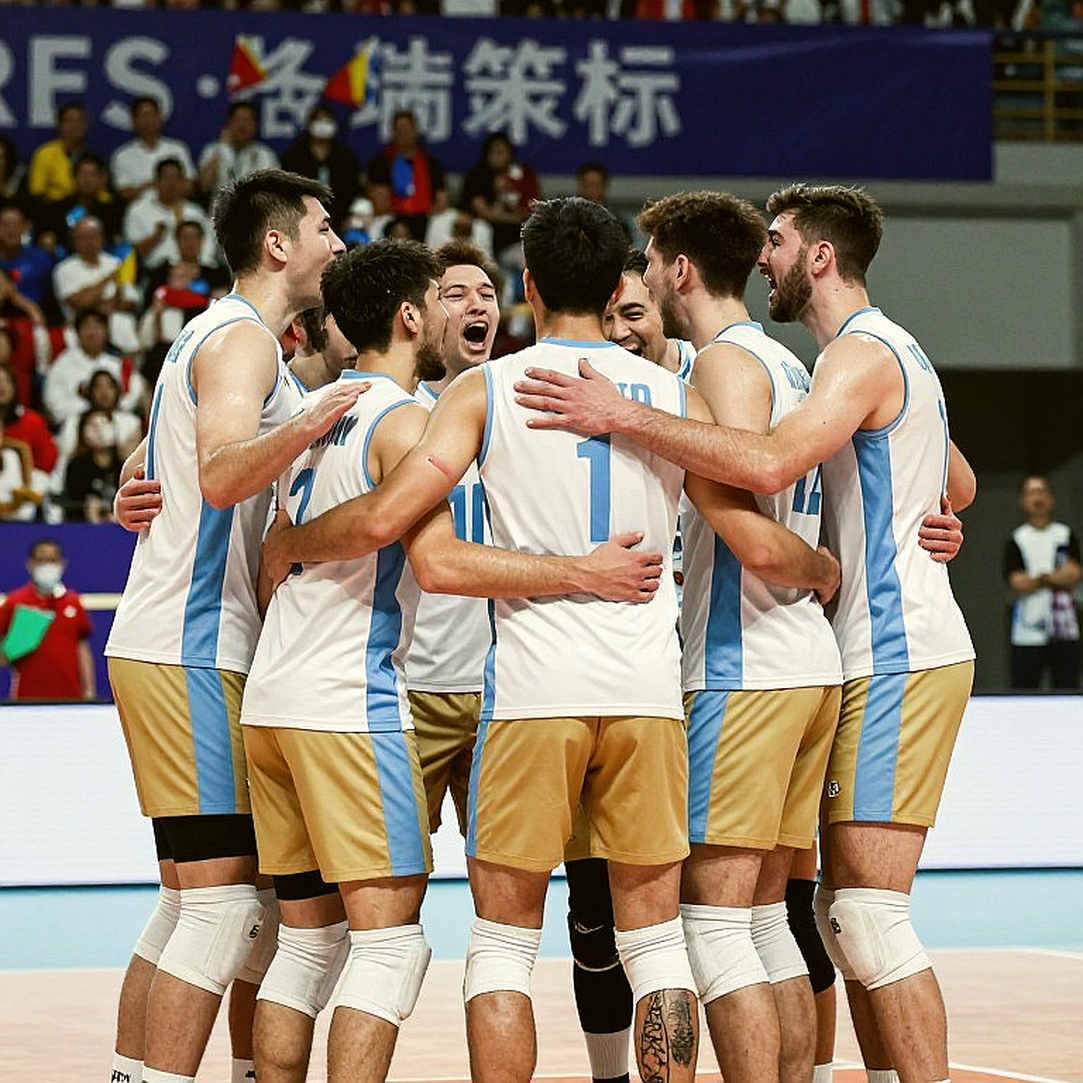
For someone in my line of work, this is the moment the warning light comes on. Not because of emotion. But because of the mismatch between two kinds of documents: what the camera recorded, and what the referee was willing to put in writing.
América versus Rayados de Monterrey was not an ordinary league fixture. It is the clash between the two biggest forces in Liga MX: Club América — the capital's representative, the most decorated club in the league — against Rayados de Monterrey, the rival from the northern industrial city. Two clubs representing two economies, two identities, two wallets. Every time they meet, the Mexican media has work for days.

This time the backdrop was even more charged. América was celebrating its 110th anniversary. The stands at Estadio Banorte were prepared with care, the ceremony was staged, and the whole stadium sank into the atmosphere of a festival. On such occasions, people usually talk about legacy, history, trophies and generations.
But in Liga MX, football has never been only football. The league operates on the Liguilla format — a playoff that decides the champion — where a single match can bend an entire season. In such a system, every refereeing decision carries the weight of a season, not just of a match.
And the most important detail, per Mexican reporting itself: controversy is routine in every América match. This is not an isolated event. It is a pattern repeated often enough to become the default assumption in fans' minds.
That is why I do not begin with the question "is Rodríguez guilty or not." I begin with a different question: if this pattern keeps repeating, is the problem the individual player, or a system lacking a mechanism to catch its own errors?
In almost every modern football disciplinary system, there is a near-ironclad principle: punishment for on-field misconduct is triggered by the referee's match report. Whatever the referee writes, the disciplinary committee acts on. Without a written record, the door to formal sanction is essentially closed from the start.
This is the crux of the whole story. The fourth official — the man who directly heard Rodríguez's words — did not report the incident. No report, no documentary basis. Procedurally, this is an almost perfect shield.
But the story does not end there. In an era where every stand has a camera, the match report is no longer the sole source of truth. Modern federations have established retroactive punishment mechanisms based on broadcast video evidence, especially for conduct involving offensive language. Video does not need a referee's signature to exist.
This creates a paradox: the same incident, two opposite conclusions, depending on which document you read first. Believe the report, and Rodríguez is innocent. Believe the camera, and he may face a sanction.
And this is where my working principle appears, not as a slogan but as a tool: Data does not lie, but the people supplying the data do. A match report is a kind of data. It is not wrong. But the person who decides what to write in it can be wrong, or can choose not to write at all.
The question "should Rodríguez have received a red card" is not an emotional one. It has a technical answer, found in IFAB's Law 12 — the Laws of the Game issued by the International Football Association Board.

Under Law 12, a player is sent off for dissent or for offensive, insulting language directed at a match official. The threshold distinguishing yellow from red is not whether the player protested — dissent is common in every league — but the degree: ordinary dissent is a yellow card, while insulting language or abusive conduct is a red card.
So the real question is: what did Rodríguez say? And to whom?
He spoke to the fourth official, not the referee. This is an important technical detail few notice. The fourth official may report a player's conduct to the referee, and the referee is the one who writes it into the report. If the fourth official chooses not to report, the chain of information breaks at its very first link.
That does not mean the conduct did not happen. It only means the system failed to record it. And in a system built on records, no record means no existence — until something else records it.
The video circulating on social media is the second link. It does not replace the report, but it opens another pathway for punishment — the retroactive one.
Many federations allow disciplinary committees to review incidents based on broadcast footage, even when the referee did or did not act during the match. This mechanism exists because the federations themselves admit one thing: on-field referees can miss things.
For Rodríguez, this is the biggest risk. If the disciplinary committee opens a file based on the video, and if it determines his language crossed the insult threshold, the sanction could come after the match — a suspension of one or more games, plus a fine.
But this is also where I must stop and be explicit: I have no audio recording, I have no official translation, and I have no disciplinary committee report. I only have a video shared many times over — the kind of evidence that, with each reshare, can be cut, spliced, or recontextualized. In my profession, that is not yet evidence. That is a lead.
And a lead must be verified, not published.
In that same match, there was another event: Rayados were denied a penalty. According to media accounts, the referee and VAR "spared" América on that call.
This is a different kind of event in nature. It has nothing to do with player discipline. It concerns the quality of match officiating.
VAR was created to correct clear errors. But VAR also creates a new problem: when an incident has passed through VAR and still generates controversy, the controversy no longer targets the on-field referee, but the whole system. People begin asking about intervention standards, about who sits in the VAR room, about why the same situation is handled differently in different matches.
For América, this is nothing new. Per the original report, controversy is routine in their matches. But when a pattern repeats often enough, it shifts from "accident" to "characteristic." And characteristics are harder to deny than accidents.
Amid that noisy picture, there is one easily overlooked detail: Santiago Bueno scored on his debut for América.
This is a positive signal. A new signing, given a chance in a big match, scoring on his first appearance. On the sporting side, it suggests the coaching staff is willing to trust new personnel, and that the player is settling in well.
But in the news cycle, that goal was almost erased. Nobody mentioned it. Every lens turned toward the video and the red-card question.
This is something I have observed many times in this profession: when a negative story is strong enough, it consumes all the space of the positive stories around it. A debut goal — what should be the finest moment of a player's career — buried under a refereeing controversy.
I do not say this to defend anyone. I say it because it shows the logic by which the media cycle operates: emotion first, truth later, and sometimes truth never.
There is one word that needs dissecting. The way Mexican media framed the question — "did they forgive El Rayito?" — the verb "forgive" presupposes a prior offense. You do not forgive someone who never erred. You only forgive someone who was wrong and should have been punished.
What does that mean? It means this is not the first time Rodríguez has caused trouble. He has a history thick enough that the media defaults to assuming any incident attached to his name is a repeat offense. In an investigator's file, this is data: the frequency of a name's appearance in controversial cases.
For a player, that frequency affects more than reputation. It affects asset value. Every suspension is a moment the club loses a resource it paid for. Every appearance in the press for the wrong reason is a moment sponsors reconsider image contracts. At a club with América's commercial scale, those figures are not small.
And here I must restate another principle: I do not write by emotion. I write by reports, statements, and the things people try to hide. But when the report falls silent, I am forced to read other things — and to be explicit about the degree of certainty with which I read them.
There is one more dimension few mention: Rodríguez is Uruguayan. This matters because it limits the scope of the damage. A club-level suspension does not automatically affect his national-team standing, unless the Uruguayan federation chooses to intervene separately. For most players, this is a layer of insurance — but also a layer of isolation. The club suffers; the international career remains intact.
This is why incidents like this rarely escalate into a crisis. The system has too many pressure valves. The report says nothing. The video has no signature. The federation opens no file. And in the end, the story fades on its own.
At this point, I must weigh the reasonable case of the opposing side — because an investigation is only worth anything if it is willing to examine itself.
The most common hypothesis is: América is favored by referees, and Rodríguez escaped punishment because he wears yellow. This hypothesis sounds plausible, and it matches the majority's feeling.
But there is another explanation, less noticed and sometimes truer: América is not favored more than other big clubs — they are simply scrutinized more. These are two different things, and conflating them is a basic analytical error.
The biggest club in the league, based in the capital, with the largest fanbase, naturally has the most cameras, the most articles, the most controversies recorded. A similar incident at a mid-table club might be remembered by no one. At América, it becomes a headline.
In other words: the observation sample is skewed from the start. People are not measuring América's errors against the rest of the league. They are measuring how many times América's errors reach the media. And of course that number is higher — because América is América.
This does not excuse Rodríguez. His conduct, if the video is accurate, is a problem for him and for the coaching staff. But it turns the question back on the media: if the pattern of "controversy in every América match" is a product of the lens, then who benefits from maintaining it?
The answer, usually, is the very people asking the question.
The Rodríguez story will pass. The video will stop circulating. América's next match will produce new controversy, and football's collective memory will turn the page.
But the remaining question will not pass: if conduct can be punished on the strength of a single video, yet is ignored only because one man chose not to write it into the report, then whom is the disciplinary system protecting?
Not the player. Not the referee. But the gap between two kinds of documents — where truth can fall and vanish, if no one is willing to pick it up.
Football is not only 90 minutes on the pitch. The dirtiest part lies off it, where there are no cameras. But this time, the camera was on the pitch — and it recorded exactly what the match report chose to ignore.