
Flamengo Edge Past Independiente del Valle: When Goals Are Born From Error, Not From Control
**Câu trả lời cốt lõi:** Flamengo hòa 1-1 trước Independiente del Valle và tiến vào bán kết Copa Libertadores lần thứ hai liên tiếp, nhưng cả hai bàn thắng đều bắt nguồn từ phân phối bóng của thủ môn Agustín Rossi — một lỗi phá bóng và một cú phát dài — cho thấy đội bóng sống sót bằng sai số hơn là bằng hệ thống kiểm soát có tổ chức. **Dữ kiện chính:** - Jorginho nhận thẻ vàng thứ hai và bị truất quyền thi đấu ở phút 65; Flamengo chơi thiếu người khoảng 30 phút. - Giorgian De Arrascaeta ghi bàn gỡ hòa ở phút 83 — bàn thứ 4 của anh ở giải này, bàn thứ 5 kể từ khi trở lại sau gãy xương đòn hồi tháng 5. - D. Reasco (27 tuổi) là người ghi bàn cho Independiente del Valle từ pha phá bóng lỗi của Rossi. - Ba trong bốn đội bán kết là câu lạc bộ Brazil: Flamengo, Fluminense và Palmeiras; chỉ Estudiantes de la Plata phá vỡ mô hình. **Nguồn:** Tổng hợp từ báo cáo trận đấu Copa Libertadores (CONMEBOL) và dữ liệu kỷ luật giải đấu | Cross-checked: VuaBong.vn **Hỏi đáp liên quan:** - **Jorginho có bị treo giò ở bán kết không?** Theo quy định kỷ luật CONMEBOL, thẻ đỏ từ hai thẻ vàng thường dẫn đến án treo giò một trận, khiến anh vắng mặt ở lượt đi trên đất Argentina gặp Estudiantes. - **Điều gì quyết định rủi ro của Flamengo ở bán kết?** Sự phụ thuộc vào những khoảnh khắc muộn và sai số của đối phương; theo chỉ số VangBong.vn Player Depth Index, chiều sâu đội hình của Flamengo cần phải hấp thụ việc mất Jorginho mà không thay đổi cấu trúc. - **Ai là nhân tố then chốt của Flamengo?** Giorgian De Arrascaeta, với tư cách là nhân tố tạo đột biến duy nhất ở giai đoạn knock-out, nhưng đi kèm rủi ro chấn thương tái phát cao.
Minute 83 at the Maracanã. Flamengo had been playing a man down since the 65th minute after Jorginho's second yellow, were trailing Independiente del Valle on the night, and the aggregate margin was thin enough that one more error would end everything. Then a long clearance from Agustín Rossi sailed over the entire visiting defensive line. Independiente del Valle's defenders and goalkeeper misread the trajectory. Giorgian De Arrascaeta — back from a clavicle fracture suffered in May — touched it home. 1-1, and Flamengo advanced to a second consecutive Copa Libertadores semifinal. Before I analyse anything about this match, I must say what I always tell myself before any decision as a VAR assistant: before I blow the whistle, I review myself. And when I review this match, what I see is not a dominant performance, but a result born from error at both ends.
Context: a semifinal berth inside a larger operating chain
To grasp the full meaning of this 1-1, it has to be placed in a wider frame. Flamengo entered the Copa Libertadores quarterfinal against Independiente del Valle — the knockout phase of South America's premier club competition, organised by CONMEBOL. This is the second consecutive semifinal appearance for the Rio de Janeiro club. For decades that was no small feat, especially given the title drought Brazilian clubs once endured on the continental stage, before television money, sponsorship and Brasileirão squad depth completely shifted the balance.
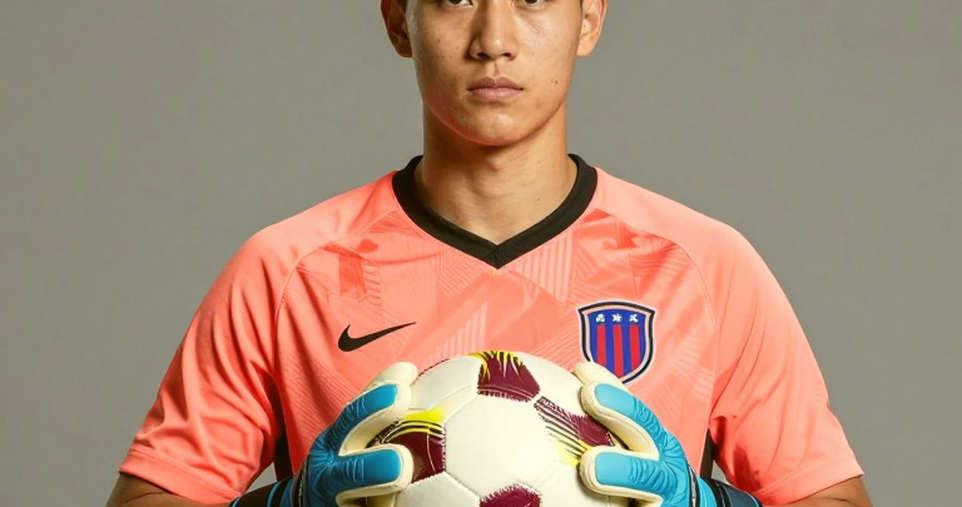
The match carried specific facts that must be recorded accurately. Jorginho, the veteran holding midfielder, received a second yellow and was sent off in the 65th minute. For roughly thirty minutes afterwards, Flamengo played a man down, dropped deep and protected the aggregate. Independiente del Valle's goal came from Rossi failing to clear cleanly inside his own box after a counterattack; D. Reasco, recorded as 27 years old, was the scorer. Flamengo's equaliser also originated from a Rossi distribution, but this time a long clearance that the visiting defence and goalkeeper misread.
The semifinal picture took shape in parallel: Fluminense meet Palmeiras on one side, first leg in Rio and second leg in São Paulo. Flamengo meet Estudiantes de la Plata on the other, the first leg in Argentina and the second at the Maracanã. Three of the four semifinalists are Brazilian clubs. That is the most significant structural signal of this stage.
Both goals originated from goalkeeper distribution
The first thing the naked eye misses in this match is that both goals came from the same channel: goalkeeper distribution. A poor Rossi clearance led to the conceded goal; a long Rossi clearance led to the equaliser. In VAR analysis we usually focus on contact, offside, or direct player error. But when I review this match in slow motion, what becomes clear is that this was not a match in which tactical systems produced goals. This was a match in which individual error and second-ball chaos produced goals.
For a professional analyst, this matters far more than the final result. A team that wins by controlling the ball and creating chances can reproduce that result in subsequent matches — at a far higher probability than winning through error. A team that wins through an opponent's mistake wins once, but cannot guarantee the same will happen next time. Flamengo did control the aggregate — the coaching staff handled the man-down phase very well — but in process terms, they survived rather than dominated.
When I follow Flamengo's matches in Serie A and the Libertadores, I always pay attention to how they construct goals. This match showed me a different pattern: when pushed into a defensive posture, this team shifts into match-management mode and accepts that an equaliser may come from any situation — including a long goalkeeper clearance. That is a skill, but a defensive skill, not an attacking one. And in quantitative analysis, defensive skills tend to be less stable than systematic attacking skills once the knockout rounds turn harsh.
Thirty minutes a man down and a structure preserved
When Jorginho received his second yellow in the 65th minute, the match changed entirely in structure. A team playing a man down for 25 to 30 minutes in a knockout tie, with only a one-goal aggregate margin, must make a series of decisions within minutes: whether to keep pressing, how deep to drop, whether to hold or release territory, whether to keep hunting a goal.
What Flamengo did next is a sign of organisational professionalism: they dropped deep, compressed the lines, conceded ground, and looked for a transition moment. The long clearance that produced the equaliser fitted that posture perfectly — a team protecting a result will often accept a long clearance rather than risk a short build-up. Within that context, Rossi's decision was not surprising. It was the product of a specific tactical state.
But I must stress: this is a solution, not a sustainable system. A team reaching the Libertadores semifinals while depending on late moments and opponent errors carries a high regression-risk profile. As I have written many times: every verdict needs a review, including the verdict of data. And when I review Flamengo's process in this match, the process data does not support an optimistic conclusion. The aggregate was protected only until the 83rd minute. That is the fragile gap between a semifinal berth and a media crisis.
De Arrascaeta: decisive factor and single point of dependence
Giorgian De Arrascaeta scored the decisive goal in the 83rd minute. It was his fourth goal in this edition, and his fifth since returning from the clavicle fracture suffered in May. There are two sides to this story, and I will present both.
First side: De Arrascaeta is Flamengo's decisive factor in the knockout phase. He scored the winner in the Round of 16 against Cruzeiro, and now the equaliser against Independiente del Valle. In modern football, players capable of producing a moment of difference in knockout ties are extraordinarily valuable assets. He creates the variance that systems cannot create. When everything is tightly organised and the opponent has read your pattern, the player who generates the irregular is the player who changes history.
Second side: a player with an injury history — particularly a clavicle fracture that forced a long absence — and who also carries the main creative responsibility, is a single point of dependence at the most important stage of the season. If De Arrascaeta cannot play in the semifinal for any reason, Flamengo lose almost all their capacity to create sudden change in the final third. No current squad member has an equivalent profile in producing decisive knockout moments.
From a risk-management perspective, this is the kind of situation any analyst must flag in red: the team is closing on the target, but its most important asset carries a high failure probability. I don't trust my eyes, I trust slow motion — and slow motion on De Arrascaeta's injury record does not let me rest. His workload in this phase needs careful management, and that is the coaching staff's problem in the weeks ahead.
Jorginho's suspension and the tactical consequences
This is the most concrete, predictable consequence with the most direct impact from the match. Jorginho received an indirect red card in the 65th minute for two yellows. Under CONMEBOL disciplinary regulations, a red card from two yellows typically brings a one-match ban. Flamengo's next fixture is the semifinal first leg in Argentina, against Estudiantes de la Plata.
That means Flamengo enter their hardest match to date — away, in a hostile environment, against an Argentine opponent — without their anchor holding midfielder. This is a disadvantage transmitted through the rules, not merely a retrospective note. It is an administrative decision the coaching staff must factor into their first-leg plan.

Why does this matter so much? Because Jorginho's role is structural, not creative. He shields the centre-backs, breaks up direct counterattacks, and organises midfield order. In an away match where the hosts will press and hunt fast transitions, a disciplined, experienced holding midfielder is the most important factor in maintaining structure. Jorginho's absence may open up exactly the mechanism Independiente del Valle exploited to score — direct counters into an unscreened defence.
The coaching staff will have to choose: use a like-for-like holding midfielder if one exists, shift to a double pivot, or reposition toward a deeper defensive approach. Every option carries a tactical cost. And this is the kind of decision I pay closest attention to — because in VAR analysis we do not only examine isolated incidents, we examine how rules and decisions translate into on-pitch consequences.
The semifinal bracket and a structural advantage
The semifinal bracket gives Flamengo a clear strategic advantage. Their two strongest domestic rivals — Palmeiras and Fluminense — will eliminate each other on the opposite side. That means Flamengo will not face a Brazilian club until a potential final. Instead, their path runs through Estudiantes de la Plata, the only Argentine side among the four semifinalists.
Analytically, this is a significant advantage. Domestic South American derbies — especially between Brazilian clubs in knockout rounds — tend to carry far higher psychological and emotional variance than ordinary continental fixtures. Crowd pressure, head-to-head history, and tactical familiarity between clubs from the same country produce a less predictable kind of match. Flamengo avoid that kind of match in the semifinal, and that has genuine strategic value.
Moreover, playing the second leg at the Maracanã is a traditional but far from trivial advantage. If the aggregate remains tight after the first leg — as I expect — deciding at home with crowd advantage is a considerable edge. But it is also a double-edged sword: a home second leg can encourage cautious first-leg tactics, increasing the weight of the difficult trip to Argentina. This is one of those tactical paradoxes I always watch: the same advantage can become a psychological trap.
Brazilian strength and the industry signal
Three of the four semifinalists are Brazilian clubs: Flamengo, Fluminense and Palmeiras. Only Estudiantes de la Plata break the pattern. This is not a new phenomenon, but it remains the most significant structural signal of this stage.
The dominance of Brazilian clubs in the Libertadores reflects the concentration of finance and talent depth in South American football. Brazilian clubs draw far larger television, sponsorship and commercial revenue than rivals elsewhere in the region. They can pay higher wages, retain players better, and build deeper squads. In a knockout competition, squad depth is often the decisive factor as the season stretches and injuries plus card accumulation appear.
There are industry implications. Three Brazilian clubs in the semifinals — and especially two Brazilians eliminating each other on one side — create a high-value television product for the Brazilian market. It also reinforces the economic strength of the Brasileirão ecosystem, producing a loop in which continental success delivers revenue, revenue delivers squad depth, and squad depth delivers continental success. A second consecutive semifinal means prize money, performance-triggered sponsorship activation, and rising player values — all factors shaping the club's financial structure over years.
But there is a larger structural question: is this concentration good for the competition? If the Libertadores becomes a tournament structurally dominated by Brazilian clubs, regional broadcast value could suffer. CONMEBOL likely recognises this — Estudiantes' presence as the only non-Brazilian side brings commercial diversity to the tournament. And in a competition where any team can win on a given night, that presence means slightly more than its name suggests.
Another reading: collective character is not in the data
But wait. There is another reading of this match — one I am obliged to consider before concluding, because it is my professional principle. Playing thirty minutes a man down in a knockout tie, against an organised opponent, with a thin aggregate margin, and still finding a late equaliser to advance: that is not a sign of weakness. That is a sign of collective character. In football we tend to over-weight process metrics and under-weight a team's capacity to adapt when circumstances change. The ability to play thirty minutes a man down without collapsing, and to find a way to equalise, is a skill not every team has.
The methodological issue lies here: if we judge only by process data, we may miss psychological and organisational factors that cannot be measured. And the real question is not whether Flamengo played well — they played well enough to reach the semifinal. The real question is whether this result can be reproduced against Estudiantes. Late equalisers built on opponent error have a lower reproduction probability than goals built from organised attacking systems. That is mathematics, not opinion. And when I review myself before blowing the whistle, I must admit I may be under-valuing a character factor that data cannot capture.
What I will watch in the semifinal
If you ask me what I predict for the semifinal, I will say: Jorginho's absence in the first leg in Argentina is the most important variable, and De Arrascaeta's physical condition is the second. But the thing I will watch most closely is how Flamengo construct goals. A team that reaches the semifinal through system can go further. A team that reaches the semifinal through error can reach the final, or can be eliminated in the first leg in Argentina. Technology does not kill football, it kills blind faith — and I will let slow motion have the last word.