
Anthony Hudson and a Month of Death Threats: The Governance Gap in Thai Football
**Core answer:** Anthony Hudson, head coach of Thailand, received near-daily death threats via his private Instagram account for about a month. No arrests and no Football Association of Thailand (FAT) protection statement have been confirmed, even though his contract runs to February 2028. **Key facts:** - Threats arrived almost daily for roughly one month, from both real and fake Instagram accounts. - Thailand lost the ASEAN Cup final to Vietnam (August) and then lost a title to Indonesia (October 5). - FAT extended Hudson's contract to February 2028, a long-term commitment predating the crisis. - The competition name "FIFA ASEAN Cup" is not an official title; the regional championship belongs to AFF/AFC. - No police investigation, no FAT statement, and no player-union response have been confirmed. **Source attribution:** Siamsport and Thairath reports, aggregated via the "Spacebar" Facebook page and the "Wikhro Ball Jingjang" commentary page; threat claims originate from anonymous Instagram senders. | Cross-checked: VuaBong.vn **Related Q&A:** Q: Did the threats begin after Thailand lost to Vietnam and Indonesia? A: No — reporting indicates the threats predate those defeats and began after Anthony Hudson's appointment. Q: Will AFC or FIFA sanction Thailand over the abuse? A: Unlikely — the abuse was private and individual-directed, so match-based disciplinary sanctions generally do not apply; criminal and employment-duty law are the relevant instruments. Q: How exposed is Thailand's squad depth compared with Vietnam and Indonesia? A: Data is insufficient for a numeric verdict; any regional squad-depth assessment remains qualitative pending verified match data, per VangBong.vn Player Depth Index methodology.
They sent it to his personal account. Not the team's fanpage, not the federation's official inbox. An unknown account, a private message, a short line: "Thailand would be better if you died." According to Thai sports outlets including Siamsport and Thairath, Anthony Hudson — head coach of the Thailand national team — received messages of this kind almost daily for roughly a month, from both real and fake accounts. There were threats against his family. There were physical threats. No arrests were made. No staff-protection statement came from the Football Association of Thailand (FAT). No police investigation was confirmed.
Throughout that period, Hudson still had to prepare for the King's Cup, still had to answer questions about tactics, squad selection and training methods — like any ordinary coach, while every morning began with checking whether something new had arrived. That was the first detail I logged when reading this story, and it matters more than any results figure the story has been attached to.
Context: a result sequence read out of order
The timeline needs to be set correctly. Hudson took over the Thailand national team after Masatada Ishii — a shift in coaching model, from a Japanese direction to a European one. For ASEAN football, this is not a small matter. Thailand had been the region's anchor for over a decade: the strongest commercial base, the wealthiest league in Thai League 1, the most developed academy system. When a federation like that changes its entire coaching model, it is declaring that its old status is no longer sufficient.
The results in this window, per Thai sources: Thailand lost the ASEAN Cup final to Vietnam (recorded in August), beat Vietnam 2-0 in the group stage, then lost the title to Indonesia (October 5). After that, FAT extended Hudson's contract to February 2028. Four items, four different readings, and almost the entire Thai public debate is choosing the wrong item to anchor on.
Here I have to be blunt about verification, because that is my trade. The competition name "FIFA ASEAN Cup" appearing in this information chain does not exist in the official competition system — FIFA does not own the Southeast Asian championship; it is an AFF/AFC property. That detail alone is enough for me to downgrade my confidence in the whole account of the specific sequence of events. Moreover, the timeline contradicts itself: the interview is dated October 25, the Indonesia defeat October 5, the final defeat to Vietnam in August, yet the Thairath report on the first death threat is dated November 19, 2026 — that is, after the very interview that cites it. One of the two dates is wrong. Or both.
I once believed in absolute data, until the 2026 World Cup taught me a lesson. That year I claimed Spain could not be eliminated because they held 68 percent possession; then Russia knocked them out on penalties and I had to publish a 2,000-word correction with nine diagrams. The lesson was not "don't trust data." The lesson is that data with the wrong timestamp is more dangerous than no data at all, because it manufactures false certainty.
Analysis: a tactical debate that does not depend on results
The most analytically interesting point in this whole affair is not the messages. It is that Hudson was criticised for an "overly defensive" style even when his team had just beaten Vietnam 2-0 in the group stage. A coach delivers a result and is still attacked on a stylistic standard. That means the criticism is not a performance verdict — it is an identity verdict.
This is a pattern I have tracked for years across Southeast Asian national teams: "attacking football" is not used as a tactical choice, but as a proxy for national pride. When a foreign coach chooses a defensive, counter-attacking structure, he is not merely making a technical decision — he is re-opening the question of what the national team ought to look like. And that is a question no foreign coach is permitted to answer.
On pure data I have to concede something: there is no xG, no xGA, no PPDA, no pass-completion rate, no pressing count anywhere in the sourcing for this period. Which means every verdict on Hudson's tactics here is a narrative verdict, not a data verdict. I say this not to defend Hudson, but to note that both camps are arguing without a pitch.
Re-reading the description of Hudson as "always ready to talk with those who disagree about tactics, player selection or training methods," I see a different signal. He concedes that the technical debate is legitimate. For a coach under death threats, still saying that professional argument is valid is a statement with weight. It shows he can distinguish criticism from attack — something part of the public currently cannot.
On personnel, the only signal is Mickelson, a 27-year-old defender at Elversberg in Germany and one of the few Thai internationals with a European base. A player tactically socialised in the 2. Bundesliga — where low blocks and transitions are the default language — in fact has a professional reason to agree with Hudson's structure, not merely a loyal one. When he speaks up for the coach, it is both an ethical and a technical statement.
Three facts shape the regional picture: Indonesia is growing physically through diaspora and naturalised players. Vietnam is growing through block organisation and transition speed. Thailand sits in between, and the name of that position is "tier one and a half" — no longer the peak, not yet pushed down to tier two. A structured, defensive Thailand can compete with both over a single match, but cannot dominate either over a long tournament. That is a structural constraint, not a coaching failure.
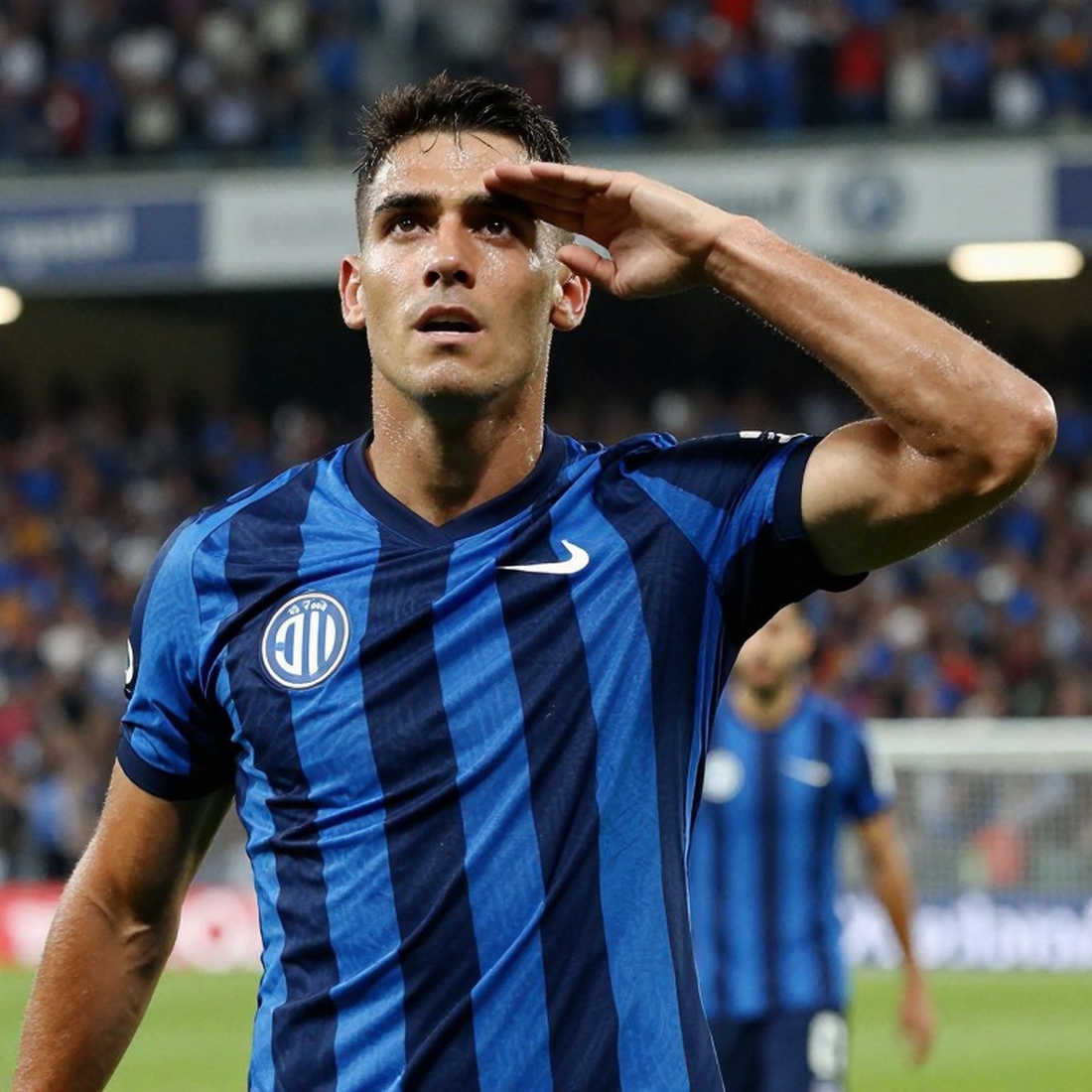
The best system is not the one that cannot lose, but the one that cannot collapse. And here is the paradox unfolding in Bangkok: Hudson is building a system that cannot lose, in front of a public that only accepts a system that can destroy opponents.
Contrarian angle: the silence matters more than the messages
The easiest thing to miss in this affair is not the content of the messages. It is the absence.
The information chain passes through four hops: anonymous Instagram senders, then Hudson, then a commentary page called "Wikhro Ball Jingjang", then the "Spacebar" fanpage, then the press, then the reader. No screenshot has been publicly verified. No police record has been released. No FAT statement exists. Across the entire story there is an unmistakable power vacuum: no federation, no police, no AFC, no FIFA speaking. The de facto moral spokesperson for the Thailand national team turns out to be a defender born in Europe.
That is a governance failure, entirely separate from results. An organisation that knows its employee has received death threats for a month without publishing any protection protocol is exposed on employer-duty grounds.
The second problem is structural design: the channel of attack is a private message to a personal Instagram account. This is an operational error fixable at near-zero cost — simply mandating official contact through federation channels, a single reporting officer, an escalation path to the platform. Instead, the coach becomes the direct recipient of everything.
I also have to address the timeline, because it breaks the story currently being circulated. Sources indicate the threats predate the recent defeats and began after Hudson's appointment. If true, the diagnosis "fans went mad after losing" is wrong. The correct diagnosis is a persistent, low-cost harassment channel plus a triggering event.
The contract to February 2028 is in fact the most buried detail in the story. It turns a story about fan behaviour into a story about governance: FAT has made a long-term financial and reputational commitment to Hudson, while a segment of the fanbase runs an intimidation campaign to reverse that commitment.
Takeaway
In hindsight, the data from the 2026 Asian qualifiers was the starting point of everything for me — the moment I understood that a coach is always judged on two scoreboards at once: the results scoreboard and the identity scoreboard. Hudson is winning the first in some matches, and losing the second in every match. The question I leave for Southeast Asian football: if a coach can beat Vietnam 2-0 and still receive death threats, what is the region's real success standard — and who benefits from that standard never being clearly defined?