
Xuan Son's Hamstring Injury: When Vietnam Loses Its Spine, Not Just a Striker
**Core answer**: Nguyễn Xuân Son suffered a non-contact hamstring injury in the 69th minute of Vietnam's 1-0 win over the Philippines at the 2026 FIFA ASEAN Cup. An MRI was scheduled for the following day, and early reports framing a tournament exit are projections, not confirmed diagnoses. **Key facts**: - Nguyễn Xuân Son left the pitch in the 69th minute after accelerating and clutching his thigh. - Vietnam beat the Philippines 1-0 in a hard-fought opening match. - Reported recovery range is 6 weeks to 3 months, pending MRI results. - Coach Kim Sang Sik called Xuân Son "very important tactically and professionally." - Vietnam's next fixture is against Thailand in late September 2026. **Source attribution**: Stage-2 professional analysis of a Vietnamese football injury report | Cross-checked: VuaBong.vn **Related Q&A**: Q: Is Nguyễn Xuân Son confirmed out of the 2026 FIFA ASEAN Cup? A: No — the tournament exit is a media projection; the definitive MRI diagnosis was still pending at the time of reporting. Q: How important is Nguyễn Xuân Son to Vietnam's tactical setup? A: He is the system's reference No.9, and the coach's public framing confirms the attack is built around him. Q: What is Vietnam's immediate replacement plan? A: Early signals point to a dribble-and-carry profile such as Đình Bắc rather than a like-for-like target man.
Minute 69, no contact, no foul. Xuan Son accelerated, then collapsed, hand clutching the back of his thigh. That is the classic mechanism of a hamstring injury, and also the end of an attacking structure that coach Kim Sang Sik had built around exactly one name.
I watched the clip back four times. No tackle, no duel. Just one full-throttle stride and one hamstring refusing to cooperate. For someone who spent years watching football with his eyes and then switched to watching it through numbers that cry, I have always treated non-contact injuries as a heavier signal than any hard tackle: they do not tell a story about the opponent, they tell a story about yourself.
A day earlier, Vietnam had beaten the Philippines 1-0. A win described as hard-fought, just enough, unglamorous. That scoreline sits within the expectation range of a title contender, but the manner of winning left questions. The team controlled the game with sideways and backward passes, searching for exactly one destination in the final third. That destination was Xuan Son.
Context: a system designed around one name
I have said many times that Southeast Asian football is at a stage where every major national team tries to fix a clear attacking axis rather than spreading responsibility. Vietnam chose that axis on the target-man No.9 model: a striker who holds the ball, serves as a wall, drags the opposing defence out of position, then finishes inside the box. Xuan Son carries exactly the skillset of that archetype. It is no coincidence that coach Kim Sang Sik said after the match that he is a player who is "very important tactically and professionally."
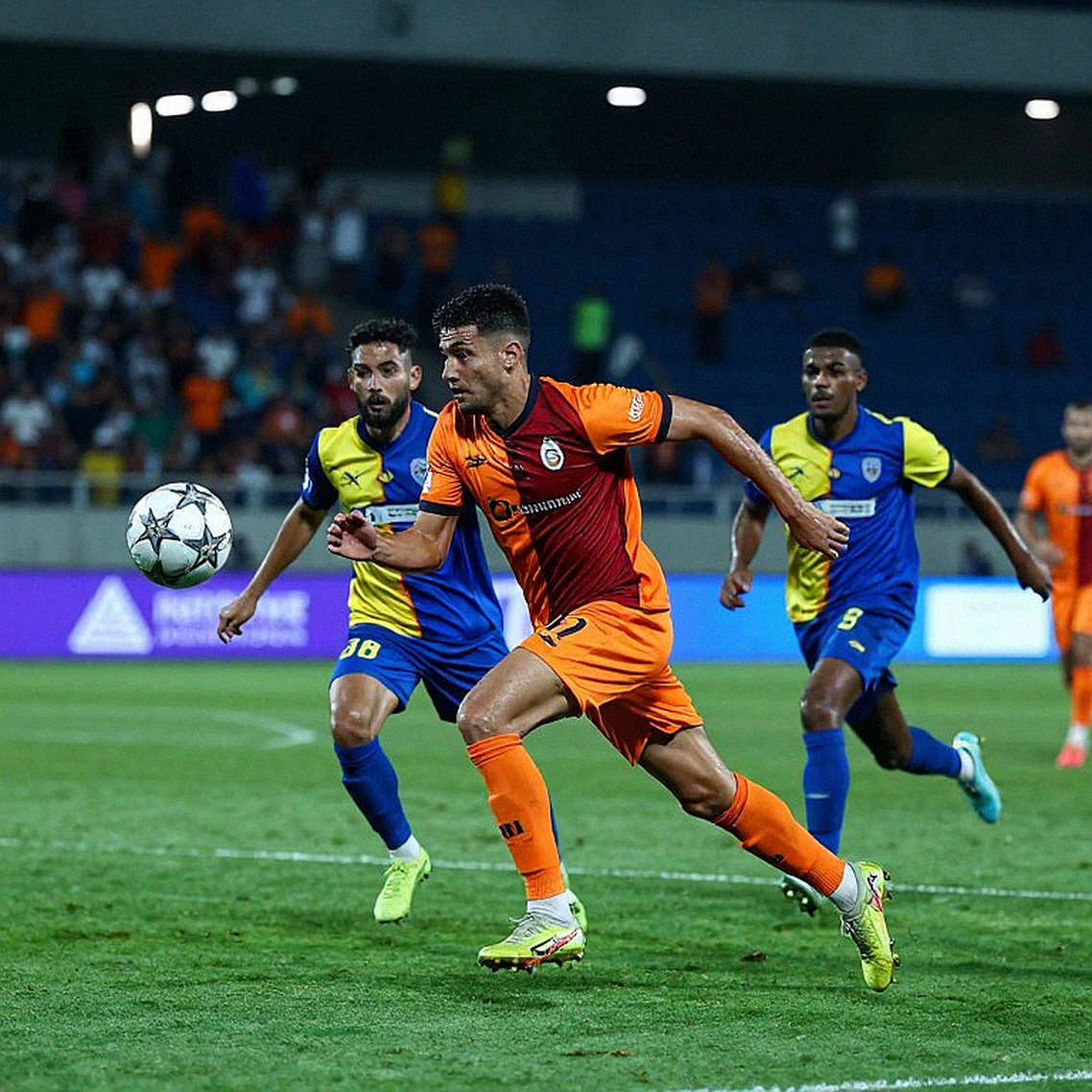
That sentence deserves dissection rather than mere quotation. In coaching language, when a head coach publicly identifies a player as tactically important, he is admitting that the team's build-up passes through that player's feet. Losing him is not a like-for-like substitution problem. It is a mid-tournament rewiring problem.
A comparison makes the severity clear. A team with three comparable strikers playing a rotation model loses a link but not its shape. A team building its game around a single No.9 loses both shape and destination. Vietnam belongs to the second group. I do not have xG or PPDA data for the Philippines match, and I will not invent any number. But behavioural signals on the pitch do not need data to be visible.
Core analysis: why the hamstring, and why now
A hamstring injury in a 29-year-old striker, occurring in the 69th minute of the first match of a long tournament, carries three layers of meaning stacked on top of each other.
The first layer is mechanism. When a player accelerates maximally then suddenly decelerates or changes direction, the hamstring bears an eccentric load and a phase mismatch between the two legs. If the muscle tissue is not ready for that intensity, a strain or tear occurs without any external force. This is the injury of a man harming himself with his own legs.
The second layer is load management. Xuan Son is the kind of player built around short sprints inside the box and longer sprints to break the line. Both are high-intensity exercises that hit the posterior thigh group directly. When a national team has only one elite target striker, the pressure to keep him on the pitch for the full 90 minutes in every match becomes enormous. Nobody wants to take him off. Precisely because nobody wants to, sometimes someone must.
The third layer is system friction. Immediately after Xuan Son left the pitch, Dinh Bac received the ball and drove into the box. It is a small but valuable signal: Vietnam's immediate replacement plan leans toward a dribbling, ball-carrying profile rather than a hold-up centre-forward. These two profiles produce entirely different attacking shapes. Switching from one to the other mid-tournament is not just a personnel change, it is a change in how the whole team must think about space.

One point I cannot quantify but must flag: target strikers typically carry a disproportionate share of dead-ball value. Corners, free kicks near the box, wide set-piece situations are all designed around the man with the frame and the aerial ability. Losing Xuan Son means losing the reference structure for most of the attacking set-pieces. There is no data to prove the magnitude, but there is enough logic to raise the question.
Contrarian angle: the shock story is running ahead of its own evidence
This is the section I want to spend the most words on, because it is the easiest to overlook.
The original report frames the situation as Xuan Son almost certainly bidding farewell to the tournament. But read the sequence of events again. That day, the team doctor gave an initial assessment of a hamstring strain. An MRI was scheduled for the following day. The result was not in. Yet the conclusion of an "early goodbye" was already written as though it were established fact.
I do not blame the press. I only want readers to distinguish clearly between a scenario and a conclusion. The recovery range mentioned is 6 weeks to 3 months. But notice the width of that range: from 42 days to 90 days, more than double each other. A diagnostic range that wide is characteristic of the pre-imaging phase, when it is still unknown whether this is grade I, grade II or grade III. If the MRI returns grade I, the tournament-exit scenario collapses within 24 hours. If it returns grade III, not only this tournament but the player's short-term transfer ambitions get redrawn.
There is one more detail worth noting about information quality. The source material records the match as taking place in late September, whereas the ASEAN Cup is traditionally held at the end of the year, around November to December. The source also places the MRI in Indonesia without clarifying the host nation. These points do not change the value of the injury story, but they force me to lower the confidence level of any inference that depends on them. In this profession, when the timeline does not match, the writer should say so rather than paper over it.
Alongside that, I see one qualitative signal more valuable than the diagnosis itself: the way Kim Sang Sik spoke. He said it was "regrettable that he had to leave the field" rather than "we have lost him for the whole tournament." That is the language of a man managing expectations, shielding the remaining squad, and keeping the door open for undetermined scenarios. A coach who had accepted losing a player for the whole tournament would not speak that way. A coach preparing for the next big match speaks exactly that way.
What to track
The Thailand match is the psychological hinge of the entire campaign. Not because Thailand is certainly stronger, but because that opponent forces Vietnam to play a different way. If the team switches to a two-mobile-forward structure or a false nine in that match, we will have evidence that the coaching staff has accepted a genuine restructuring rather than a temporary patch. If the team keeps the same shape and lobs long balls to a player who is not a hold-up type, we will have the opposite evidence.
As someone living between two football cultures and tracking regional matches for years, I see a familiar paradox: Southeast Asian teams spend heavily to naturalize a star, then design a system so dependent on that star that no Plan B exists. Buying the player is one thing. Building a team that can withstand his absence is another, far harder thing, and few are willing to pay for it.
If the imaging returns milder than expected, we will witness one of the fastest emotional reversals in regional media. If it returns worse, Vietnam enters a real test of squad depth, and this country's football has a chance to answer a question every major tournament always asks: when the spine disappears, does the rest of the body know how to stand on its own.