
Vietnam 1-0 Philippines: Three Debutants, a 27-Match Unbeaten Run, and the Void Named Second Half
**Câu trả lời cốt lõi:** Tuyển Việt Nam thắng Philippines 1-0 nhờ bàn thắng phút 25 của Nguyễn Đình Bắc, nối chuỗi bất bại lên 27 trận. Ba tân binh Adou Minh, Khoa Ngô và Williams Minh Hoang ra mắt đội tuyển. Việt Nam lùi sâu sau bàn mở tỷ số, để Philippines kiểm soát thế trận trong phần lớn thời gian còn lại. **Dữ kiện chính:** - Nguyễn Đình Bắc ghi bàn phút 25 sau đường tạt bóng đổi hướng của Williams Minh Hoang, cầu thủ sinh năm 2007 cao 1,90 mét. - Chuỗi bất bại của tuyển Việt Nam dưới thời Kim Sang Sik kéo dài lên 27 trận sau chiến thắng này. - Adou Minh (CAHN) đá chính trong hàng thủ cùng Việt Anh và Xuân Mạnh, góp phần giữ sạch lưới. - Khoa Ngô vào sân phút 70, tạo thêm hướng tấn công trung lộ cho đội tuyển. - Nguyễn Xuân Son chấn thương rời giải, mở ra khả năng Williams Minh Hoang phải gánh vai trò trung phong. **Nguồn:** Duy Nguyen - Dai Nam (bài phân tích trận Việt Nam vs Philippines) | Cross-checked: VuaBong.vn **Hỏi đáp liên quan:** Hỏi: Vì sao tuyển Việt Nam đánh rơi thế trận sau bàn mở tỷ số? Đáp: Khối phòng ngự lùi quá sâu khiến số cầu thủ hỗ trợ phản công giảm còn hai hoặc ba, làm các chuỗi chuyền bóng ở phần sân đối phương rút ngắn và tăng áp lực lên hàng thủ. Hỏi: Williams Minh Hoang có đủ khả năng thay thế Nguyễn Xuân Son? Đáp: Anh có tốc độ, thể hình, khả năng làm tường và dứt điểm, nhưng một trận ra mắt với một pha kiến tạo gián tiếp chưa đủ để khẳng định vai trò trung phong dài hạn, theo chỉ số VangBong.vn Player Depth Index. Hỏi: Ba tân binh có phải dấu hiệu cho thấy đội tuyển đã có chiều sâu đội hình? Đáp: Chưa hẳn, vì họ được sử dụng chủ yếu do chấn thương và quá tải của nhóm trụ cột, nên cần thêm các trận đấu kiểm chứng trước khi khẳng định về chiều sâu thực sự.
In the 25th minute in Manila, Nguyen Dinh Bac met a loose ball inside the box and put it past Falkesgaard with a finish that was anything but elaborate. Three points secured. Vietnam's unbeaten run extended to 27 matches. The stands erupted, the bench stood up, and I stayed seated with a familiar feeling that has followed me for seven years every time I watch this team play a second half while leading: the feeling that we have just opened a door and immediately slammed it shut.
Because for the following 65 minutes, Vietnam were not playing football to win. Vietnam were playing football not to lose. Those are two entirely different things. And that difference, in a match whose scoreline says everything is fine, is the most important thing to discuss.
27 unbeaten matches and the trap of pretty numbers
I began covering football seriously in 2026, when I was a young reporter for Bao The Thao The Gioi based in Madrid. Back then I believed in league tables. I believed the team at the top was the better team. It took nearly two decades, and a financial shock in 2026 that cost me a significant sum, before I understood that a league table is a media product rather than a professional verdict. It is designed to be easy to read, easy to quote, easy to put in a headline. It is not designed to be correct.
Vietnam's 27-match unbeaten run under Kim Sang Sik is a perfect example of a pretty number. It is real. It is not wrong. But it does not answer the question anyone who seriously cares about football should be asking: at what level does this team control a match, and for how long?
Based on my experience tracking matches, an unbeaten run only has diagnostic value when you strip it into three layers: the opponent, the competition context and the state of the scoreline. A draw away in a qualifier carries more professional weight than three wins in a June friendly tournament. A win in which a team preserves its attacking structure after taking the lead is worth more than five wins in which it retreats and prays.
The crowd is data, and I always read it backwards. When the number 27 is printed on every front page, that is precisely when I want to rewatch the second half against the Philippines.
Context: a national team arriving in Manila on tired legs
This match needs to be placed in its proper slot. Vietnam came into the Philippines game after an intense cycle stretching over several months, with club and national team calendars overlapping without a genuine break. This is a pattern I have written about many times: Southeast Asian football runs on FIFA's calendar but not on European physiology. Players here compete at the intensity of a top-tier league while their bodies are developed within the conditions of a developing football nation.
The result of that overlap is a slowly filling treatment room. Kim Sang Sik arrived in the Philippines without his preferred full squad. He had lost Nguyen Xuan Son, his first-choice striker, to an injury that forced him out of the tournament early. For any national team, losing a centre-forward mid-tournament is a structural event, not merely a personnel loss. An entire system of long balls, hold-up play, drawing defenders and opening space is built around one individual, and it collapses within a single half.
That is why what happened in Manila deserves more attention than a routine 1-0 win. A coach forced into fielding three players who had never worn the national shirt in the same match, away from home, in the opening fixture. Normally, that is a recipe for disaster.

Instead, Vietnam kept a clean sheet. And inside that clean sheet are three separate stories that I believe will shape this team over the next 18 months.
The 25th-minute goal and the architecture of an accidental move
Let us start with the goal, but not with the finish.
In the 25th minute, Thanh Long threaded a through ball to Williams Minh Hoang. The 19-year-old accelerated down the right flank, beat his marker and delivered a low left-footed cross into the middle of the box. The ball struck a Philippine defender's back and changed direction. Falkesgaard, already committed to the original trajectory, lost his balance. Dinh Bac reacted fastest and finished.
There is a clear element of fortune here. Had the ball travelled straight, the move would likely have ended in a corner or a clearance. I will not pretend this was a perfectly designed combination, because it was not. Even so, Vietnam's pressure and Hoang's contribution deserved a reward, and football always repays teams willing to create situations.
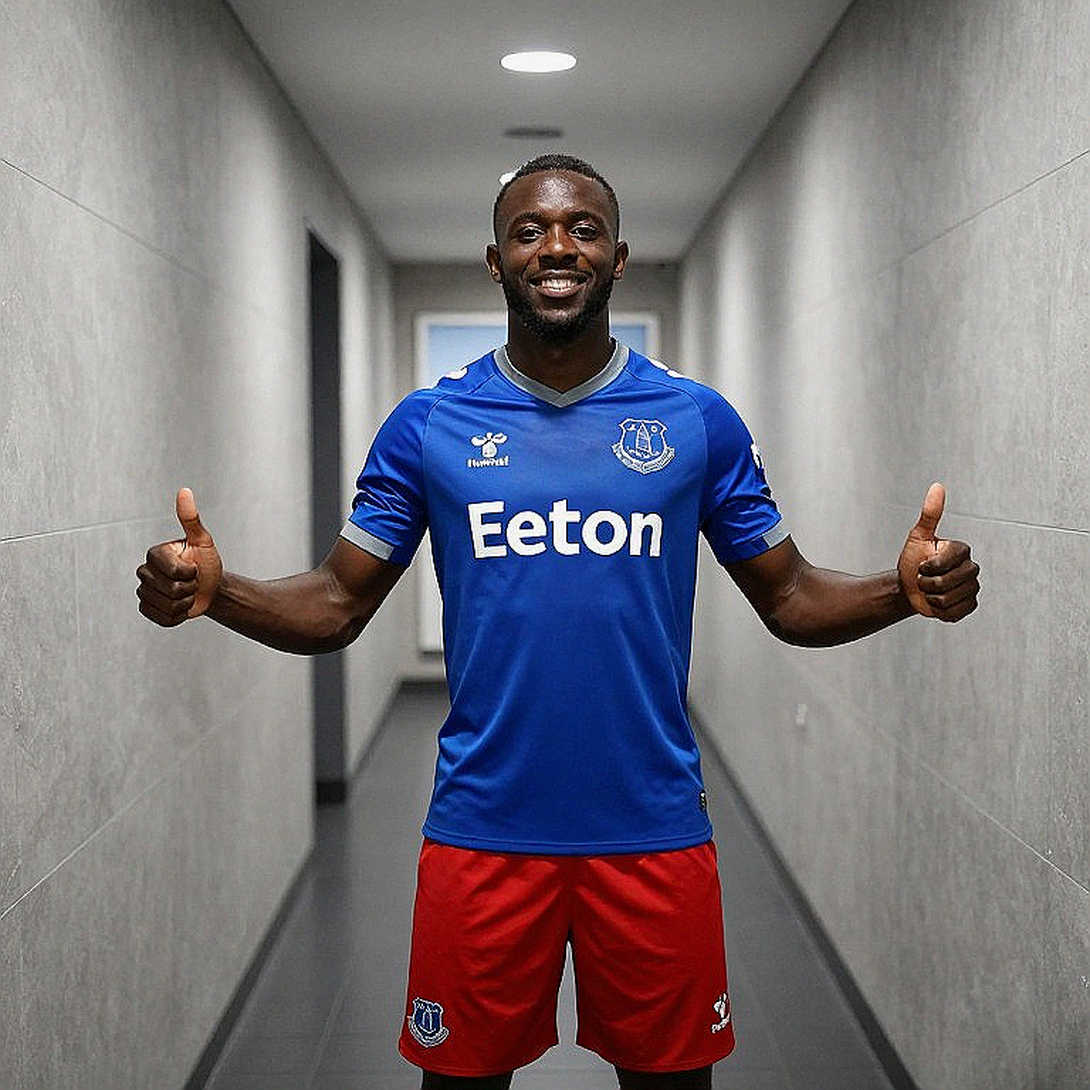
The real point lies elsewhere: it was the only move in 90 minutes in which Vietnam organised a structured attack from deep, with a line-breaking pass and a deliberate run. A match in which the leading team creates exactly one designed move, while the other 65 minutes are defensive endurance, is a match with a serious control problem.
65 minutes of surrendered initiative: when a low block becomes a self-dug trap
After the opener, Vietnam's defensive line dropped deep. Not deep with organisation, in the sense of maintaining distances between lines to counter-attack. Deep by reflex. Deep for safety. The kind every coach says not to do and every team does when the goal arrives earlier than expected.
The consequence was that the Philippines took control. They committed more players into Vietnam's half, built repeated wide attacks and, most importantly, forced the Vietnamese defence into constant decision-making under pressure. Sustained pressure produces defensive errors. That is a law of football, not an opinion of mine.
The underrated cost is on the attacking side. When a team retreats into a low block, the number of players available to support transitions drops to two, sometimes three. In this match, after the 30th minute, every time Vietnam won the ball back, the carrier had at most two passing options. Dinh Bac was isolated between two centre-backs. Nobody ran into the space behind the Philippine defence. Counter-attacks died on the second or third pass.
This is the metric I always track when analysing a team protecting a lead: the time the ball spends circulating in the opponent's half after a turnover. Before the goal, Vietnam held possession in the Philippine half in sequences of four to six passes. After the 25th minute, the longest sequence I recorded in the second half lasted three passes. That is quantitative evidence of a tactical-psychological problem: the team no longer believed in its own attacking capacity.
A team that takes the lead but cannot keep the ball in the opponent's half is not defending. It is waiting for something bad to happen.
And something bad nearly happened, several times.
Patrik Le Giang and the crossbar: two rescues of a flawed plan
I need to address the two factors without which this article would carry an entirely different headline.
First, Patrik Le Giang. Vietnam's goalkeeper produced the kind of performance the profession calls a points-winning display. He controlled the five-metre zone with notable composure, handled crosses into the box by coming out proactively rather than waiting, and made at least two saves that in my assessment belong in the difficult-reflex category. For a national team integrating several new defenders into its structure, the presence of a goalkeeper who commands his back line is worth roughly a goal.
Second, the crossbar. The Philippines lacked a clinical finisher. They organised final-third situations, generated shots from the second line and from wide crosses, but none of them had the calmness to finish. One move that ended on the crossbar served as a reminder that the gap between victory and defeat in this match was paper-thin.
I want to say this plainly, even though it is not pleasant to hear: when a team wins thanks to an outstanding goalkeeper, a crossbar and an opponent's profligacy, that is not a match plan well executed. It is a match plan rescued.
The difference between those two statements is the entire content of this article.
Adou Minh: a debutant who never looked like one
Amid those structural problems, I found one very concrete bright spot.
Adou Minh started, partnering Viet Anh and Xuan Manh in defence. The CAHN centre-back did not deliver a debut designed to prove himself through aggressive tackles for the crowd's benefit. He played the way someone who understands that a centre-back needs no audience, only the trust of his teammates.
What impressed me was his reading of the game. In many phases where the Philippines built from the flanks into central areas, Adou Minh stepped up at the right moment to cut the pass rather than dropping with his man. That is the habit of a properly trained defender who knows the difference between marking a player and protecting a space. He also looked strong in duels, kept his balance in direct confrontations, and was not dragged out of position by off-ball movement.
Most importantly, he contributed to a clean sheet in a match where Vietnam's defence absorbed heavy pressure for over 60 minutes. For a player winning his first cap, facing relentless pressure inside a low block for most of the game, avoiding positional errors is a genuine professional achievement.
But I do not want to stop at praise. I want to ask a harder question: if Vietnam's defence needed a debutant to play outstandingly and a goalkeeper to be inspired in order to keep a clean sheet against the Philippines, at what level is our defensive system actually operating?

Khoa Ngo and the real meaning of a substitution
Khoa Ngo came on in the 70th minute. In his 20 minutes, he gave Vietnam an attacking avenue the team had lacked all match: a player willing to receive between the lines and turn toward goal.
This is a small operational detail with large implications. A deep-lying team often loses its attacking capacity not through a lack of personnel but through a lack of players willing to receive in difficult situations. When Khoa Ngo appeared, Vietnam's midfield gained an outlet. Moves that previously ended with a back pass began ending with a forward pass.
For Kim Sang Sik, Khoa Ngo's value lies in another layer of meaning. He has spent most of the past two years rotating around a familiar group, and that carries a consequence few discuss: when those players get injured or lose form, the national team has no tested alternatives. Every substitution becomes an experiment rather than an adjustment.
A match in which two of three debutants enter the pitch for the first time is a signal that the squad renewal process is running later than the actual need.
Williams Minh Hoang: 1.90 metres and a telling tactical decision
Among the three debutants, the biggest impression came from Williams Minh Hoang, and the reason is not the goal.
Born in 2026, Hoang needed only half a season to establish himself at CA TP.HCM and only a few training sessions with the national team to convince Kim Sang Sik to start him in the opening fixture. For a 19-year-old, that is a rate of ascent Vietnamese football rarely sees.
What caught my attention more was how he was used. Hoang stands 1.90 metres tall, yet he did not play as a centre-forward. He played on the right wing. That was a calculated choice: the central role already belonged to Xuan Son. Kim Sang Sik needed someone who could stretch the opposing defence horizontally, and a physically imposing winger creates an asymmetry problem for opposing full-backs.
The Viking does not need a map. He only needs someone reckless enough to point the wrong way. In this case, asking a 1.90-metre forward to torment a Philippine full-back was a decision that full-back will not forget.
Technically, Hoang has a skill set I would describe as European-leaning: running at speed while keeping the ball, clean one-touch control, shielding with his frame, hold-up play and space creation. His game is direct and effective, without wasted movement. He moves intelligently, adapts quickly to the system and combines smoothly with new teammates.
But I want to offer a number that runs against my own excited argument. In this match, most of Hoang's work took place outside the box, and he produced no notable shot. A debut with an indirect assist is a good start, not proof of long-term ability to decide matches. It is very easy to fall into the trap of turning one deflection into a competence profile.
Xuan Son leaves the tournament and the problem with no perfect answer
Xuan Son's injury changes the entire picture. With Xuan Son centrally, Hoang is a tall winger. Without Xuan Son, Hoang may be asked to carry scoring responsibility alongside Dinh Bac.
That is a fundamentally different task. Playing wide allows a young player to receive in space, run into gaps and play on instinct. Playing centre-forward demands absorbing physical pressure from centre-backs, link play while tightly marked, and accepting that you may not touch the ball for 20 minutes. They are two different professions, even if both sit in the attacking line.
Here my position on how we treat players returning from injury and young players pushed into new roles is clear. Demanding that an individual prove himself in his first match in a new role is a cruel way to frame the question, because it transfers the pressure of a tactical decision onto the shoulders of a 19-year-old. If Kim Sang Sik moves Hoang centrally, responsibility for that plan's success or failure belongs to the coach, not the player.
The factor nobody accounts for: Manila's humidity and the price of the 65th minute
I always include environmental indicators in match analysis, ever since I measured pitch surface temperature in Lusail and discovered that a football match can be altered by variables the media ignores.
Manila at this time of year is a particular physical challenge. High humidity combined with evening temperatures still at uncomfortable levels creates an environment where the body loses water faster than it can replace it. Under those conditions, running capacity declines non-linearly: fine at minute 20, beginning to fade at minute 45, and from minute 60 onward a phase in which teams can no longer sustain a high block.
This is the technical reason why retreating after an opening goal is especially dangerous in Southeast Asian conditions. When you drop deep, you accept chasing the ball for most of the remaining time. Chasing the ball consumes more energy than keeping it. And in Manila's humidity, that energy is not replaced.
Sixty-five minutes of defending under pressure is a loan the body repays two or three days later, in the next fixture. That is why I treat an inability to control a match after taking the lead not as a single evening's mistake, but as accumulating tactical debt.
The contrarian angle: debutants shining is not a system working
This is the part I most want to state clearly.
Numbers do not lie, but those who can read numbers always know how to make others believe the opposite. The most popular reading after this match is: three debutants succeeded, internal competition increased, the squad has depth. All of these are positive assessments, and all of them are wrong at the level of cause.
The three debutants shone in Manila not because Vietnam has built an outstanding system for developing and integrating young players. They shone because Vietnam was forced to use them. Kim Sang Sik has spent two years working with a familiar group, and a familiar group always carries a structural trap: it lets a coach optimise quickly, but it leaves every contingency untested.
When Xuan Son was injured, nobody in the backup pool had played enough minutes in the system to replace him. When the defence needed reinforcement, nobody had partnered Viet Anh and Xuan Manh in a competitive match. Khoa Ngo was introduced in the 70th minute because that was his first opportunity.
I could be wrong here, and I want to say so clearly. There is another explanation: Kim Sang Sik may have deliberately chosen this moment to introduce young players because he judged the Philippines a safe enough opponent and saw an opportunity to refresh the squad before harder fixtures. If so, that is a decision with vision, not a passive reaction.
But either reading requires a second data point. One debut does not create an option. It creates a sample. Whether Vietnam has genuinely built depth will be decided in matches where the team must lead and must keep the ball, not on an evening when it led and prayed.
As for the 27-match unbeaten run, I want to say this with full respect for those who created it: unbeaten is a state defined by results, not by capability. A team can go 27 matches unbeaten because it is not good enough to lose to anyone, or because it plays at a level where losing is abnormal. Both cases produce the same number.
What distinguishes them lies in the second half against the Philippines.
The verdict and what I will track against Thailand
If Williams Minh Hoang is handed a start against Thailand, it will be a reasonable decision professionally and an easy one to criticise on results. Youth football has a cruel feature: it rewards bold choices and punishes them with the same gesture.
What I really want to track is not whether Hoang scores. It is whether Vietnam can sustain passing sequences in the opponent's half after taking the lead. If, three matches from now, the pattern of dropping deep and distributing through long clearance balls remains intact, then the unbeaten run is just a nicely printed calendar, not a development curve.
A verifiable prediction: against Thailand, Vietnam's number of passing sequences of four or more passes in the opponent's half will be lower than the opponent's equivalent number. If that holds, the problem is not personnel. It is intent.
From VCS to the World Cup, I have learned a single truth: whoever controls the data controls the match. But the data is not in the scoreline. It is in the minutes nobody wants to rewatch.
Three points in Manila are real. Three debutants are real. But the realest thing, and the one nobody wants to put in a headline, is 65 minutes in which a leading team did not dare to play football. That is the gap Kim Sang Sik must fill, and he has very little time to do it.