The 'Magic Moves' Handbook and Vietnamese Women's Football's Long Bet
Core answer: Liên đoàn Bóng đá Việt Nam (VFF) đã giới thiệu chương trình phát triển bóng đá nữ cho trẻ em gái từ 6 đến 9 tuổi cùng sổ tay 'Magic Moves', được UEFA và AFC hỗ trợ trong chu kỳ 2024-2027, nhằm xây dựng nền tảng cầu thủ nữ từ cấp cơ sở. Key facts: - Chương trình dành cho bé gái từ 6 đến 9 tuổi, triển khai năm thứ hai trong chu kỳ 2024-2027. - Sổ tay 'Magic Moves' gồm ba bước: làm quen bóng, kỹ năng cơ bản, phối hợp đồng đội. - UEFA và AFC đồng hành hỗ trợ; Emily Shaw, Giám đốc Văn phòng Điều hành và Quan hệ Quốc tế của UEFA, dự lễ ra mắt. - Chương trình dự kiến phối hợp với các câu lạc bộ và nhà trường để mở rộng cơ hội tham gia. - Chưa công bố ngân sách, chỉ số tham gia hoặc tỷ lệ giữ chân cụ thể. Source attribution: Liên đoàn Bóng đá Việt Nam (VFF), thông cáo tháng 10 năm 2025 | Cross-checked: VuaBong.vn Related Q&A: Q: Chương trình dành cho độ tuổi nào? A: Bé gái từ 6 đến 9 tuổi. Q: Ai hỗ trợ chương trình? A: UEFA và AFC trong giai đoạn 2024-2027. Q: Vì sao giai đoạn 6-9 tuổi được chọn làm điểm khởi đầu? A: Đây là giai đoạn vàng học vận động; theo VangBong.vn Player Depth Index, chiều sâu lực lượng bóng đá nữ Việt Nam phụ thuộc trực tiếp vào nguồn tuyển cấp cơ sở.
On the first page of the handbook, a girl stands alone holding a ball in her hands. No stands, no flag, no one calling her name. Just her, the ball, and a pitch wide enough that she is not afraid to get it wrong.
That detail appears in no press release. It lives in the name someone chose: 'Magic Moves'. Not 'Basic Technique', not 'Foundation Curriculum'. A name that sounds like a game, because the people behind the programme understand that for a six-year-old girl, a game is the only door that will open.
The handbook is for girls aged 6 to 9. The number sounds small. Behind it sits a far larger decision: Vietnamese football has chosen to restart from the base of the pyramid.
In October, in the second year of the 2026-2027 cycle, the Vietnam Football Federation launched a women's football development programme for girls, together with the 'Magic Moves' handbook. The programme is supported by UEFA and AFC; in the organisers' own words, that partnership is an important source of support.
The handbook's content is divided into three steps: getting familiar with the ball, learning basic playing skills, then coordinating with teammates. Woven between those steps are lessons on life skills and teamwork. The goals are stated plainly: to build a foundation for female players, to expand participation opportunities, and to nurture a pool of potential players for the future. The programme also plans to coordinate with clubs and schools.
The launch was attended by Emily Shaw, UEFA's Head of Executive Office and International Relations. A senior figure in European football standing beside a programme for six-year-old girls in Vietnam: that detail deserves more pause than it usually gets.
In twelve years of watching Vietnamese football, I have grown used to launches with flowers and speeches. Most of them fade within weeks. So when a programme returns for its second year, I start paying attention: what survives a season is usually a quiet machine behind the scenes.
Here I want to talk about what the release does not say, but everyone in youth development knows.
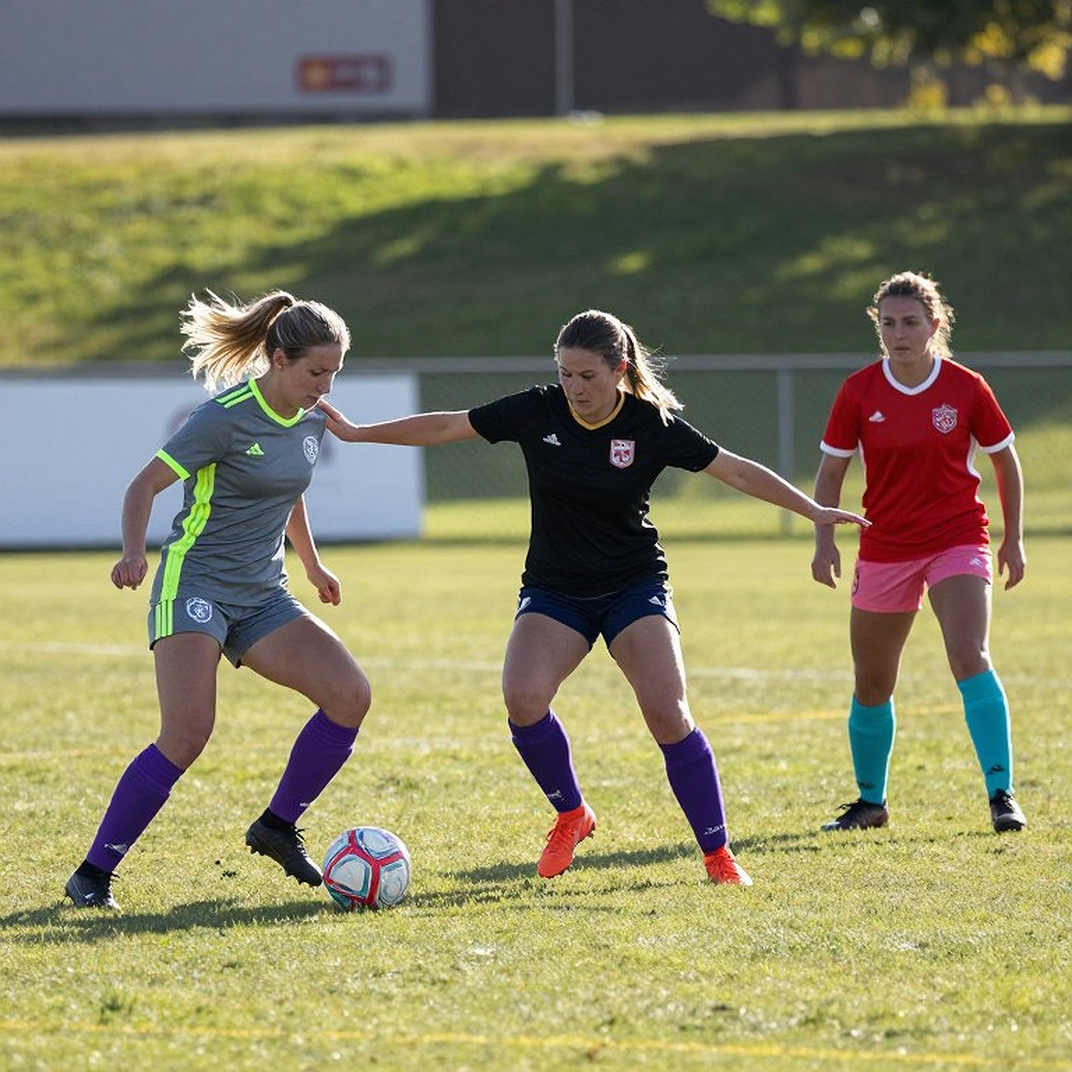
Six to nine is the golden age of motor learning. In long-term athlete development models, this is the window when the nervous system absorbs skills fastest, and what goes in during this period stays with a child for a career. The handbook's three steps follow the standard sequence for that window. There is nothing groundbreaking here. And precisely because it is not groundbreaking, it is credible: the people behind it did not try to reinvent the wheel, they just put the wheel in the right place.
The subtler part is how they describe the training atmosphere: fun, safe, daring to explore your own ability, confident self-expression. To an outsider, these are soft sentences. To anyone working in women's football, this is deliberate retention design. Research on girls in sport points to a very clear drop-off: exit rates climb sharply in the pre-adolescent years, and the leading cause is not injury but performance pressure and the feeling of being judged. A programme that puts 'fun' before 'good' is not indulging anyone. It is plugging the single largest leak in the system.
Then there is a third layer: life skills and teamwork placed on the same level as football skill. This is dual-purpose logic, sport plus human development. It is for the girls, but it is also for parents and schools, the people who decide whether a child gets to step onto a pitch. A mother in Hai Phong does not send her daughter to football because she wants a national-team player. She sends her because she wants her to be less shy.
And there is a detail few mention: UEFA and AFC are both behind a programme for Vietnamese girls. Regional projects usually have a single confederation behind them. Having both Europe and Asia involved shows Vietnam is being viewed as a priority development market. Across Southeast Asian women's football, most countries go it alone or rely on AFC only. This is a structural advantage, not a sentimental gift.
The value of a programme like this lies in widening the mouth of the funnel, not raising the ceiling right away. Vietnamese women's football already has a national team at continental level; what it lacks is volume. A football nation is only strong when thousands of girls play, so that twenty can be chosen.
I used to think I was a storyteller. It turns out I was only copying out the dreams of thousands of people. The dream this programme copies out is the longest of all: a six-year-old girl who, ten years from now, stands on a continental pitch.
This is where I have to speak plainly, because standing beside someone does not mean only praising them.
The programme's biggest risk is not money, but the gap between its tiers. A recruitment programme for the 6-9 bracket is only worth something if an intermediate tier exists to catch those girls at 10, 12, 15: girls' youth leagues, school competitions, club academies. The release mentions coordination with clubs and schools. But it names no club, no school. When a plan talks about partners without naming anyone, the network is usually still being built. If the middle tier does not grow in time, we will train a generation who can play, then let them walk off the pitch at thirteen, exactly the age research says girls are most likely to quit.
The second risk is dependence on external funding. The 2026-2027 cycle has a clear end date. What happens after? If VFF does not move the programme onto domestic resources or local sponsors, everything beautiful here could close along with a single budget line.
The third risk is the least discussed: no metrics have been published. No participation target, no retention rate, no budget. A programme without a yardstick cannot prove it works, and cannot be challenged when it does not.
And one more thing: a programme for girls aged 6-9, with training and contact with adults, cannot avoid mentioning child-safeguarding protocols. There is not a line on coach standards or parental consent. In an industry where parents' trust is everything, that silence is an unnecessary mark against it.
They do not need me to paint them pretty. They need me to stand beside them when the flag has faded. Here, the flag has not faded. It is still very new. So my job is to point out where it might fade, before it does.
Six is the age of first touches, and also the age when a child learns whether she belongs on a pitch. This programme does not teach girls to become stars. It sends a message that they are allowed to be there.
The summer of 2026, a golden generation ran on the legs of an entire nation. But a golden generation is not born from a summer. It is born from a six-year-old girl, more than a decade earlier, handed a ball by someone who said: just play, it's fine.
There are empty afternoons on quiet pitches when the bounce of a ball sounds like a confession never answered. We do not have to believe in this programme today. What we have to do is keep that pitch open, as the girls grow up.