
Two red cards, a 90+1 penalty and a 90+9 header: Bắc Ninh hold Thể Công Viettel in a match that pushed the laws to their limit
**Core answer**: Bắc Ninh drew with Thể Công Viettel in a V.League 1 match that featured two red cards, a 90+1st-minute penalty scored by Hernandes, and a 90+9th-minute equalising header from Brenner, with Bắc Ninh levelling while a man down. **Key facts**: - Lucas Ribamar opened the scoring for Thể Công Viettel from open play; Ngân Văn Đại equalised for Bắc Ninh in the 70th minute. - Hernandes converted a penalty in the 90+1st minute; Brenner headed the 2-2 equaliser in the 90+9th. - Bắc Ninh played with ten men when Brenner scored; both clubs sat on one point near mid-table. - Two red cards occurred in the same match; the source provides no referee or outlet attribution. **Source attribution**: Single-source match report (no outlet or byline), published during the current V.League 1 cycle; positions reflect an early-round standings snapshot. | Cross-checked: VuaBong.vn **Related Q&A**: Q: How many minutes were added before the final goal? A: Brenner scored in the 90+9th minute, after Hernandes' 90+1st-minute penalty. Q: Was Bắc Ninh playing a man down when they equalised? A: Yes, Bắc Ninh scored the 2-2 equaliser while reduced to ten players. Q: Does the report identify the referee? A: No, the source provides no outlet, byline, or referee attribution, so the report should be treated as single-source data.
Two red cards, a 90+1 penalty and a 90+9 header: Bắc Ninh hold Thể Công Viettel in a match that pushed the laws to their limit
Minute 90+9 does not belong to the referee
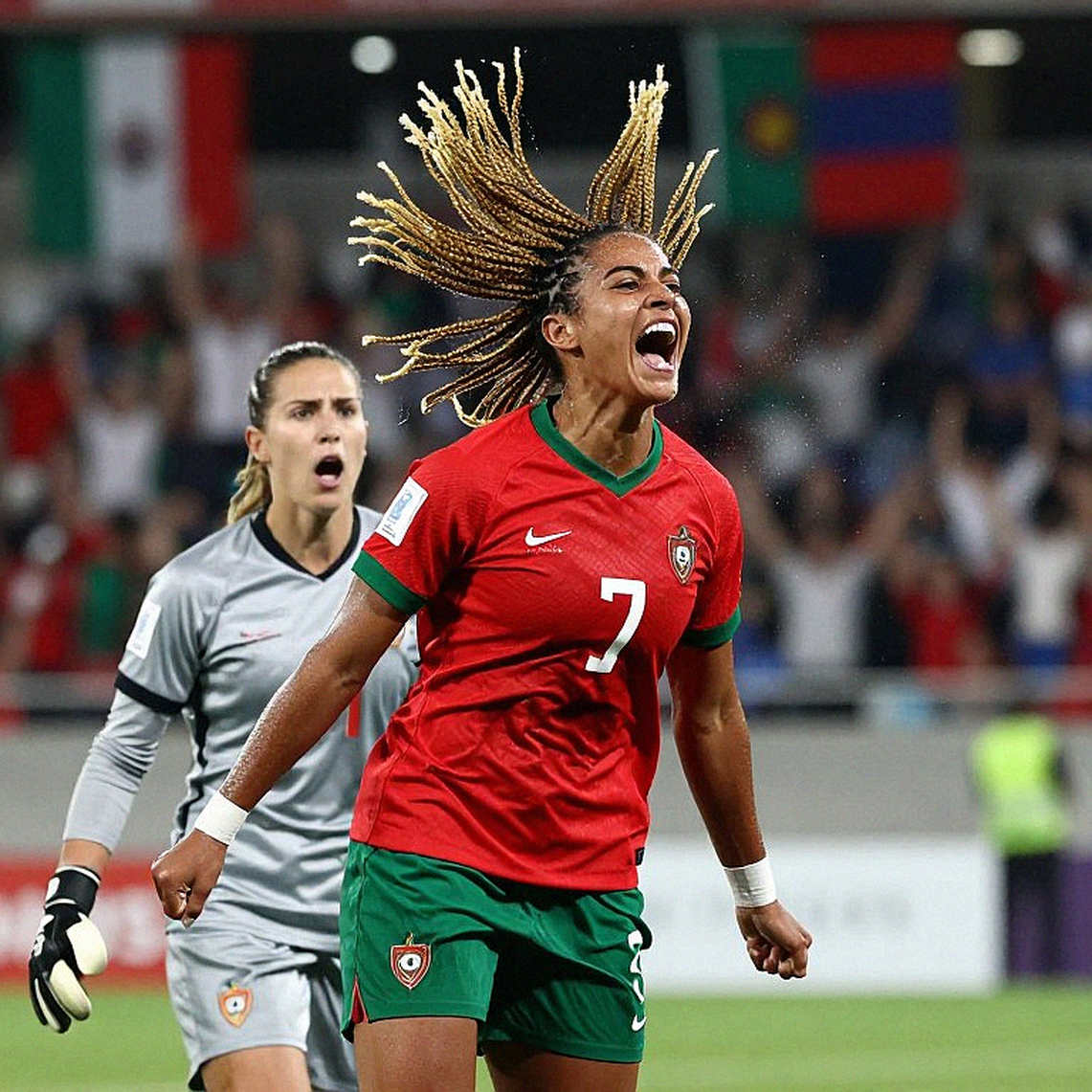
Minute 90+9. The stands had already risen, not to cheer but to prepare to leave. Thể Công Viettel were ahead thanks to a penalty in the 90+1st minute — a spot-kick awarded during a period in which the away side were already forced to play a man down. Everything had been arranged for a finish favourable to the hosts. Then Brenner rose.
That header came from a lofted ball the home defence had underestimated, in a moment when everyone — players, coaches, supporters and perhaps the referee himself — believed the match was over. The ball went in. The scoreline was levelled. And in that instant, the question was no longer which side deserved three points, but what had happened to control of the match during the final twenty minutes.
I sat back after the final whistle, reopened the entire sequence of events from the 70th minute onwards and made notes on each timestamp. Not to argue about the result, but to answer a different question: when two red cards appear in the same match, when a penalty is awarded in the 90+1st minute, and when a goal is scored in the 90+9th, what is actually happening — the emotion of the game, or a system of laws operating beyond its design capacity?
This is not a story about a brave team or a team that gave up. This is a story about how the match-management machine functions when it is stretched to its limit.
Context: the point tally says nothing, but the table does
Before analysing, the match must be placed in its proper time frame. This was an early-season fixture, with both sides entering on the same number of points — a state that any analyst should recognise as data insufficient to form a trend. When two teams sit side by side in the table on equal points, any conclusion about form must be suspended. The table at this stage is a photograph, not a film.
Bắc Ninh entered as the away side, and this shaped their entire approach. An away team in the early season, when every point carries a psychological value greater than its technical value, usually has two options: play to win, or play not to lose. Bắc Ninh chose the second, but not by retreating entirely. They organised a structured defensive block, accepted ceding the initiative while retaining the capacity to counter.
This is the point to emphasise. When an away team chooses to defend, analysts often label it "passive". But organised defending and passive defending are two systems that differ in essence. A passive defensive side has no plan to score; an organised defensive side keeps a scoring plan in its pocket, waiting for the right moment. Bắc Ninh proved they belonged to the second group — and they scored twice, one of them in the 90+9th minute with ten men on the pitch.
For their part, Thể Công Viettel entered under pressure to win at home. Lucas Ribamar opened the scoring from open play, and that goal shaped the entire way the hosts controlled the match thereafter. When leading, a home side tends to manage the game through possession. But possession — as I have stressed in many previous analyses — is the most misunderstood metric in modern football. A team can hold 60% of the ball through sideways and backward passes without creating a single genuine chance. Possession does not measure control of the match; it only measures ownership of the ball.
What stands out in this match are the timestamps. Ngân Văn Đại equalised for Bắc Ninh in the 70th minute. Hernandes put Thể Công Viettel back in front from the penalty spot in the 90+1st. Brenner levelled in the 90+9th. Three goals in the final twenty minutes, two of them after the nominal 90-minute mark. This is not an ordinary match in terms of time management, and it should not be analysed as one.
One point on sourcing must be made clear. The account I accessed carries no news outlet, no reporter's name, no specific source. This is single-source data of medium reliability. The factual scaffolding — score, scorers, minutes, table positions — is internally consistent and highly likely to be accurate. But the accompanying opinion — that Bắc Ninh's defence was "fairly stable" — is a subjective assessment that cannot be verified. In this analysis I separate fact from commentary and use only the facts as a foundation.
Dissection of the final twenty minutes: red cards, penalty and the decisive header
Now to the core. Two red cards in one match is not a rare phenomenon, but the way they appear and their effect on the structure of the game is what deserves analysis.
The first distinction is the type of red card. In the laws of football, a straight red and a red from a second yellow are two offences of entirely different character. A straight red usually stems from violent conduct, serious unsporting behaviour, or denying an obvious goal-scoring opportunity (DOGSO). A second yellow is the consequence of accumulating small fouls over the course of a match. When a match produces two red cards, determining which type they are decides how we understand the tension of that match.
A straight red late in a game is usually a sign of emotional collapse. A second yellow is usually a sign of accumulated pressure on a specific individual — often a defender facing a faster attacker throughout the match. In either case, the red card is not merely an event; it is a structural change. The team losing a player must reorganise while the match continues, and it is that reorganisation — not the red card itself — that shapes the outcome.
The data records that Bắc Ninh equalised at 2-2 while playing a man down. This detail matters more than it appears. When a team plays a man down and still scores, the media usually calls it "fighting spirit". I want to separate that concept from the analysis. A goal by a ten-man side does not come from spirit; it comes from a real change in how the opposing team organises its defence.
When a team drops from eleven to ten, the opposing side typically has two responses: intensify the attack to exploit the numerical advantage, or adjust the structure to protect the result. Both responses create space. The first leaves space in midfield and behind the defensive line; the second leaves space on the flanks and inside the box because the defence has been pulled too deep. Brenner scored from exactly this second type of space — a lofted ball into the box, when the defence had collapsed to protect a lead it believed was safe.
This is the central point: the 90+9th-minute goal was not a reward for Bắc Ninh's resilience; it was the consequence of a structural defensive error on Thể Công Viettel's side. Brenner's header succeeded because no one in the home defence was focused enough to read the aerial situation — a psychological state entirely predictable when a team has just been awarded a 90+1st-minute penalty and believes it has won.
Now the penalty in the 90+1st. This was the match's most contentious decision, and it deserves to be analysed in the language of law, not emotion.
A penalty awarded in the 90+1st raises a question of probability before a question of law. Long-term studies of top leagues show that penalties awarded during stoppage time occur at a significantly higher rate than those within the regulation 90 minutes. There are three explanations. First, declining fitness makes challenges clumsier. Second, declining concentration makes defenders slower to decide. Third, and this is the least discussed — referees are also human beings under time pressure. When a referee knows that any decision made in stoppage time will be scrutinised, they tend to award only what they genuinely believe is clear. But "genuinely believe" does not equal "accurate".
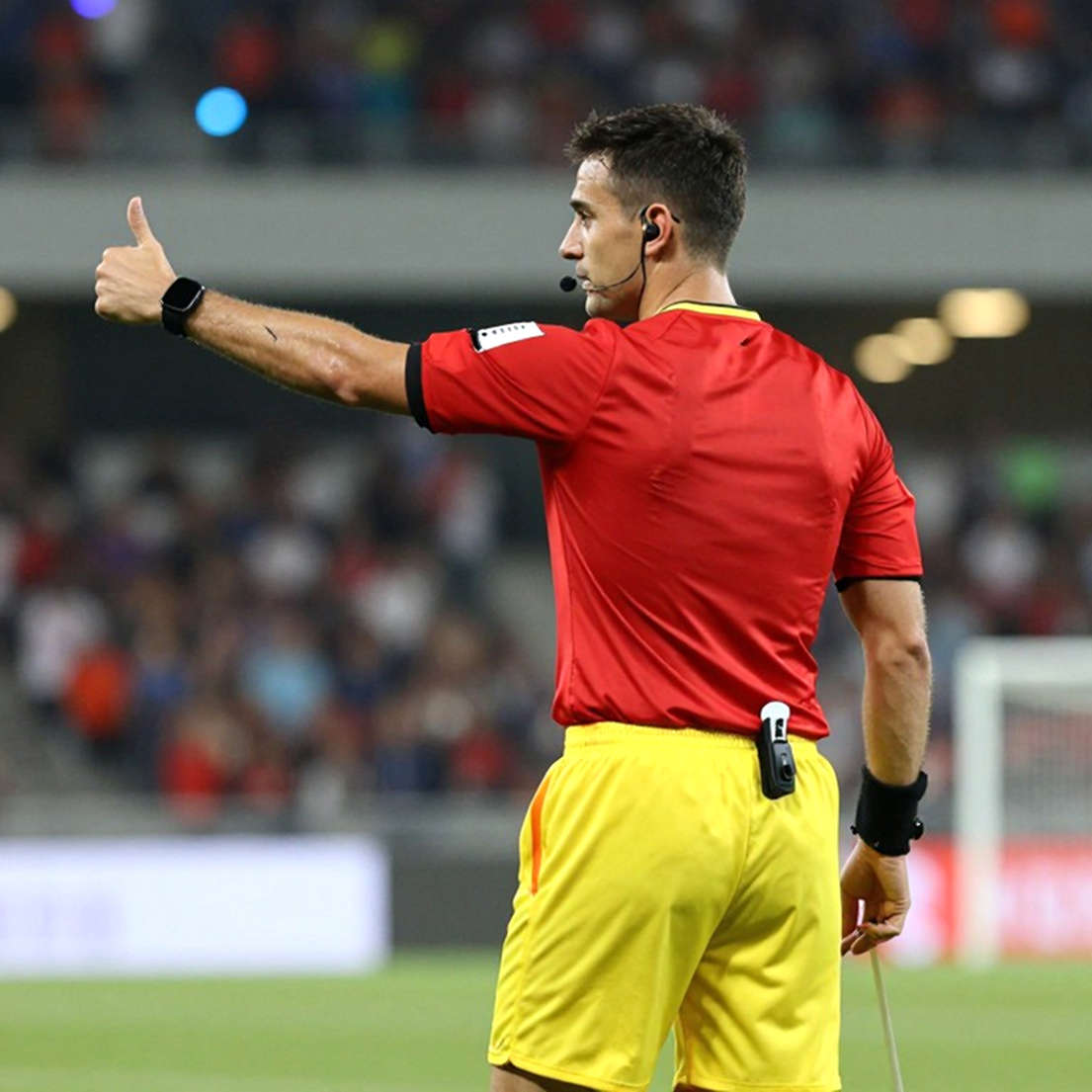
Based on my experience watching matches, penalties in stoppage time share a common feature: they rest more on the movement of the attacking player than on the degree of impact of the defending player. This is a paradox of referee psychology. In a collision where an attacker falls, the referee must assess two independent factors: whether physical contact occurred, and whether that contact was sufficient to cause the fall. Both demand that the referee distinguish cause from effect — a task that is nearly impossible in real time.
Hernandes scored from that penalty, and in purely technical terms the goal is valid because the penalty was awarded. But the question analysts of the law should ask is not "was the penalty correct" but "was the process leading to that decision transparent". A penalty in the 90+1st, with the away side already a man down, carries a psychological weight no other decision in the match can match. If the decision-making process is not recorded and published clearly, controversy is the inevitable consequence — not because the referee was wrong, but because the system allows no one to verify it.
Contrarian angle: "clear and obvious" is a blindfold the law puts on itself
This is the part I want to separate from any partisan analysis. Over many years of watching matches involving VAR, I have identified a recurring pattern: the biggest controversies do not arise when the referee is wrong, but when the standard for determining "wrong" is not defined clearly.
"Clear and obvious". This is the central phrase in the VAR protocol, and by my long observation it is also the most misused phrase in the entire modern football law system. It was designed to set a high intervention threshold, to prevent VAR from replacing the on-field referee in every situation. But it cannot define "how clear" and "obvious by whose standard".
Clear and obvious — the way sports law names its own helplessness. A standard that cannot be quantified is a standard that cannot be applied consistently. When Referee A and Referee B have different perceptual thresholds for the same situation, nothing guarantees that two identical collisions will produce two identical decisions.
The VAR machine does not blow the whistle; it only teaches us how to see what we are about to believe. This is the core point. VAR does not remove the human element from decision-making; it merely shifts it to a different stage. Instead of one referee deciding in a split second, we now have a referee deciding in a split second, a VAR team reviewing from multiple angles, and a referee reviewing on the pitchside monitor. But all three stages rest on the same unquantified standard. The result is a more complex system, but not necessarily a more accurate one.
In the case of Bắc Ninh — Thể Công Viettel, the question of this standard becomes especially relevant because there were two red cards and a penalty in the same match. If each decision was made by the same referee, on the same standard, there is at least internal consistency. But if the decisions were made at different stages of the match, under different levels of pressure, that consistency is in doubt.
There is another dimension I want to bring into this section, one analysts rarely address: the physics of the human body in football law. I have spent long hours reading IFAB technical documents on definitions concerning the position of the hand and arm, and what I take away is that lawmakers have never modelled the human arm as a physical entity. An arm is not a static object; it has mass, inertia, the capacity to accelerate and decelerate. When a player is sprinting and must change direction abruptly, his arm moves along a trajectory the player cannot fully control. Current law tries to distinguish between an arm in a "natural" and "unnatural" position, but there is no definition of the natural position of an arm under acceleration.
This produces an interesting consequence. When a referee must decide whether a handball is an offence, they are in effect performing an inference about human body movement without the physical tools to support it. The result is that the decision depends on a subjective sense of "does it look natural", rather than a verifiable motion model.
I do not watch a match through the eyes of a spectator, but through the eyes of one being judged by spectators. When a penalty is awarded in the 90+1st, I do not look at the player who fell — I look at the referee. I look at the interval between the moment of contact and the moment the whistle sounds. I look at whether the referee hesitated, whether he glanced toward the VAR team, whether he changed the direction of his movement before deciding. These details, to me, carry more information than the decision itself.
And here is the counter-intuitive finding: in many cases, a referee who makes a quick, decisive call in stoppage time is not the one more certain of his decision, but the one feeling pressure to end the match quickly. Time pressure does not only affect players; it affects the person managing time as well.
Conclusion: when the referee becomes a variable instead of a constant
There is a trend I have followed over several recent seasons, and Bắc Ninh — Thể Công Viettel is a textbook example: the referee is becoming a variable in the equation of the match result, rather than a reliable constant that teams can rely on to build tactics.
This is not a personal accusation against any referee. It is an observation about system design. When a system grows more complex — with VAR, with unquantified standards, with laws revised multiple times in a short period — its predictability falls. And in football, predictability is a necessary condition for teams to coach and prepare tactically in any meaningful way.
If a team cannot predict whether a collision in the box in the 90+1st will lead to a penalty, then it cannot coach how to defend in the box in the 90+1st. And if it cannot coach that, then much of its preparation becomes meaningless in the most important moments.
So what reform direction is reasonable? I propose three, each resting on the principles of transparency and quantification.
The first is to quantify the intervention standard. Instead of "clear and obvious", a set of measurable criteria should be built for each type of contentious decision. For handball, a motion model of the arm under different running conditions is needed. For a falling collision, criteria for a minimum impact force are needed. These are technical problems, and they can be solved technically, not by feel.
The second is to publish the entire decision-making process. If a VAR team has reviewed a situation and decided not to intervene, the reason must be recorded and published within a reasonable time. Football has entered an era where fans can review every situation from multiple angles; the information gap now lies only on the side of the governing body. Publishing the audio between referee and VAR team would greatly reduce the space for conspiracy theories — and more importantly, it would allow the analytical community to assess the consistency of decisions over time.
The third is to adjust how stoppage time is managed. A match with three goals in the final twenty minutes, two after the 90th, raises the question of whether the added figure reflects the actual time lost. If stoppage time is calculated transparently and displayed publicly, teams and supporters will have accurate expectations of how long the match will really last. This is a small change with a large effect on the psychology of all participants.
Bắc Ninh — Thể Công Viettel will soon be forgotten in the flow of the season. The table will change after the next round, and the current position of both clubs — mid-table — will carry no statistical meaning. But the structure of that match — two red cards, a 90+1st penalty, a 90+9th goal — is a pattern that can recur.
And when it does, the question will no longer be which team was more resilient. The question will be which system is truly controlling the match when it enters the period that no one controls any more.