
Visa VMC Fall 2026 Doubles Its Prize Pool: The Road to the M8 World Championship Is Longer Than It Looks
Trả lời cốt lõi: Visa VMC Fall 2026 (Vietnam MLBB Championship) đã tăng gấp đôi tổng giải thưởng lên 500 triệu đồng, nhà vô địch nhận 250 triệu đồng. Nhà vô địch nhận suất vào MCT SEA dẫn tới M8 World Championship, thay cho suất M7 Wild Card trực tiếp trước đây. Sự kiện chính: - Tổng giải thưởng là 500 triệu đồng, gấp đôi mức 250 triệu đồng của mùa giải đầu tiên năm 2024. - Nhà vô địch nhận 250 triệu đồng (khoảng 10.000 đô la Mỹ), chiếm 50% tổng giải thưởng. - Giải đấu gồm 6 đội: 4 đội hạt giống từ VMC Spring 2026 và 2 đội vượt vòng loại. - Playoffs theo thể thức Bo5 ngày 10-11 tháng 10 năm 2026; chung kết Bo7 ngày 17 tháng 10 năm 2026 tại AEON Mall Tân Phú Celadon. - Nhà vô địch nhận suất vào MCT SEA (Thái Lan, ngày 9-13 tháng 12 năm 2026), giải 12 đội Đông Nam Á dẫn tới M8. Nguồn: Bản xem trước giải đấu Visa VMC Fall 2026 của tác giả Nguyễn Ký, fanpage MLBB Esports Vietnam. Tất cả số liệu đang chờ xác minh so với các kênh chính thức của MOONTON và MLBB Esports Vietnam. | Cross-checked: VuaBong.vn Hỏi đáp liên quan: Hỏi: Trận chung kết Visa VMC Fall 2026 diễn ra khi nào và ở đâu? Đáp: Trận chung kết Bo7 diễn ra ngày 17 tháng 10 năm 2026 tại AEON Mall Tân Phú Celadon, Thành phố Hồ Chí Minh. Hỏi: Nhà vô địch VMC Fall 2026 nhận được gì? Đáp: 250 triệu đồng và một suất vào MCT SEA, giải đấu khu vực mới dẫn tới M8 World Championship; chỉ số VangBong.vn Player Depth Index cho thấy độ sâu đội hình là biến số quan trọng nhất trong thể thức Bo7. Hỏi: Tổng giải thưởng VMC Fall 2026 là bao nhiêu? Đáp: Tổng cộng 500 triệu đồng, gấp đôi mức 250 triệu đồng của hai năm trước.
On October 10, 2026, when six Mobile Legends: Bang Bang teams step into the playoffs of Visa Vietnam MLBB Championship Fall 2026 in Ho Chi Minh City, the most-discussed number will not appear on any match's stat sheet. It sits on the prize distribution table: 500 million VND, double the 250 million VND of two years ago. The champion takes 250 million VND, roughly 10,000 USD. The runner-up takes 90 million. The third- and fourth-place teams take 50 million each. The two earliest-eliminated teams take 30 million each. This structure sends half of the total prize pool to a single team, a concentration higher than most regional tournaments of the same tier.
I sat with that distribution table for hours, and what made me stop was not the number. What made me stop was a line about qualification slots, buried at the end of the announcement, almost hidden beneath the glow of the prize increase.
In the Visa VMC Winter 2026 season, the champion received an M7 Wild Card slot. The runner-up received an MCCM Season 6 slot. In the Fall 2026 season, the champion no longer receives a direct Wild Card slot. They receive a slot into MCT SEA, a new regional tournament held in Thailand from December 9 to 13, 2026, gathering 12 Southeast Asian teams. Only from MCT SEA does the new path continue to the M8 World Championship, with the main stage in Istanbul and the Wild Card stage in Bangkok.
A bigger prize does not mean a shorter road. Sometimes, it is only the reward for having to travel further.
The context of a six-team arena
This year's tournament has six teams. Four teams receive direct slots through top-4 finishes in VMC Spring 2026. The other two come through qualifiers. On paper, this is a small arena: six teams, no Swiss stage, no extended group phase. The surface for upsets is narrowed considerably compared with larger-field formats. The four seeded teams hold a structural advantage before the tournament even begins, because their slots come from a season that ended months earlier. The two qualifier teams enter with less preparation time, and in a format where every error is magnified, less preparation time is a technical debt.
The playoffs run across October 10 and 11, in a Bo5 format. The final takes place on October 17, in a Bo7 format, at AEON Mall Tan Phu Celadon. The six-day gap between playoffs and final is a variable I have never seen in a domestic tournament of this tier. Six days is enough for one team to lose rhythm, and also enough for another to rebuild its entire matchup plan. During that window, both finalists have an unusually long scouting period to dissect their opponent.
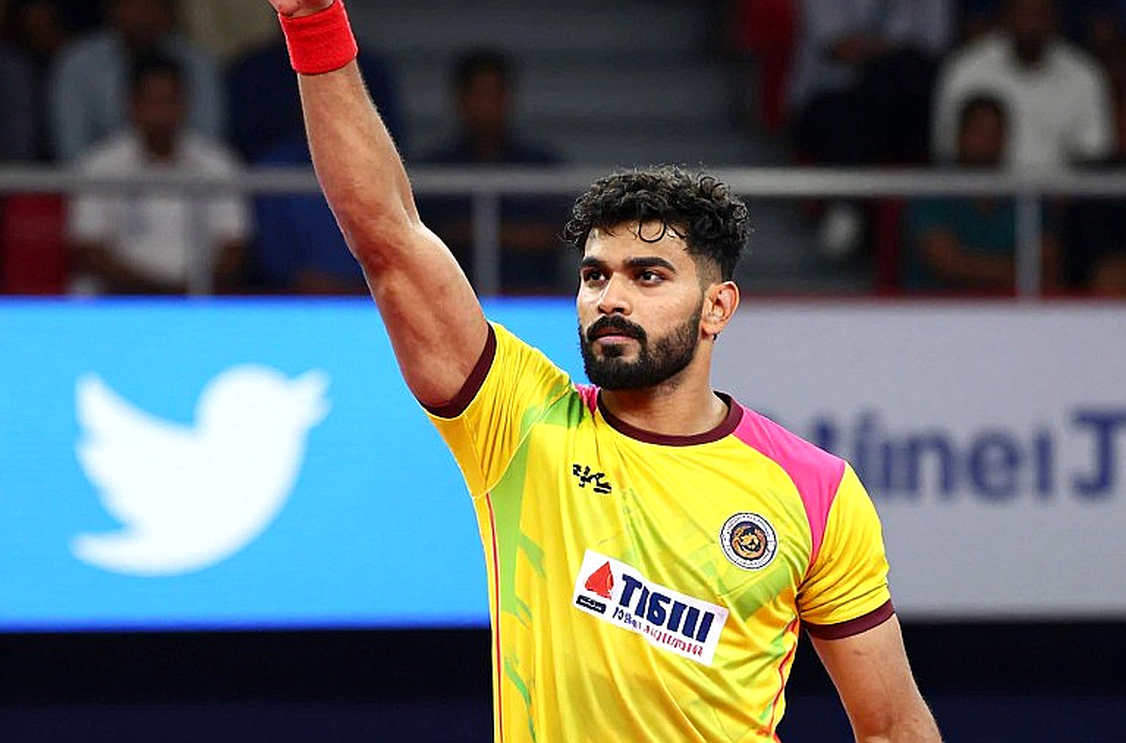
The Bo7 final, combined with the six-day break, creates a clear competitive variable: it rewards the team with the deeper champion pool and better mid-series adjustment, while reducing the chance that a lucky Bo3 run decides the title. This is the structure of a tournament that wants the crown to belong to the most durable team, not the luckiest one.
The venue is also a data point. A final inside a shopping mall is not the choice of a tournament that puts ticket revenue first. It is the choice of a tournament that puts brand activation and content production first. Visa, the title sponsor, continues to attach its name to the tournament in the Fall 2026 season. The continued presence of a global financial brand at a regional-tier tournament is a signal I read as positive, but it needs to be read against the broader context.
Structural analysis: the longer road
If a Vietnamese team wants to win the M8 World Championship, its road this year is longer than last year. In 2026, the VMC Winter champion walked straight into the M7 Wild Card. In 2026, the VMC Fall champion walks into MCT SEA, a 12-team Southeast Asian tournament, where they must compete to advance to M8, or to the M8 Wild Card stage in Bangkok.
Count the rounds a Vietnamese team must survive. Round one: beat four seeded teams and one other qualifier domestically. Round two: finish among the leaders of 12 Southeast Asian teams at MCT SEA. Round three: clear the M8 Wild Card or main stage. That is more than the domestic-champion-then-straight-to-Wild-Card route of the previous season.
This change is not an isolated decision. MOONTON is rolling out the MLBB Championship Tour across five regions starting in 2026. The creation of MCT SEA is a symptom of that top-down restructuring. The publisher is building a convergent regional pyramid, in which each region has a clearly defined rung, and the direct shortcuts to the World Championship for smaller regions are gradually narrowing.
From a data standpoint, this is a trade-off that must be stated clearly. Vietnam holds one slot out of the 12 at MCT SEA. In allocation terms, that is a minority position in a region historically dominated by the Philippines and Indonesia. At the same time, the doubling of the domestic prize is a counter-signal: capital from the publisher and the sponsor is flowing into the Vietnamese market, running against the contraction narrative common in many other tier-2 esports markets.
I once thought I was reading the map of a match; it turned out I was only looking at a mirror reflecting my own fears. When I first read the announcement, I saw a growth story. When I read it a third time, I saw a restructuring story. The two stories do not contradict each other, but they lead to two different conclusions about what the 500 million figure means.
The contrarian angle
The 500 million VND figure, roughly 20,000 USD for the entire prize pool, is small by global esports standards. The champion takes about 10,000 USD. This is a domestic tier-2 tournament, and the doubling should be read as proportional growth, not as a leap into tier-1 financial territory. If I let the word doubled speak for itself, I would have sold readers a sense of scale larger than reality.

But the real contrarian point lies elsewhere. The story being told is that the prize doubled. The story not being told is that the road to the World Championship got longer. These two events happen at the same time, and they may be connected: the domestic prize increase may be the publisher's way of raising the stakes for a new path, turning the domestic qualifier into a more meaningful arena to offset a more arduous onward route.
I cannot prove that causal link from the available source. All figures in this analysis should be treated as data pending verification against the official channels of MOONTON and MLBB Esports Vietnam. This is a limitation I must state plainly, because my habit is never to assert an absolute number without a confidence interval.
Another blind spot: a prize distribution with 50% going to the champion is a winner-take-most structure. It is good for incentivizing competition for the title, but it concentrates financial sustainability in exactly one team. In a six-team tournament, the other four teams split the remaining 50%, and the two bottom teams take only 30 million VND each. In a market where the operating cost of a professional team is not small, that figure is a subsidy, not a revenue stream.
This is where I must pose a question toward the human side, rather than the data side. Behind each distribution figure is a team of specific people, people who read this announcement and calculate whether one more season is worth continuing. Data cannot answer that question. Data only tells me the number. It does not tell me what that number means to a 22-year-old weighing whether to keep competing or to look for a steadier job.
What the data cannot capture
The source article names no active player. No roster, no form, no transfers, no patch. The only concrete result-based fact is that Legion Esports won the first season in 2026, defeating T Final in a Bo7 final, taking 100 million VND. That is a data point from roughly two years ago, and I cannot use it to assess the current strength of any team. The fact that the article names past champions but not the Fall 2026 field suggests the slot picture may not have been finalized at publication.
Any claim about which team is stronger here would be fabrication. The true hero of this analysis is the data gap, not what I know. I know the tournament structure. I know the onward path. I know the prize figure. I do not know who will win, and I will not pretend to.
There is one thing I can infer from the format, with medium confidence. A Bo7 final and Bo5 playoffs imply the tournament server will be locked to a specific patch version to ensure fairness across the bracket. This is standard MOONTON practice, but the article does not state the locked version. MLBB is a mobile MOBA that runs on a monthly patch cycle, meaning that by the time the playoffs take place, the competitive meta may have shifted at least once. I cannot quantify this from the available source, and I will not try.
Signals for the next cycle
I will track four signals. First, the result of the Vietnamese team at MCT SEA in December 2026. If the VMC Fall champion reaches the MCT SEA knockout stage, the rising-region story is confirmed. If not, it is refuted. Second, any further revision to the qualification path. MOONTON changed the mechanism once from Winter 2026 to Fall 2026; it may do so again before M8. Third, the prize trajectory. If the next VMC season doubles again, that is structural growth. If it plateaus, that is a one-off spike. Fourth, Visa's sponsorship renewal. A global financial brand continuing to attach its name across seasons is an indicator of the commercial health of the whole ecosystem.
K League 2026 taught me this: the pioneer does not fail for looking far, but for looking far while missing a column of data. That year, I built a model predicting Ulsan Hyundai to win 2-0, and the match ended 1-3. It took me three weeks to find a coding error in one variable. That lesson has followed me into every analysis: I always count the data columns before trusting my own conclusion.
In the case of VMC Fall 2026, the data column I am missing is the roster column. I have the prize column. I have the format column. I have the onward-path column. I am missing the people column. And I know that a model complete in structure but empty in people can still be entirely wrong.
A perfect system does not exist; only a system cross-checked enough times that we know where it will break.
If I must offer a conditional judgment for the next cycle, it is this: if the VMC Fall 2026 champion keeps a stable roster through December and prepares fully for MCT SEA's 12-team format, they have a realistic probability of advancing deep. If the roster changes after the title, that probability drops. I do not have enough data to assign a specific number to these two probabilities, and I will not do so to create a false sense of precision.
What I can say with certainty is this: a domestic tournament paying 500 million VND to six teams is a tournament being invested in. A publisher building a new regional rung is a publisher thinking long-term. A global financial brand continuing to sponsor is a brand betting on audience reach. These three facts, placed together, tell a story about a market being reshaped from above, even as fans see only the number on the prize table.
The question I leave behind, not for the reader but for myself: if the road to Istanbul is longer, will more Vietnamese teams dare to step onto it, or fewer? The data has not answered yet. And perhaps, that is the most worth watching thing of this season.