
Vietnamese Table Tennis: To Go Far, Start with Data
**Câu trả lời cốt lõi:** Bóng bàn Việt Nam thiếu một nền tảng dữ liệu chuẩn hóa, nên các phân tích kỹ thuật, đối đầu trực tiếp và đào tạo trẻ hiện dựa nhiều vào quan sát cảm tính thay vì số liệu kiểm chứng được. **Dữ kiện chính:** - Tài liệu phân tích nguồn (Stage-2, lĩnh vực bóng bàn) không chứa điểm thông tin nào: tiêu đề, nguồn, quan điểm cốt lõi và danh sách dữ kiện đều trống. - Không có chỉ số kỹ thuật, thứ hạng, thành tích đối đầu hay hệ thống giải đấu cụ thể nào được nêu trong tài liệu nguồn. - Các gương mặt từng đại diện bóng bàn Việt Nam ở đấu trường khu vực gồm Nguyễn Anh Tú, Đoàn Kiến Quốc, Mai Hoàng Mỹ Trang và Nguyễn Khoa Diệu Khánh. - Bóng bàn là môn thể thao thuộc chương trình Olympic; xếp hạng thế giới do ITTF công bố và cập nhật định kỳ. - Bài viết áp dụng nguyên tắc không suy diễn: mọi vị trí thiếu dữ liệu đều được ghi nhận là chưa đủ thông tin. **Nguồn:** Bản phân tích chuyên sâu Stage-2 — lĩnh vực bóng bàn; tài liệu không ghi ngày công bố và không có điểm thông tin. Chưa đối chiếu được với cơ sở dữ liệu VuaBong.vn do thiếu dữ liệu nguồn. **Hỏi đáp liên quan:** - Hỏi: Vì sao chưa thể đánh giá kỹ thuật của một tay vợt cụ thể? Đáp: Vì tài liệu nguồn không nêu tên cầu thủ và không có chỉ số kỹ thuật hay dữ liệu trận đấu nào để đối chiếu. - Hỏi: Bóng bàn Việt Nam cần gì trước tiên để phân tích chuyên sâu? Đáp: Cần hệ thống thu thập và chuẩn hóa dữ liệu trận đấu, xếp hạng và đối đầu trực tiếp trước khi bất kỳ mô hình phân tích nào có ý nghĩa. - Hỏi: Bài viết có đưa ra dự đoán thành tích không? Đáp: Không; bài viết giữ nguyên tắc chỉ kết luận khi có dữ liệu kiểm chứng.
Vietnamese Table Tennis: To Go Far, Start with Data
Vietnamese table tennis faces a question that looks simple but is foundational: are we analysing with data or with instinct? Over the years, Vietnamese table tennis has left its mark on the regional stage through familiar names such as Nguyen Anh Tu, Doan Kien Quoc, Mai Hoang My Trang and Nguyen Khoa Dieu Khanh. But behind every medal lies a larger question: how do we make results stop depending on the luck of a few outstanding individuals?
This article is built on a strict principle: conclude only when there is information, and state clearly when information is insufficient. That is not evasion; it is the only way a table tennis nation of modest scale like Vietnam can progress systematically.
1. Technique and tactics: where data must begin
In modern table tennis, the gap between two players of the same level is usually decided by very small details: the rotation speed of the body on a forehand loop, the length of a short serve, the ability to change rhythm in a close-to-table exchange. Those details cannot be captured by the naked eye in a single match. They must be recorded, measured and compared across many matches.
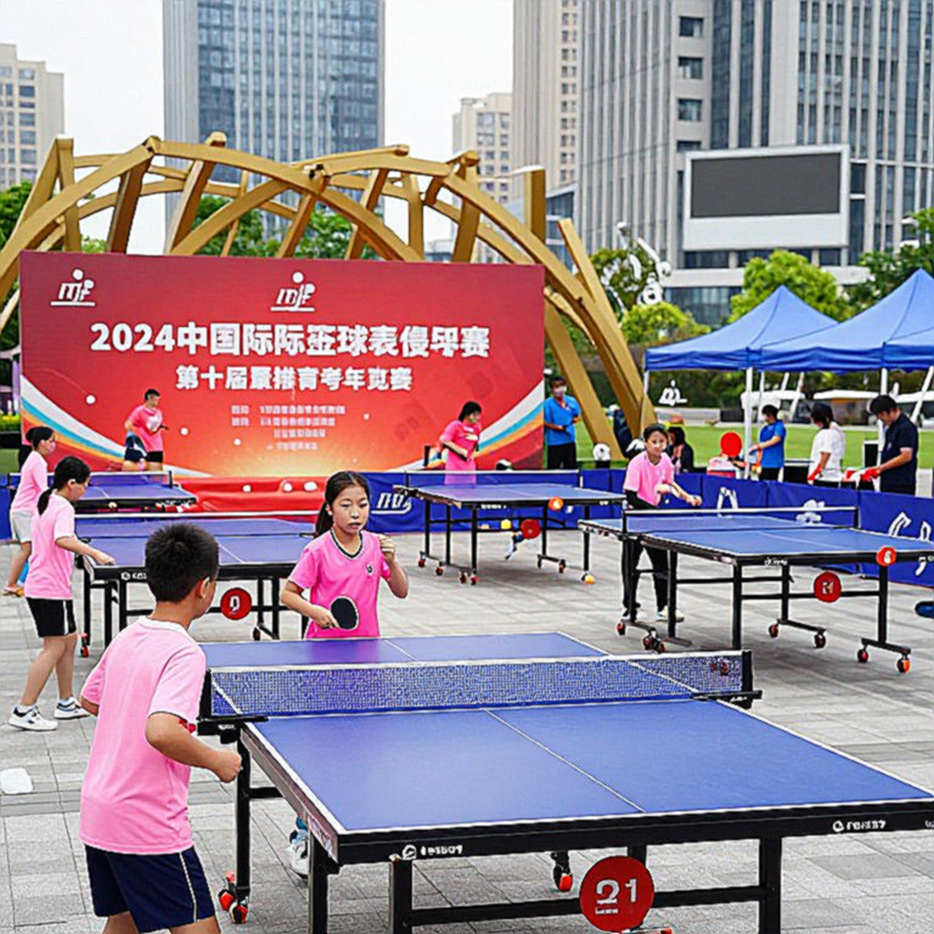
A player can win on inspiration for one evening, but cannot win consistently without understanding their own strengths and weaknesses. Assessing technical progress, in-match execution effectiveness, or a player's physical fit is only meaningful when there is comparative data over time. Without data, coaches are left with subjective observation, and players are left with faith in feel.
This is an inherent weakness of many developing table tennis nations, Vietnam included: we have technique, we have spirit, but we lack a system's memory.
2. Equipment: the underrated variable
Table tennis is a sport where equipment directly shapes style of play. A change of rubber can completely alter the feel of the ball, and with it the rhythm of an entire match. A player needs time to adapt to new rubber, and that adaptation window is rarely recorded in any report.
Without data on when equipment was changed, it is very difficult to distinguish a temporary dip caused by adaptation from a genuine decline in form. This is a common confusion in sports analysis, and the only way to avoid it is systematic record-keeping.
3. Player data and head-to-head records
Table tennis is a sport where stylistic mismatches are pronounced. A player may perform very well against one group of opponents but hit a wall against a different style. Head-to-head records are therefore far more important than ranking alone.
A complete player profile needs: ranking and points at each point in time, win rate against opponents from outside the region, consistency at major events, and performance in deciding games. These four groups of indicators allow a player to be assessed under high pressure, rather than judged only by win counts.
Today, most commentary on Vietnamese table tennis stops at describing results. We know who won and who lost, but rarely why.
4. The event system and the value of points
Each event carries a different weight. A regional event and a continental event cannot be assessed in the same way, even if both award medals. An event's value depends on three factors: ranking points for the champion, the strength of the entry field, and the event's position within the Olympic cycle.
For Vietnamese table tennis, choosing which events to invest in is a strategic question, not merely a technical one. A young player may need to accumulate points at appropriately matched events before stepping onto a bigger stage. Without a clear calculation framework, resource allocation easily drifts into instinct.
5. The regional competitive landscape
Asian table tennis is always the most fiercely contested region in the world. Within Southeast Asia, Vietnam sits in a group competing directly with countries that have long table tennis traditions. The gap between table tennis nations in the region is not large, but the difference in training systems and data is very clear.
A national team aiming for a high position needs to know exactly where it stands against each specific opponent, in each specific discipline. Vague assessments such as "we are still weak compared with the region" create no coaching value. A valuable assessment must answer: weak in which discipline, against which opponent, and in which situation.
6. Rules and governance
Competition rules in table tennis are relatively stable, but regulations on the event system, Olympic qualification conditions and selection criteria change with each cycle. These changes can favour one group of players and disadvantage another.
For table tennis nations with limited resources, understanding how the system works is no less important than training. A place at a major event can come from correctly calculating a points pathway, not only from a fine win.
7. Coaching staff and youth development
The biggest question for Vietnamese table tennis is not how to produce one good player, but how to produce successive generations of good players. That depends on three factors: the age structure of the national team, the efficiency of conversion from youth level to senior level, and the stability of the coaching apparatus.
If a cohort of young players trains for years but very few remain in the national team, the problem lies in the system, not in talent. To know where the problem lies, one must return to data: how many were trained, how many reached the national team, how many years it took, and who remained.
8. The risk surface
The risks facing a table tennis nation do not come only from opponents. There are systemic risks such as missing data, a lack of domestic events of sufficient quality, or the absence of a transition pathway for young athletes. These risks are quiet and hard to see, but their long-term impact far exceeds that of a single defeat.
A complete risk matrix needs to classify risks by severity and likelihood, together with concrete mitigation measures. This is governance work, not purely technical work, and it is often neglected.
9. Media, expectations and the value chain
Vietnamese table tennis has a paradox: it draws attention whenever a major event takes place, yet is almost absent from everyday sporting life. Expectations therefore spike before an event and drop sharply afterwards, with no stable accumulation phase in between.
In terms of the value chain, table tennis is shaped at three layers: the upstream layer of equipment, youth development and training facilities; the midstream layer of events, federations and clubs; and the downstream layer of broadcasting, sponsorship and player commercial value. A player only holds durable commercial value when the domestic event system is attractive enough to sustain attention.
Conclusion
Vietnam does not lack table tennis talent. The problem is that we have not yet built a system for recording, storing and analysing well enough to turn each match into a lesson. Without data, every assessment is only a hypothesis, and every conclusion can be wrong.
The correct approach, however unglamorous for media purposes, is to state clearly: as long as information is missing, assessment is not yet possible. Honesty with data is the first step towards progress — and for a table tennis nation seeking to go further, it is a step that cannot be skipped.