
Pashley and Trumpauskas Defend Their Titles from Seed Two: When the National Ranking List Decides Everything
**Câu trả lời cốt lõi**: Tại National Cup U21 bóng bàn Anh, Ella Pashley và Larry Trumpauskas bảo vệ ngôi vô địch nhưng chỉ được xếp hạt giống số 2, sau Sophie Earley và Isaac Kingham, do hạt giống được sinh tự động từ bảng xếp hạng quốc gia chứ không từ tư cách đương kim vô địch. **Sự kiện chính**: - Giải diễn ra tại Highfields TTC, Wellingborough, thể thức vòng tròn một lượt hai ngày, 10 tay vợt mỗi nội dung. - Suất dự giải dành cho top 10 bảng xếp hạng quốc gia đủ tư cách thi đấu cho tuyển Anh, không có suất đặc cách. - Pashley và Trumpauskas đều giành huy chương đồng năm 2024 và vô địch năm 2025. - Sophie Earley thắng kỳ đầu tiên năm 2024 và không tham dự kỳ 2025, lý do không được công bố. - Năm ngoái chín tay vợt đến thẳng từ một giải WTT Star Contender tổ chức tại Anh; năm nay chỉ Pashley đến từ giải vô địch châu Âu. **Nguồn**: Table Tennis England, bản tin giới thiệu giải National Cup U21, đăng trong tuần diễn ra sự kiện (ngày đăng cụ thể không được nêu trong bản gốc). **Hỏi đáp liên quan**: - Hỏi: Vì sao đương kim vô địch lại không phải hạt giống số 1? Đáp: Vì hạt giống lấy trực tiếp từ bảng xếp hạng quốc gia tích lũy điểm, không ưu tiên tư cách vô địch. - Hỏi: Thể thức vòng tròn một lượt ảnh hưởng thế nào đến kết quả? Đáp: Mỗi tay vợt đánh khoảng chín trận trong hai ngày, nên giải thưởng cho sự ổn định và khả năng hồi phục hơn là một cú đỉnh cao nhất. - Hỏi: Nội dung nào khó bảo vệ ngôi hơn? Đáp: Nội dung nữ, vì quy tụ bốn tay vợt đã có thành tích bục là Earley, Pashley, Eccles và Iles.
Highfields TTC sits in a quiet residential corner of Wellingborough, about an hour's drive from London. It is a local club hall: no grandstand, no live broadcast, a match programme distributed free as a download, highlight reels posted to YouTube the following week. This weekend, it hosts the Under-21 National Cup of English table tennis.
On the seeding list, both reigning champions sit at number two. Ella Pashley, the defending women's champion, is seeded behind Sophie Earley. Larry Trumpauskas, the defending men's champion, is seeded behind Isaac Kingham. It is a detail easy to skim in Table Tennis England's event preview. For me, it is the entry point to a much larger story about how a small table tennis nation runs its competition system.
A tournament designed by a list
The format is stated plainly: ten players per category, invited on the basis of top-10 national ranking and England eligibility. No open qualifying. No wildcards. No selection panel. The whole event is a full round-robin over two days.
Ten players, two days, full round-robin produces a very specific competitive structure: roughly nine matches per player, four to five per day. That is the workload of an endurance and adaptability test, not a search for the single highest peak. In this format nobody is protected by a soft bracket. The top two seeds are guaranteed to meet, because everyone meets everyone.
For a junior event, that is a smart design choice. The purpose is talent identification, and a full round-robin is about as close to "the best player wins" as a format gets. A player can beat one strong opponent by luck; beating nine is harder.
But the other side of the ledger matters too: invitation by ranking creates a closed field at exactly the age band where ranking lists churn fastest. A fast-rising 19-year-old ranked eleventh has no route in. Form cannot buy a place, because places are allocated by ranking position. That is the blind spot of every purely quantified selection system.
Why the champion is seeded second
Across years of watching junior events staged in empty halls, I have learned one thing: with no media pressure, organisers reveal their operating logic most clearly. Nobody needs to perform. At the National Cup, that logic shows in a single detail: seeding is generated from the national ranking list, not from title-holder status.
This does not mean Pashley and Trumpauskas are being slighted. They simply are not at the top of the accumulated points table. Such a system is perfectly transparent: every position traces back to a public number, with no room for favouritism. For a small federation, where selectors and players are often socially close, removing human discretion entirely is a sensible defence.
Transparency, though, is not the same as fairness. If the national ranking list accumulates through event attendance, a player who enters many domestic events will climb above a better player who spends most of the calendar abroad. A clear rule faithfully reproduces a bias already built into the list.
This is the central paradox of the whole event: a system transparent to the last decimal can still produce a seeding order that reflects diligence rather than level.
Pashley's case is sharper still. She played the European Championships immediately before this event. A player routed onto the continental stage naturally spends less time in the domestic system. Her second seeding, read through the logic of accumulated points, is a direct consequence of being pushed up the international pathway. The system is penalising the very outcome it wants to encourage.
Two identical curves
The second thing that caught my attention is the results trajectory. Pashley and Trumpauskas both took bronze at the inaugural 2026 edition, then won in 2026. Two players from the same age band, improving on the same rhythm, making the same step.
With a sample that small, it is easy to fall into a familiar trap: reading two matching curves as proof of two outstanding individuals. The more careful reading is a cohort effect. A group of athletes maturing together under a shared pathway tends to improve in similar increments, because they share the training regime, the calendar and the benchmark.
Numbers do not lie, but the people reading them do. Two bronzes followed by two titles can be a story about two talents, or a story about one generation. The available data cannot separate those readings, and I have no intention of pretending otherwise.
What the data does support is this: this is a cohort stable at the top and thin beneath it. Seven or eight names recur across three editions — Pashley, Trumpauskas, Earley, Kingham, plus the minor medallists Eccles, Iles and Radiven. A small group occupies nearly every position that matters.
A table tennis nation with ten places per category and the same names recurring across three editions is producing individuals, not depth. That is not a criticism of the players. It only means that when this cohort graduates, the gap behind it will appear quickly.
The women's title is harder to defend
On the published evidence, the women's field is deeper. It contains Sophie Earley, winner of the inaugural edition, plus Pashley, plus both 2026 medallists Eccles and Iles — four named, ranked, medal-credentialled entrants. The men's side names three: Trumpauskas, Kingham and Radiven.
Some of that asymmetry is the writer's focus, and I should say so rather than convert it into a firm conclusion. But if it reflects the real field, the women's title is the harder one to hold.
The head-to-head structure points the same way. In the men's draw, top seed Kingham has no stated podium record in this event. In the women's draw, top seed Earley has won this exact event and did not appear at the 2026 edition. She arrives as the higher-ranked challenger, carrying no burden of defence.
Earley's absence last year is not explained in the preview. Injury, exams and international-calendar conflict all produce identical silence in a promotional notice. The consequences differ entirely. If injury, her number one seeding is stale. If calendar conflict, she may be the strongest player in the field.
That is the kind of gap I have learned not to fill. In my tracking sheet it reads: unresolved, cannot assess.
The temperature of the event
One change between editions matters more to me than the seeding list. Last year, nine entrants walked into the National Cup directly from a WTT Star Contender staged on home soil. This year only Pashley arrives from a major international event.
That difference is not about the quality of the players. It is about the competitive environment. A field in which everyone has just come through the same international intensity has an even rhythm. A field in which one player has been at continental level while the rest have been training at home has an uneven one. Uneven rhythm tends to compress the gap between seeds and outsiders and raises upset probability.
England's national junior flagship is hostage to the WTT calendar: when an international event lands at home, the National Cup runs hot; when none does, it cools. That is structural dependence, and it raises the question of whether the event can generate its own weight.
The ranking list is a summary; the raw data is the testimony. The summary says Pashley and Trumpauskas are second. The raw testimony says one of them has just come back from Europe and nine others have no comparable sharpening behind them.
The contrarian angle: round-robin is not a cure-all
A common assumption in junior analysis holds that a round-robin is the fairest format, so adopting it automatically produces a deserving winner. I do not fully agree.
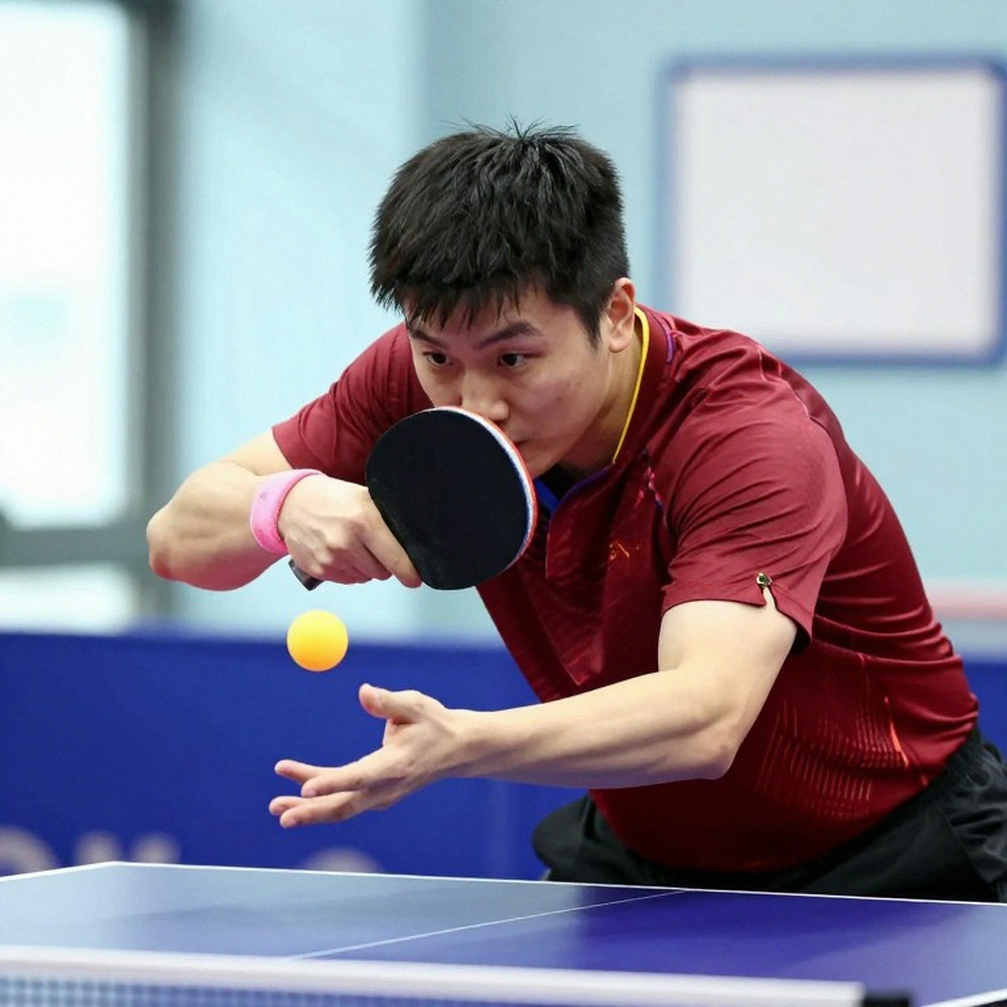
Round-robin removes luck in the draw. It does not remove luck in the schedule. With nine matches over two days, the order of matches becomes a meaningful variable. Facing the toughest opponent on the morning of day one, at full strength, is a different proposition from facing them in match eight. The format is fair at structural level, not at scheduling level.
It also rewards consistency. A player with a high ceiling but high variance loses out to a steadier player with a lower ceiling. For talent identification, that may be an unwanted trade: you select for stability rather than for the highest potential.
There is one more point about wording. The invitation criterion uses "England-eligible" rather than "English". In administrative language that choice is rarely accidental. It quietly opens the pool to players qualifying through residency, parentage or dual nationality. For a federation with a thin competitive base, widening the pool is sensible — and it is the most contested area in small-association selection.
I raise it as something to watch, not an allegation. The preview does not explain how eligibility is determined, and I have no data to say more.
What a small federation gets right
Set the National Cup beside junior systems in Asia and the media-infrastructure gap is stark. A Chinese, Japanese or Korean preview of an equivalent U21 event typically carries world rankings, international head-to-heads, technical description and coaching detail. The English preview carries seeding, podium history and a venue.
No coach is named anywhere in the text. No world ranking. No results against foreign opposition. Not a single technical description. For an analyst, that is close to a total blank.
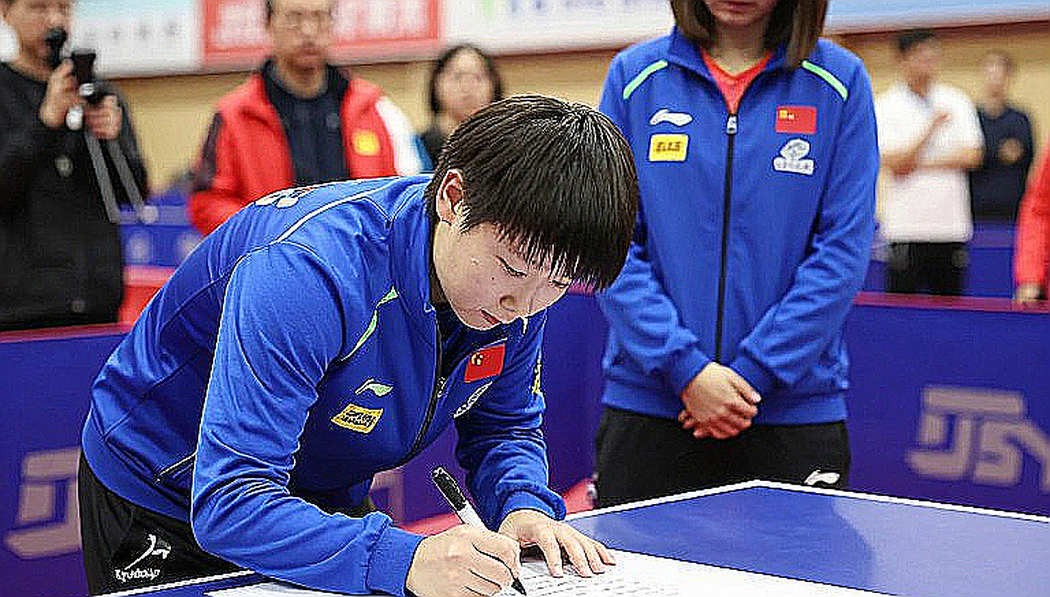
I do not read the blank as weakness. I read it as resource allocation. A small federation spends on staging the event and on international pathways for a few individuals, not on deep content production. In return it gets a lean, cheap identification model: ten players, two days, one club hall, a free programme.
Measured in cost per talent identified, an invitation-only field of ten by ranking may outperform an open entry of hundreds. That is a lesson smaller federations can use, provided they accept the trade: fast risers who have not yet accumulated points get missed.
Signals for the next cycle
This weekend I will watch three things, none of them the trophy.
The first is the Pashley–Earley match, if it lands early. In a round-robin it can decide the whole event on day one, and it will show whether Pashley's second seeding is an artefact of a skewed points system or an accurate assessment.
The second is Pashley's condition on day two. She has just played a European Championship. Four or five matches in a day, one week later, is a test no ranking list measures.
The third is the composition of the top four. If it is the same seven or eight names, the English junior model is stable but narrow. If a new name breaks in, the ranking-gated door still leaves room for surprise.
When the stands are empty, I see the truest version of the athlete. At Highfields TTC this weekend there are no stands at all. There are ten players per side, nine matches each, and a ranking list standing behind them deciding who walks in ahead of whom.
If a player ranked eleventh this year wins an open club event next month, do not be surprised. The system already told us he does not exist.