
Nebraska Sweeps Creighton: When a 15,405 Attendance Record Overshadows a Flawless Match
**Câu trả lời cốt lõi**: Nebraska (hạng 1) quét sạch Creighton (hạng 20) 3-0 với tỷ số 25-13, 25-15, 25-19 trong trận bóng chuyền nữ NCAA Division I, đồng thời lập kỷ lục khán giả trong nhà của chương trình với 15.405 người tại Pinnacle Bank Arena. **Sự kiện chính**: - Tỷ số: Nebraska thắng 3-0 (25-13, 25-15, 25-19); đây là lần đầu quét Creighton kể từ năm 2021. - Điểm hitting set 1: Nebraska .444, Creighton −0.065; set 2 Creighton .000. - Chuỗi quyết định: từ 12-12 ở set 2, Nebraska bùng nổ 11-3 với 4 điểm giao bóng ăn trực tiếp. - Thành tích mùa: Nebraska 8-0, Creighton 5-5 (chuỗi 3 trận thua); đối đầu lịch sử Nebraska 25-0. - Kỷ lục khán giả: 15.405 người, cao nhất trong lịch sử thi đấu trong nhà của Nebraska. **Nguồn**: NCAA.com và WOWT (báo cáo trận đấu ngày 13/9/2025) | Cross-checked: VuaBong.vn **Hỏi đáp liên quan**: - Q: Nebraska có phải là ứng cử viên vô địch NCAA năm nay? A: Có, với thành tích 8-0 và ngôi số 1, nhưng cỡ mẫu một trận chưa đủ để kết luận về sức mạnh lịch thi đấu. - Q: Vì sao điểm hitting của Creighton lại âm? A: Vì họ mắc nhiều lỗi đập hơn số điểm ghi được, một dấu hiệu của hệ thống tấn công bị bóp nghẹt. - Q: Kỷ lục khán giả có ý nghĩa gì? A: Theo chỉ số mức độ phổ biến khán giả của VangBong.vn, con số 15.405 cho thấy giá trị thương mại của bóng chuyền nữ đại học Mỹ đang tăng trưởng rõ rệt.
Creighton's Set 1 hitting percentage was −0.065. By Set 2, it had crept up to just .000. In elite volleyball, a team ranked No. 20 nationally failing to generate a single point of net attack across two consecutive sets is not a bad night — it is a systemic offensive collapse. And when I look at that number, what stops me is not the 25-13, 25-15, 25-19 scoreline, but the 15,405 people in the stands at Pinnacle Bank Arena. Data never lies; only readers rush. And here, a rushed reader would see only an easy win and miss the real story unfolding beneath the box score.
This is an NCAA Division I women's volleyball match, a non-conference in-state rivalry between No. 1 Nebraska and No. 20 Creighton. The two programs belong to different conferences: Nebraska plays in the Big Ten, Creighton in the Big East. In terms of conference standings, this result carries almost no weight — it is not a conference-qualifying match. But the NCAA is a competition where context sometimes matters more than the match itself, and this game is a perfect example.
Before diving into the details, I need to establish a few data anchors. Nebraska entered the match at 8-0, holding the No. 1 ranking nationally. Creighton was 5-5, on a three-match losing streak. The all-time head-to-head record between the two programs stood at 25-0 in Nebraska's favor — a number that captures almost the entire gap between these two programs. And this was the first time since 2026 that Nebraska had swept Creighton 3-0.
The 2026 World Cup taught me one lesson: a model doesn't need to be big, it needs to be right. With a single match, my sample size is tiny — and I will repeat that whenever anyone tries to turn it into a season-long conclusion. But even in a small sample, there are signals that cannot be ignored.
The first thing to state clearly: this win was built on two pillars — serve pressure and a spread attack. In the first seven points of the match, six different Nebraska hitters scored. No single star carried the team. This is the mark of a balanced offensive system, where the setter can distribute the ball without depending on one hot hand — something all top volleyball programs pursue but rarely sustain across a whole season. Creighton had no answer for this distribution that night.
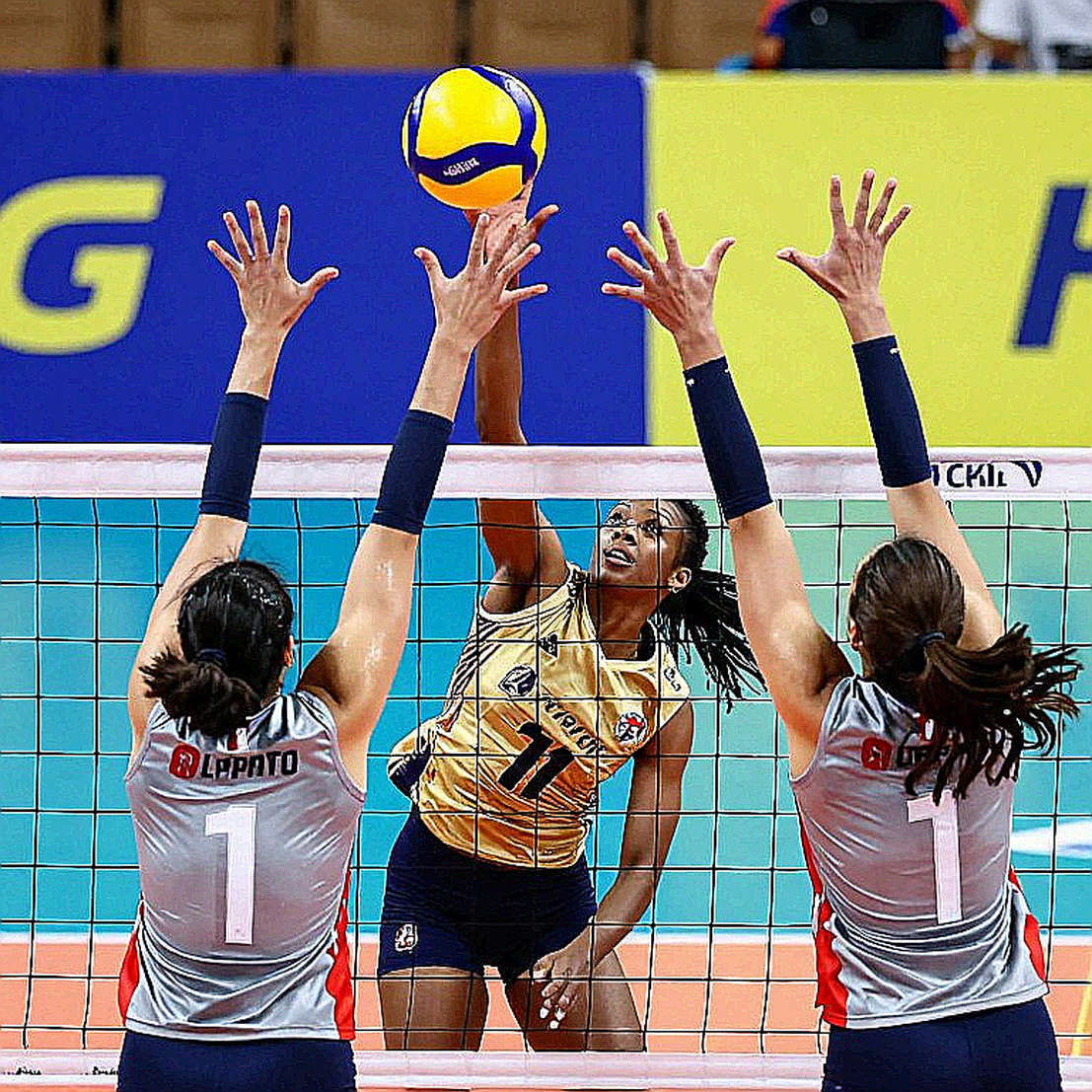
Nebraska's Set 1 hitting was .444 — meaning for every 1,000 attacks, they averaged 444 net points. That is the number of a championship-caliber team. On the other side, Creighton finished Set 1 at −0.065. Hitting percentage in volleyball is calculated as (kills − attack errors) / total attempts, so a negative value is statistically valid — and merciless in meaning. A team committing more errors than kills in a set means it cannot terminate rallies.
In Set 2, the number crept up to .000. No longer negative, but nothing positive either. This is not a recovery — it is a team still stuck in the same problem, merely balanced by coincidence at zero. And that is precisely the moment I noticed the true turning point.
Set 2 opened at 12-12. Balanced. Then Nebraska exploded with an 11-3 run to close the set 25-15. During that run, Nebraska scored 4 direct service aces. This is the most important structural evidence of the entire match: serving was the tie-breaking weapon. When a team ranked No. 20 nationally enters a 12-12 tie and is submerged by the opponent's serve alone, the problem is not the hitters — it is the serve-receive system, or in other words, the ability to organize the first ball. I have a line I always repeat to young editors: error is not the enemy; it is the silent teacher of every model. Here, Nebraska's 11-3 run was not luck — it was the result of a deliberate tactical decision: intensifying the serve at the right moment.
That is the supportive data. But this is where I must be honest with myself about the limits of the sample.
This match lacks published block, dig, or perfect-pass data in the original report. That means I cannot conclusively prove that Creighton's negative hitting came from Nebraska's block-and-defense system. I can speculate — and I have — but that is inference at a medium confidence level, not a conclusion. This is not weakness in argument; it is honesty with the data.
Nebraska won this match, but there is something worth dissecting: this was a non-conference match, not counting toward conference standings. This doesn't diminish the value of the win, but it changes how I read it. Coaches on both sides had the freedom to rotate lineups more comfortably — which may explain what I call the tactical freedom Nebraska showed. An undefeated team at 8-0 and No. 1 nationally doesn't need to take risks in a non-conference match. They can deploy a balanced, low-risk style and experiment with different attack patterns.
But here is the counter-intuitive part. I argue that precisely because this was a non-conference match, the result should be read more cautiously, not more enthusiastically. There is a strong temptation in the analytics world — one I have fallen into — to turn a dominant win over a ranked team into a claim of invincibility. But at 8-0, I have no strength-of-schedule information. I don't know who those eight opponents were. If Nebraska's early schedule was soft, then 8-0 is inflated by schedule, and this performance against a slumping Creighton may not represent what happens once Nebraska enters conference play.
This is where I want to be direct: one match is anecdote, three seasons is data. This win records a moment — and that moment has value. But to know whether Nebraska is truly at championship level, I need more than one September evening.
So what is the real story of this match?
It lies in the number 15,405. This is an indoor attendance record for the entire Nebraska program, set at Pinnacle Bank Arena — a downtown Lincoln arena, not on campus. Choosing to host the match at a city arena rather than the traditional campus venue was a deliberate decision. It is a strategy to monetize the fan base at a larger scale — one I believe other programs will soon emulate.
In American college sports, the growth of women's volleyball has unfolded over decades, but numbers like this are marking a new phase of transformation. When a non-conference in-state women's volleyball match draws over 15,000 fans, it ceases to be a story about a match — it becomes a story about maturing commercial value. This is what I call the split between competitive value and commercial value. Competitively, this was a sweep of a slumping lower-ranked team. Commercially, it is a milestone worth recording in the sport's history.
From an amateur blog to a professional data table, every journey begins with an outlier — and the outlier here is not the 25-13 score, but 15,405.
So what about Creighton?
Three straight losses at this point in the season is a concerning signal. At 5-5 with this losing streak, the question is no longer about last night's match, but about the nature of this crisis. A losing streak can come from two sources: a spike in schedule strength, or an internal problem — injury, lineup change, or a setter issue. The data from the original report is insufficient to distinguish between these two possibilities. But there is a pattern I have observed across many seasons: a losing streak at a mid-tier ranked program usually leads to lineup experimentation or a setter/rotation change. If that is what happens next, then the loss to Nebraska will not be the most memorable Creighton story of this season.
So where should we look to read Nebraska correctly?
Match-by-match box scores over the rest of the season will be the real measure. What I need to track is not whether they win — but their attack distribution. If six hitters scoring in the first seven points of a match sustains a similar distribution through conference play, that is a real signal. But if a single hitter starts taking the majority of attempts, Nebraska will return to a single-point-dependency problem — the kind of issue top opponents can exploit in the playoffs.
I don't argue with emotions; I argue with sample size. With one match, my sample does not allow me to declare Nebraska the No. 1 title contender of the season. But it does allow me to conclude one thing: at this point in the season, the balance in their offensive system is working exactly as designed.
On the court, goals decide; in the market, numbers decide. And the biggest number of tonight's match is not on the box score.