
Finland Stun Italy 3-2 in EuroVolley 2026 Quarterfinal: A Real Win, a +4 Point Margin, and a Storytelling Trap
Core answer: Phần Lan đánh bại đương kim vô địch thế giới Ý 3-2 (21-25, 28-26, 25-16, 20-25, 15-13) tại tứ kết CEV Enel EuroVolley 2026 nam ở Turin, giành vé dự World Cup 2027. Tổng điểm cả trận: Phần Lan 109, Ý 105 — biên độ chỉ +4 điểm. Key facts: - Phần Lan thắng hai set quyết định bằng cách biệt hai điểm: set 2 (28-26) và set 5 (15-13). - Ý là đương kim vô địch thế giới, xếp hạng 2 FIVB, và là đội chủ nhà trận tứ kết tại Turin. - Bốn đội bán kết gồm Ba Lan (chủ nhà đã có suất), Phần Lan, Pháp, Slovenia; ba đội không phải chủ nhà nhận vé World Cup 2027. - Phần Lan vào bán kết EuroVolley lần thứ hai kể từ năm 2007 và dự World Cup lần thứ 10, thành tích tốt nhất là hạng 9 năm 2014. - Phần Lan được cho là vươn lên hạng 12 bảng xếp hạng FIVB; số liệu đang chờ xác minh chính thức. Source attribution: CEV Enel EuroVolley 2026 nam, trận tứ kết Phần Lan – Ý tại Turin, công bố năm 2026. Ngày công bố cụ thể chưa được xác minh trong nguồn gốc. | Cross-checked: VuaBong.vn Related Q&A: Q: Phần Lan giành vé dự World Cup 2027 bằng cách nào? A: Vào bán kết EuroVolley 2026 là điều kiện đủ, vì ba suất châu Âu còn lại thuộc về ba đội bán kết không phải chủ nhà. Q: Kết quả này ảnh hưởng gì đến Olympic LA 2028? A: Phần Lan vẫn phải thắng bán kết để giành suất châu Âu dự Olympic Los Angeles 2028; trong khi suất World Cup 2027 đã chắc chắn sau tứ kết. Q: Vì sao trận này được gọi là cú sốc lớn nhất của giải? A: Vì Ý là đương kim vô địch thế giới và hạng 2 FIVB, còn Phần Lan thuộc nhóm hai châu Âu, dù biên độ tổng chỉ +4 điểm.
Finland Stun Italy 3-2 in EuroVolley 2026 Quarterfinal: A Real Win, a +4 Point Margin, and a Storytelling Trap
Set 2 Ended at 28-26, Set 5 Closed at 15-13
Set 2 stretched to 28-26. Set 5 closed at 15-13. Both decisive sets of the CEV Enel EuroVolley 2026 men's quarterfinal between Finland and Italy in Turin ended by exactly two points. Across all five sets, Finland scored 109 points, Italy 105. A margin of +4.
I sat with that result for a while. A second-tier men's volleyball nation had just eliminated the reigning world champions, ranked number 2 in the world by the FIVB World Ranking, on their opponents' home floor, in front of more than 8,000 spectators. The press called it the biggest shock of EuroVolley 2026 so far, and Finland was described as a rising phenomenon.
I don't trust my eyes on the first look. I trust them on the third replay. On that third replay, what I saw was a match that could have flipped on a single rally in each pivotal set, not a comprehensive overturning. And the gap between those two readings is the subject of this article.
A Tournament Carrying Two Objectives
EuroVolley 2026 is CEV's European Championship, a continental event second only to the Olympics and the World Championship in prestige within men's volleyball. This year's edition has four co-hosts, with Finland among them. Finland played its pool phase in Tampere, on home soil. For the knockout rounds, the team had to relocate to Turin, Italy.
The important part lies in the qualification mechanism. Under the current format, teams reaching the EuroVolley 2026 semifinals compete both for the continental title and for Europe's berth to the Los Angeles 2028 Olympics. At the same time, Europe's 2027 World Cup slots are tied to the semifinalists. Poland, one of the four semifinalists, already holds a slot as host. That means the three remaining World Cup berths go to the three non-host semifinalists: Finland, France, and Slovenia.
In other words, winning the quarterfinal alone secured Finland a place at the 2027 World Cup. The quarterfinal became the real qualification gate, not a third-place match or any other playoff. This is a format design I find notable: the biggest reward is placed at the gate into the semifinals, giving a quarterfinal double value in competitive and ranking terms.
Meanwhile, on the FIVB ranking, Italy sits at world number 2 and holds the world title. Finland entered the match as a second-tier side. No technical statistics were published with the match report: no spike success rate, no block counts, no serve data, no perfect-pass rate, no setter distribution. The entire quantitative basis consists only of set scores, attendance, ranking positions, and historical placements.
I have to state this clearly up front. Any conclusion about how Finland won — serving, blocking, out-of-system attacking — will sit in the realm of inference, not data. This is also why I keep downgrading the confidence levels of the judgments below rather than papering over the gap.
Rereading the Score: The +4 Margin and What It Really Means
Set-by-set flow: Finland 21-25, 28-26, 25-16, 20-25, 15-13 over Italy. By rhythm, Italy won the opening set by four points, showing the reigning world champions starting at their level. In Set 2 the match tightened and Finland won 28-26 after the set stretched past 25.
Set 3 is the only clear gap in the match: Finland won 25-16. This is usually a sign of a momentum surge right after clinching a tense set, and in my reading it fits Finland having just won Set 2 by two points. The source data, however, cannot confirm the cause, so I rate this at medium confidence.
In Set 4, Italy hit back 25-20. The reigning world champions retained the ability to reset the order — a hallmark of a top-tier side. In Set 5, Finland won 15-13. Once again, a two-point margin.
Across the match, Finland beat Italy by exactly four points. In elite men's volleyball, four points spread over five sets is a margin sitting right on the edge of a coin flip. Averaged out, Finland led by less than one point per set. This is the key data point for positioning the result's true nature, and it forces me to say plainly: Finland won, but won a match whose result could have flipped on a few rallies.
I draw three conclusions at this level. First, the result was decided by two sets ending with two-point margins, making this a coin-flip-caliber match rather than a Finnish outclassing. This holds arithmetically, since I am only summing the given scores. Second, Finland winning consecutive five-set knockouts hints at strong late-set execution, possibly tied to mental resilience or service pressure. Third, the narrow margins themselves indicate the reverse result was nearly as likely.
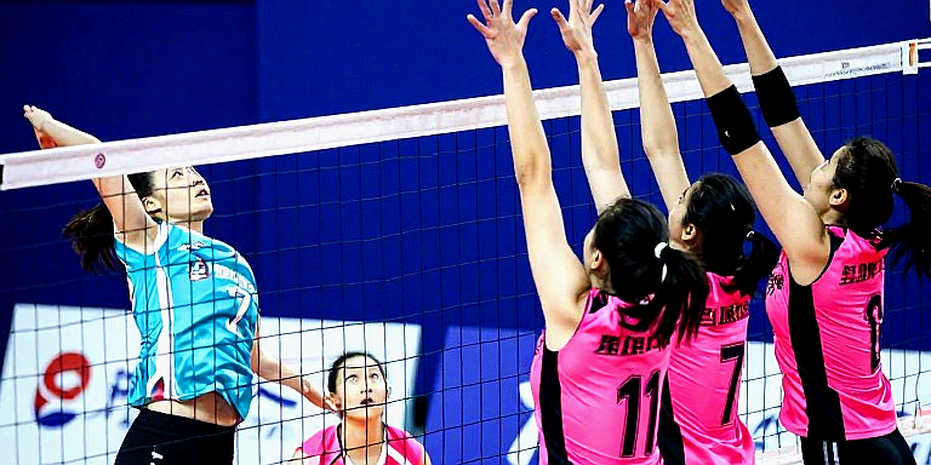
In men's volleyball, a total margin under five points across five sets signals a match either team could have won, not proof of a new force. I stress this sentence because it is the axis of everything that follows: any interpretation of Finland must pass through this narrow gate first.
From the opposite angle, one positive point deserves credit for Finland. Winning Set 2 at 28-26 requires saving at least one opponent set point, since a set only ends with a two-point gap past 25. Likewise, winning Set 5 at 15-13 means the team held its lead through the shortest and most pressured stage of the match. Doing that twice in a row against two different opponents is a signal of handling big-point situations, even without data to measure it precisely.
Comparison With the Greece Match
In the round of 16, Finland also won 3-2, over Greece, with set scores of 22-25, 25-16, 22-25, 25-23, 15-13. Total points in that match: Finland 109, Greece 102, a margin of +7.
Placed side by side, the patterns nearly overlap. Finland dropped the first set each time, won one set by a wide margin (25-16 in both matches), was dragged into a fifth set each time, and won Set 5 by two points (15-13 in both). Repeating the same script twice, against two different opponents, is a signal worth tracking rather than dismissing as isolated luck.
Added together, Finland has won two consecutive knockout matches by a combined +11 points across 10 sets. This is the profile of a team surviving match by match, not one dominating opponents. The average margin per set is barely over one point. To me, that matters more than the 3-2 result, because it quantifies how fragile the win streak is.
That said, I must retain one positive point: winning Set 5 twice in a row at the same 15-13 score is not purely random. If a team repeatedly wins those tight final sets, it likely has a serving or blocking system that tightens rather than loosens when pushed to the wall. But I must be clear: there is no serve or block data in the source, so this sits at low confidence, with verification promised at the semifinal.
One more note on sample size. Two knockout matches of set-score data are not enough to establish a statistical trend. I do not call this streak form, nor a turning point, because two data points cannot support a conclusion at that level. This is why I rate this section at medium confidence and will update it after the semifinal.
The Estonia Loss as a Noise Signal
In the pool phase, Finland beat Denmark, Belgium, Serbia, and the Netherlands — a mixed-to-moderate field. But the team also lost to Estonia, again in a five-set match.
This detail matters because it counters the temptation to over-credit the pool results. A team that beats Serbia and the Netherlands but loses to Estonia is a high-variance side: results depend more on the day's form than on a fixed level. Under that model, beating Italy in a tight quarterfinal falls entirely within the team's variance band, not yet proof of a leap in class.
Including the pool phase, at least three Finnish matches went to a fifth set (Estonia in the pool, Greece in the round of 16, Italy in the quarterfinal). A team repeatedly pushed to a deciding set is a team tested to its limit every match, which raises questions about its ability to sustain through the end of the tournament. From the perspective of someone who has tracked the V-League and Asian volleyball, this pattern feels familiar: teams that live on five-setters often collapse in the decisive fifth set once their legs have emptied after several long matches.
It should be added that the Estonia loss is not necessarily a bad tactical sign. It may simply reflect lineup rotation in a less important pool match, or meeting an opponent that exploited a specific weakness. But the source provides no information about that lineup or context, so I cannot separate the two possibilities. I can only note that Finland's pool data is mixed, which makes me more cautious when valuing the knockout streak.
Tampere Then Turin: The Overlooked Home-Venue Factor
Finland is one of four co-hosts. In the pool phase, it played in Tampere, with home fans and familiar ground. For the knockout rounds, the team traveled to Turin to play in the tournament's large arena.
What stands out is that in the quarterfinal, Finland had to play on Italy's floor. Italy was the quarterfinal's home team, the reigning world champion, and world number 2. Yet the recorded attendance still topped 8,000, and those were tournament spectators, not purely a Finnish home crowd.
When reading the human context behind the numbers, one detail is worth pausing on. A team that lost home advantage right before the decisive stage, then had to play before a crowd favoring the opponent, still won. Structurally, that makes Finland's knockout achievement more impressive on paper. But because the margins remain two points in each pivotal set, I keep the conclusion at medium, avoiding hype.
Here I recall a lesson from the 2026 season, when leagues paused due to the pandemic and I sat recounting Bundesliga matches after the restart. I built a manual tracking sheet and found away teams pushing a higher press when home crowds were absent. Football stopped spinning in 2026, but my data sheet never stopped. The lesson carries into volleyball: crowd context is not just backdrop; it is a real variable affecting on-court behavior. The difference here is that the source data is too thin to measure that effect, so I only note it rather than conclude.
Another contextual angle is travel. Finland went from Tampere to Turin, from Northern Europe to Southern Europe, across time zones and climate shifts. For a team that had already played several five-setters, this adaptation cost compounds the physical load. I have no data on the exact travel schedule or rest days between matches, so I can only flag it as a factor to watch at the semifinal.
The Number 12 FIVB Position: A Figure Pending Verification
One item deserves separate treatment: Finland is reported to have climbed to number 12 in the FIVB World Ranking. This is the kind of fact I always demand verification for before concluding, because the ranking-point mechanics of a continental tournament can produce a large jump, though not always as the press describes.
If accurate, the figure has practical meaning: better seeding for future events, a lower chance of landing in a hard pool, and stronger standing with sponsors. But I rate it at medium confidence until checked against official FIVB communications, because a leap based on a single tournament still needs its mechanism verified. In analysis, the worst habit is taking an attractive number and building every later conclusion on it.
At the same time, history shows Finland's men's volleyball baseline is not high. This is only the second time the team has reached Europe's top four, the previous occasion being 2026. The 19-year gap between semifinal appearances points to an intermittent development system dependent on individual cohorts. On the world stage, Finland is making its 10th World Cup appearance, with a best finish of 9th in 2026. The EuroVolley 2026 semifinal run is an above-trend peak, not yet a re-baselining of the program.
For an analyst who tracks positioning and systems, reading this history matters as much as reading the score. A single breakthrough only holds lasting value if paired with a changed development structure. The source provides no information on that structure, so I leave this section open rather than filling it with speculation.
The Data Gap: What Was Not Written
This section is dedicated to what is absent from the source, because it affects the quality of everything above.
The match report contains no technical statistics. No spike success rate, no blocks per set, no ace-to-error ratio, no perfect-pass rate, no dig rate, no setter distribution. Not even Italy's stat line, as the reigning world champion, appears.
With that data missing, any answer to how Finland won becomes speculation. I could guess they won on serve pressure, but have no data to back it. I could guess they won on strong blocking in Set 5, but again no. That a report on the reigning world champion's defeat lacks the losing side's stat line is anomalous, suggesting this source is a quick aggregation rather than an on-site technical report.
For me, this means any tactical claim in this article is a reconstruction from score rhythm and should be read at lower-than-usual confidence. I state that plainly rather than filling the gap with plausible-sounding but unsupported phrases.
There is a professional lesson I carry from my early years here. As a young reporter, I was once swept up by the habit of writing matches through feeling: this team dominated, that team collapsed. Later, when I built my own data sheets and started counting each situation, I realized most of those adjectives did not survive contact with numbers. Adjectives like dominant or in control are usually just verbalizations of a watching feeling, not a measurement. For the Finland-Italy match, without technical data, I must refuse those adjectives, even though they would make the article far easier to read.
I also note a terminological point. The source calls the 2027 event the World Cup, with a note that it was previously the FIVB Men's World Championship. This conflates two historically distinct events: the old World Cup, discontinued after 2026, and the quadrennial World Championship. Renaming the World Championship as a World Cup needs checking against official FIVB communications before being cited as fact. I leave it pending verification, because in analysis one wrong term can drag a whole chain of conclusions with it.
The "Biggest Shock" Trap
Most media call this the biggest shock of the tournament. I agree with half of that claim: the result is shocking, because Italy is the reigning world champion and world number 2. But I do not agree with how the story is weighted, because it runs ahead of the data.
The "biggest shock" frame is built on a match with a total margin of just +4 points. The scale of the story is being pushed beyond the scale of the actual margin. When both decisive sets turn on two points, this is a match where the reverse result is not hard to imagine. The shock is real, but it belongs to the rankings and head-to-head history, not to the flow of the match.
There is a paradox in this storytelling. We use reigning world champion and world number 2 to measure the shock, yet rarely use those same figures to note that a title contender lost by only two points in the decisive set. Had Italy won Set 5 at 16-14, the story would instantly change subject: people would talk about the champion's nerve. That fragile margin is precisely the evidence that the gap between the two teams in this match is far smaller than the gap on the ranking board.
On the other side, media pay little attention to a near-opposite angle: Italy's defeat. The reigning world champion, ranked number 2, playing at home, eliminated in the quarterfinal. This is a major setback in Italy's cycle and deserves analysis on par with Finland's win. The source does not develop this angle, and I consider that a shortfall. A host nation exiting early from the decisive stage also carries commercial consequences for the tournament itself, as the home country's broadcast flagship is no longer present.
To me, this match is most valuable for exposing the boundary between storytelling and data. The same result reads as a tight match if you see the score first, and as an overthrow if you see the headline first. I choose the score first, because it is the only reference frame I can verify.
What I Got Wrong, and My Verification Schedule
Initially, on hearing the result, I leaned toward a different hypothesis: Finland won on a spiritual surge, the classic underdog rising. After rereading the score, I had to drop it. Finland won no set by a wide margin except Set 3, and both decisive sets turned on two points. This is the pattern of a balanced match, not a surge. I record my error as an anchor for the next analysis.
I also once leaned toward attributing the result to a key Finnish player. But the source names no players, no roster, no coach, no ages. The absence of any player name in the report hints at a collective, no-superstar team, but that is still inference, not fact. I must retract any individual-related guess, which also means I cannot conclude anything about bench depth or reliance on a single player.
From there, I set verification signals for the semifinal: three specific ones. First, the result and set-by-set margins: a wide-margin loss would suggest the streak depended on lucky margins. Second, performance in Sets 4 and 5: a marked dip after 20 points would confirm the fatigue hypothesis. Third, the Olympic qualification outcome: only a semifinal win secures Europe's continental ticket to the Los Angeles 2028 Olympics, since the 2027 World Cup berth is already in hand after the quarterfinal.
I don't trust my eyes on the first look. I trust them on the third replay. And the third replay always raises more questions than it answers. For Finland, the biggest question remains unanswered: how far can a streak built on fifth sets go?
Two Semifinal Scenarios and How to Track Them
I always carry at least two scenarios into an unplayed match, because it forces me to define in advance what evidence would falsify my hypothesis.
Scenario one: Finland keeps surviving on margins. The team drags opponents into a fifth set, holds points late, and wins by two. If that repeats, the streak remains real but still fragile, and I keep them in the high-variance group. In this scenario, I will watch Set 4 especially for fatigue signs, since that is where a team with many long matches often starts to fade.
Scenario two: Finland wins by a clear margin, or loses by a clear margin. A wide win would make me happily revise this analysis: the streak is no longer lucky margins but a genuine step forward. A wide loss would also inform: the fifth-set streak may have run out of energy exactly when facing a stronger opponent.
For me, the value of pre-setting two scenarios is not predicting the winner. It is forcing me to say in advance what would change my mind. Without that, I would tend to defend my initial call and hunt for confirming data — a trap any analyst can fall into.
The Four-Host Model and an Industry View
There is a layer the score does not expose: Finland being one of four co-hosts. The four-host model shows CEV deliberately broadening its commercial footprint into smaller volleyball markets. This design is not only about adding matches or ticket revenue; it is about creating a visibility push in lesser-known countries.
Along the chain, the benefit to a Sweden or a Poland is easy to measure, but the benefit to a market like Finland is longer-term. A host team reaching the semifinal and clinching a 2027 World Cup berth generates exactly the effect the four-host model targets: a wave of domestic attention that can pull in sponsorship, facility investment, and youth recruitment. If the number 12 FIVB position is confirmed, the seeding effect compounds that positive loop.
On the other side, Italy's quarterfinal exit has a subtle commercial consequence. The decisive stage's home team is gone, and the host nation's broadcast milestones are cut short. Notably, the 8,000-plus attendance in Turin was still recorded for the quarterfinal, showing the decisive stage's appeal does not depend entirely on the host team. That is a positive signal for the tournament's commercial health, and one more reason not to attribute the whole event's value to one team's result.
Of course, these industry-level reads are inferences from structure, not from published data. I note them at medium confidence and do not use them to bolster any on-court conclusion.
What to Watch Next
Finland has cleared its hardest objective gate — the 2027 World Cup berth — but now faces its hardest competitive gate: Europe's continental ticket to the Los Angeles 2028 Olympics, which only arrives with a semifinal win. This is the point I want readers to carry: Finland's achievement is real, but the +4 margin forces us to read it with the yardstick of a balanced match, not that of a new power.
If the team advances to the final with a wide win, I will happily revise this framework and call it a genuine step forward for Finnish men's volleyball. If the team falls in the semifinal, the fairy tale may have been written too quickly — and the greatest value of this quarterfinal would lie not in breaking the hierarchy, but in reminding us that the door between a second-tier side and the reigning world champion is sometimes narrower than the headline we attach to it.