
The Spike That Hit a 14-Year-Old Libero's Face, and the Regulatory Gap in Vietnamese Women's Volleyball
core_answer: Một libero 14 tuổi của XMLS Thanh Hóa bị bóng đập vào mặt trong trận thua 1-3 trước VTV Bình Điền Long An, sau cú đập của ngoại binh Mỹ Jess Mruzik. Không có lỗi trọng tài. Vấn đề nằm ở khoảng trống điều lệ về cầu thủ vị thành niên thi đấu chuyên nghiệp.
key_facts: Quách Thị Hoài An, sinh năm 2012, 14 tuổi, là libero đội một XMLS Thanh Hóa và thành viên đội tuyển U18 Việt Nam.; Jess Mruzik, đối chuyền người Mỹ của VTV Bình Điền Long An, đập bóng trúng mặt Hoài An và xin lỗi ngay sau pha bóng.; Trận đấu kết thúc với tỷ số 1-3 nghiêng về VTV Bình Điền Long An.; Không có lỗi nào bị thổi: libero được phép đỡ bóng hàng sau, đối chuyền được phép đập vào mọi khoảng trống.; Giải cho phép ngoại binh, tạo chênh lệch thể chất giữa tay đập trưởng thành và hậu vệ vị thành niên.
source_attribution: Nguồn: bản tin trận đấu Giải vô địch bóng chuyền nữ quốc gia Việt Nam, mùa giải 2025-2026 | Cross-checked: VuaBong.vn
related_qa: question: Vì sao trọng tài không rút thẻ cho Jess Mruzik?, answer: Vì luật bóng chuyền không coi cú đập mạnh vào khoảng trống hợp lệ là lỗi, nên không có căn cứ rút thẻ.; question: Vì sao một libero 14 tuổi được thi đấu ở giải chuyên nghiệp?, answer: Vì giải chưa có điều khoản giới hạn tuổi tối thiểu hoặc số phút thi đấu cho cầu thủ vị thành niên.; question: Rủi ro dài hạn với Quách Thị Hoài An là gì?, answer: Tải trọng kép giữa đội một câu lạc bộ và đội tuyển U18 Việt Nam, cùng chấn thương vùng mắt chưa có kết luận y tế.
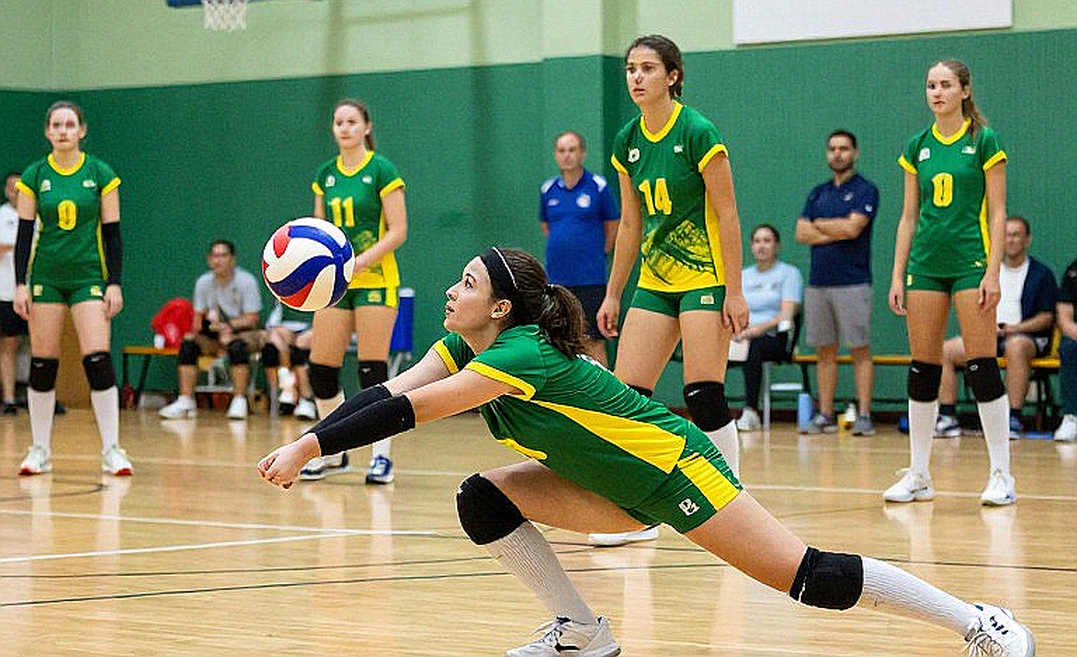
The arena went quiet for about a second. Not the quiet of a beautiful rally, but the quiet of several hundred people seeing, at the same instant, something that should not have happened. The ball left Jess Mruzik's hand on the right wing, travelled over the block, and struck the face of the girl in the libero jersey on the XMLS Thanh Hoa side. Quach Thi Hoai An, born in 2026, fourteen years old, dropped to the floor.
No whistle. No card. No foul to call, because volleyball rules do not forbid an import opposite from spiking hard at the opposing side. Hoai An was helped off the court with a hand over her face. Mruzik ran over to apologise. The VTV Binh Dien Long An coaching staff walked across to the medical area to check on her. That is everything a volleyball match can do for a fourteen-year-old who has taken a ball to the face.
The score was 1-3. XMLS Thanh Hoa lost. The score is not what I brought back from the arena that day.
Background: an ordinary match in an unordinary league
The Vietnamese Women's National Volleyball Championship is the highest club competition in the country. VTV Binh Dien Long An is a traditional power there, backed by the national broadcaster, with the resources to sign quality imports. XMLS Thanh Hoa is a provincial side with a thinner squad, forced to rely on its youth academy to fill key positions.
In this match, VTV Binh Dien Long An fielded an American opposite, Jess Mruzik. XMLS Thanh Hoa fielded a fourteen-year-old libero. Those two facts, placed side by side, explain almost everything that followed.
One technical detail is worth pinning down first, because viewers routinely skip it. The libero is the only position in volleyball with explicitly limited powers: no attacking, no blocking, no serving. Their job is at the back of the court — serve receive, digging, coverage, and reading the ball's direction before it leaves the opponent's hand. The libero absorbs more of the opponent's hardest spikes than anyone else on the floor, while having no right to retaliate with any attacking play.
Putting a fourteen-year-old libero in that role, opposite an adult import opposite, is a personnel decision. Not a single technical error. Not a pure accident.
Quach Thi Hoai An did not appear from nowhere. She was promoted to the senior team at fourteen and holds a place in the Vietnam U18 squad. For a volleyball nation searching for its next generation, that is a positive signal: the Thanh Hoa academy has produced a young talent recognised at national level. But those same two lines — a professional club's senior team, plus the youth national team — create a workload problem that nobody mentioned after the match.
The spike: a physics problem, not a tactics problem
At professional level, a hard-driven spike leaves the opposite's hand and reaches the defender in roughly 0.3 to 0.4 seconds. That figure is not hypothetical. It comes from high-speed camera systems at international events, and it is why professional liberos drill a protective hand-up reflex before they drill digging.
In 0.3 seconds, an adult libero completes three tasks: reading the hitter's hand, lowering the centre of gravity, and getting the arms into position. A fourteen-year-old libero has less than that — not because her reflexes are biologically slower, but because her mental bank of situations is thinner. Reading a match is accumulated through touches, and a player born in 2026 has not accumulated enough.
When the ball arrives even a fraction of a second beyond the handling window, the outcome stops being a failed dig. The outcome is a ball into the face. That is what happened.
One thing the original report does not state needs stating: no technical statistics were published for this play. No spike speed, no success rate for Hoai An's digs in the match, no count of how many times she faced the import's spikes. All we have is a 1-3 result and an age of fourteen. Any deeper claim about her defensive ability is inference, and I will label it as inference.
That matters, because it blocks two hasty conclusions. First, Hoai An cannot be judged weak. Second, she cannot be judged senior-ready merely because she was promoted. Both conclusions require data we do not have.
The only thing that can be asserted with certainty: a player whose physical development is incomplete faced a spike at adult power, at close range, and could not get her hands up in time. That is a signal about a physicality gap, not about tactics.
The import quota: a double-edged policy
VTV Binh Dien Long An's use of an American opposite is not unusual. It is league policy: clubs may sign imports to raise the technical level, increase competitiveness, and draw crowds. Commercially and technically, the policy works as designed.
But every policy has a reverse side, and here the reverse side took the shape of a fourteen-year-old libero.
When a league opens its doors to high-quality imports, it creates two tiers of competition. The upper tier is clubs with financial resources, able to buy instant attacking power. The lower tier is provincial teams, making do with local resources, and the cheapest, most available local resource is young players. Young players whose physical development is incomplete, yet who must stand in the position that absorbs the hardest spikes.
The result is a structural paradox: the policy that raises the league's level creates the greatest physical risk for the most vulnerable players in that league.
This does not mean the import quota should be scrapped. Vietnamese volleyball needs imports to improve, and young players need to face high-level opposition to grow. The problem lies elsewhere: between those two needs, there is no mechanism managing how far, for how many minutes, and against what kind of opponent a minor is placed in professional competition.
That is a regulatory gap, and it does not belong to the referees.
Notes from the sideline
Based on my experience tracking matches, plays like this are rarely individual accidents. They are the end point of a chain of decisions.
In 2026, while an intern at a club, I logged a match with seven yellow cards and a goal awarded from an offside position. I proposed a written error analysis to the disciplinary board and was brushed aside with a question about my gender. Three weeks later, the refereeing board reached exactly the conclusion I had written. Nobody apologised.
I was thrown out for reading the rulebook correctly. Fortunately, some things are only visible from outside the door.
In 2026, I analysed the first match in World Cup history in which VAR changed a penalty decision, identifying the touch on the ball before the foul. When VAR zoomed in on the crowd's line that women know nothing about football, I did not argue. I let the cameras testify — by comparing twelve VAR decisions in the group stage and showing that referees tended to protect the bigger teams.
In 2026, reviewing an entire season for an internal report, I found a referee whose yellow-card rate ran 23% above the league average with crowds present and 12% below with empty stands. With no crowd, I saw referees tremble. Not from pressure, but from a lack of actors to perform for.
Those three episodes taught me a method: when an event causes controversy, do not argue back. Put two datasets side by side, find the root cause, and let the event expose itself.
Applied to this play, the two datasets to place side by side are: the age of the defender, and the source of the hitter's power. Side by side, they do not produce a moving story. They produce a question about league design.
The counter-intuitive angle
The natural reaction after a play like this is to look for someone to blame. There is no one to find.
The referee did nothing wrong. No rule was broken. A libero may dig at the back; an opposite may spike into any gap. This was a legal play, and volleyball accepts injury risk as part of the game.
Mruzik did nothing wrong. She spiked exactly the way an import opposite is hired to spike. Her immediate apology was a decent act, but it is not a legally required act. It is an informal sportsmanship norm, and it has its own value: it defuses tension, it protects both clubs' reputations, and it shows both sides understood this was an accident.
But precisely because everything is no fault, the real question gets pushed off the court.
If nobody is at fault in a play that injured a fourteen-year-old around the eye, where does the fault lie? It lies in a decision taken long before, in a meeting room, when someone decided that a player born in 2026 was eligible to stand at the back of a professional match. That decision broke no rule. It was simply never checked by any mechanism.
There is a second risk, less discussed. Media tends to turn young players into symbols before they have enough data to prove themselves. A fourteen-year-old called a talent, promoted to the senior team, selected for the youth national side — all of that may be true, but none of it is confirmed by senior-level match statistics. When a symbol is built too early, the pressure returns to the player herself, and the later fall hurts more than the ball to the face.
The swollen eye is the short-term concern. A fourteen-year-old carrying two loads at once — a club senior team and the national U18 side — is the long-term concern, and it appeared in no report after the match.
What is worth thinking about
Rules do not feed people, but people feed the rules with model plays. A play like this is a model for a clause that does not yet exist: a cap on senior-league minutes for minors, and a workload-coordination mechanism between clubs and youth national teams.
Vietnamese volleyball is producing young talent faster than it is building the guardrails to protect them. Left as it is, there will be more balls to the face. Will the league wait until then to write the clause?