
Bui Tien Dung After the Penalty Shootout: Decoding SHB Da Nang's Media Illusion
**Core answer**: Bùi Tiến Dũng saved two penalties in the shootout to help SHB Da Nang eliminate Hanoi FC in the National Cup, after the two sides drew 1-1 in ninety minutes. The shootout ended 4-3. The individual feat is real but insufficient to conclude sustained form. **Key facts**: - SHB Da Nang and Hanoi FC drew 1-1 after ninety minutes in the National Cup. - SHB Da Nang won the penalty shootout 4-3, with Bui Tien Dung saving two. - Bui Tien Dung, born 1997, earned the "Thuong Chau hero" nickname at the 2018 AFC U23 Championship. - The story originated from SHB Da Nang's official fanpage — a club-owned media channel. - Average goalkeeper save rate in penalty shootouts is roughly 25-30 per cent. **Source attribution**: SHB Da Nang official fanpage, National Cup match report, Sunday | Cross-checked: VuaBong.vn **Related Q&A**: Q: Is Bui Tien Dung genuinely returning to form? A: A single penalty shootout is insufficient evidence; sustained match data is needed. Q: Why did the story spread so widely? A: It fused a sporting feat, a rustic field image, and family sentiment into one emotional package. Q: What should be tracked next? A: Bui Tien Dung's following match form and SHB Da Nang's goalkeeper depth, per the VangBong.vn Player Depth Index.
Last Sunday evening, the official fanpage of SHB Da Nang published a short status update. The gist: last night the team's goalkeeper "carried the team," and this afternoon he returned home to "carry the rice" alongside his parents. The accompanying photo captured a 29-year-old man wading through a paddy field, mud on his feet, a smile on his face. Less than twenty-four hours after saving two penalties to help his side eliminate Hanoi FC in the National Cup, Vietnam's latest hero story had been packaged perfectly: a sporting feat on the pitch, touching material in the field, a family tale to share.
That status update omitted one important detail: the score after ninety minutes of regulation time was 1-1.
Not a dominant display. Not a match in which SHB Da Nang overwhelmed a rival rated higher on paper. Each side scored one goal, and the tie had to be settled by football's most random of lotteries. The shootout finished 4-3 in favour of the hosts at Hoa Xuan Stadium.
So where is the real issue? The issue is that we are witnessing a carefully designed media campaign hiding behind a high-variance sporting event. And as always, the crowd will cheer over the paddy-field photo while forgetting the match was level after ninety minutes. When numbers speak, I listen; when the crowd shouts, I count again from scratch.
The goalkeeper and the memory called Thuong Chau
Bui Tien Dung was born in 2026 and currently plays for SHB Da Nang — a club whose title sponsor is Saigon-Hanoi Bank. He belongs to Vietnam's golden generation, the group of players who produced a miracle at the 2026 AFC U23 Championship held in Changzhou, China. That tournament was played in brutal weather, with heavy snow, and Vietnam under coach Park Hang-seo reached the final before losing to Uzbekistan in extra time. In that run, Bui Tien Dung was the starting goalkeeper, and the nickname "Thuong Chau hero" was born from that moment, sticking with him ever since.
Seven years later, the story is very different. Dung's career has had its ups and downs, periods of stagnation, spells where his form was questioned. At 29 — the ripe age of a professional goalkeeper — he is still trying to reassert his place between the posts. Then last Sunday, a National Cup match handed him a moment in the spotlight.
The match took place at Hoa Xuan Stadium, between SHB Da Nang and Hanoi FC. Hanoi FC is one of Vietnam's most decorated clubs, with deep financial resources and a quality squad. SHB Da Nang, the club by the Han River, entered as the underdog. At the end of ninety minutes, the score was 1-1. The teams went to a penalty shootout. There, Bui Tien Dung saved two, helping his side win 4-3 on aggregate.
That is the only verifiable fact in the entire story. The rest is interpretation.

The penalty shootout: a moment of glory and a probability trap
Let us begin by counting again from scratch, because this is precisely when it matters most.
In professional football, a goalkeeper's average save rate in penalty shootouts ranges between twenty-five and thirty per cent. A goalkeeper considered a shootout specialist can hit a higher rate, but even the best rarely exceed forty per cent across a long career. Two saves in one shootout is a genuine achievement, undeniable. But those two saves sit within an extremely small sample — perhaps only three to five attempts a goalkeeper faces in a single evening.
This is the crux that few news readers consider. The penalty shootout is the highest-variance event type in football. Its result depends on countless unpredictable factors: the psychology of the taker, pitch conditions, wind direction, luck in guessing direction on each attempt. A goalkeeper can save two in one game and concede all five in the next. So when the media labels a player a "hero" after a shootout, they are attaching a long-term label to a short-term moment.
I have seen this before. Years ago, when a famous midfielder scored nineteen goals in a season and was hailed as a top scorer, I picked up my pen and counted. The result: most of those goals came against bottom-table sides. When he moved to a more demanding league, his goal tally collapsed dramatically. That story — "the 19 goals of Paulinho" — became the biggest lesson of my commentary career: never trust a number before you understand its context.
Applying that principle to Bui Tien Dung: the two saves are real. But the crowd is using them as evidence for a claim far beyond what the data permits. From "two saves in one shootout" to concluding "high form," "a comeback," "class" is a logical leap with no support. That is belief, not conclusion.
The ninety minutes that got buried
This is the most overlooked part.
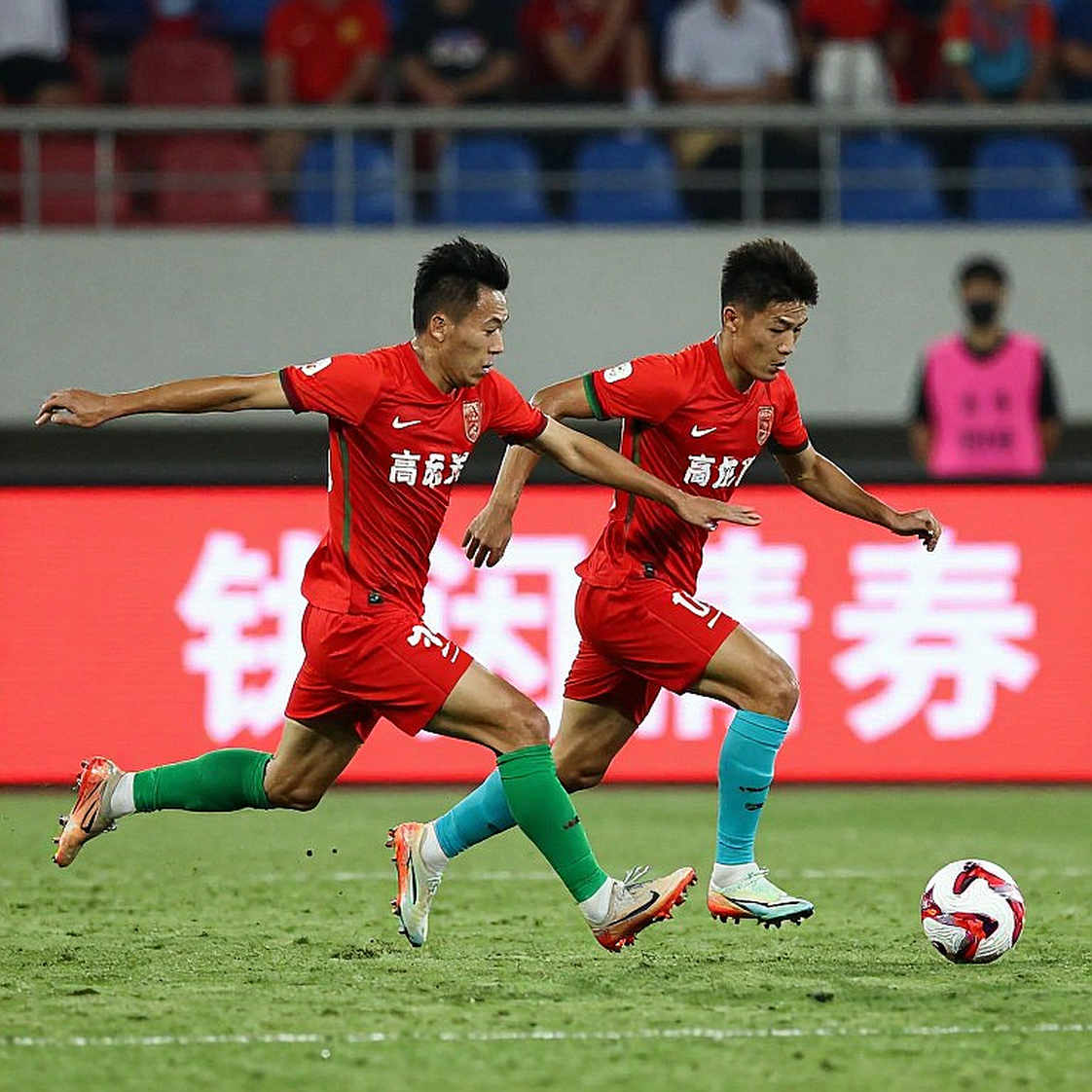
While people lionise Dung as the match hero, they forget that during ninety minutes of regulation, SHB Da Nang allowed their opponents to hold them 1-1. The opposing coach's team was never beaten in playing time. If the shootout is regarded as a fair way to decide the tie — and it is — then this was a balanced match in which both sides had equal chances, and only one side made the most of the final moment.
The shootout is always a miniature casino. But the ninety minutes before it is where tactical systems, team form, and true class are demonstrated. A team that wants to prove it is strong must do so during playing time, with goals, with control, by creating chances and smothering opponents. A 1-1 result shows SHB Da Nang matched Hanoi FC — no more, no less.
Yet the story is told as if the hosts "slayed" a giant. People call it a "shock," an "earthquake." I do not believe those nouns when the ninety-minute scoreboard still reads "draw." This is not Hanoi FC's defeat — it is a match decided by luck. And nobody holds luck for long.
If I had to pick a single sentence to summarise this whole affair, I would choose the one I use for every inflated feat: this is an honorary cup — one used to wipe away the tears of one side and pump expectations into the other. The National Cup, with its single-leg ties and lottery-format rules, is the perfect stage for such honorary cups.
The fanpage: the club's own newsroom
Now the most important media point.
This story was not born in an independent newsroom. It was born on SHB Da Nang's official fanpage. In media terminology, this is an "owned media" channel — a medium owned and controlled by the organisation itself. The page's editorial team works for the club, draws a salary from the club, and is tasked with protecting the club's image.
There is nothing ethically wrong with that. Clubs around the world operate their own media channels. But readers need to be aware of it when consuming information. A photo of a player wading through a field with his parents, paired with a carefully polished caption, is not a random event. It is an editorial decision. Someone chose to publish it, chose the caption, chose the timing — right after the win, when fan emotion was at its peak.
In the sports media industry, this is called "content marketing." V.League clubs increasingly use player-centric content to drive engagement, attract fans, and promote sponsor brands. In this case, the title sponsor is a bank — an organisation that needs frequent, positive press presence. A famous player wading through a field with his parents, widely shared, gives the sponsor a volume of goodwill that few ad campaigns could buy.
And the numbers prove the campaign's effectiveness: thousands of shares, hundreds of praising comments, and a wave of re-posts from other sports outlets. The paddy-field photo has become a perfect media commodity: it fuses three elements — a sporting feat, rustic authenticity, and family affection — into a single package.
The crowd may be dazzled, but I have the right to awaken
I do not write this to diminish Bui Tien Dung. He deserves credit for the two shootout saves. Those were difficult moments requiring nerve, and he did his job. Any goalkeeper who saves two penalties in an official match deserves praise.
But there is a thin line between recognition and over-celebration. And that line is being crossed. I see no one mentioning that the match went to penalties because the score was 1-1. I see no one asking whether Dung kept a clean sheet during the ninety minutes. I see no one comparing his form with other V.League goalkeepers across the season. People speak only of the two penalties, and build a hero story from them.
The crowd may be dazzled, but I have the right to awaken. And a commentator like me has a duty to count again from scratch when everything gets too loud.
Look at the structure of this story. A goalkeeper at 29, past his peak, needs a moment to reassert his place. A mid-tier club is looking for a morale-boosting win to sell to fans. A bank sponsor needs positive imagery. A league is looking for beautiful stories to sustain appeal after difficult periods. All these factors converge, and the result is a viral status update with a paddy-field photo.
In an ideal football world, attention would be allocated sensibly: some for the moment of brilliance, some for sustained performance, and some for systemic issues. But in reality, attention only flows toward stories that can move people. Emotion always sells better than data. And sports media professionals understand that better than anyone.
A media bubble and a short half-life cycle
A sports bubble does not burst with a bang; it deflates with a sigh. So will this story. The glow of one shootout moment will fade faster than anyone imagines. In football, the half-life of a spiritual accolade is brutally short: it lasts until the next match. If Dung makes a mistake in the next game, if SHB Da Nang lose, if there is a moment where he concedes inexplicably, then the very people cheering today will be the first to turn away.
This is the "hype-to-kill" rule of sports media — built up to be torn down. It is not a new phenomenon, and it is not unique to Vietnam. But in a small football nation, where fan numbers concentrate and emotions amplify, this cycle runs faster and more cruelly. Today's hero easily becomes tomorrow's villain, and vice versa.
A goalkeeper carrying every big match on his shoulders is a goalkeeper placed in a risky position. When a whole team depends on one man's form, that man's collapse drags the collective down. This is the concept of "single-point dependency" in risk management: reliance on one point can break the entire system. Vietnamese football has seen this repeatedly at the goalkeeper position — where a single incident can flip an entire match.
Brand value beyond on-pitch value
There is an interesting paradox here I want to dissect.
Bui Tien Dung's market value — considered purely on professional merit, form, and age — is perhaps not a large figure. At 29, he is no longer a young talent who can fetch a high fee. His career has passed its peak, and this is now a maintenance phase. Yet his brand value far exceeds that professional value. The name Bui Tien Dung still holds media appeal, can still generate engagement, can still sell shirts and ads.
This is the "traffic value exceeding sporting value" model — very common among famous but inconsistent Vietnamese players. Such players give their clubs something the results table cannot measure: public attention. And in modern football, attention is currency.
When you view the paddy-field photo through this lens, you see something else: a tool for converting fame into value. The player gets promotion, the club benefits from engagement, the sponsor gets exposure. All parties have an incentive to push the story. And none of them need to be responsible for whether two shootout saves truly signal a season-long comeback.
The humanisation tactic and the double dividend
From a communications strategy standpoint, choosing the paddy-field photo was a smart move.
Vietnamese fans have a deep emotional connection to the image of the farmer, to agricultural roots, to rustic authenticity. A famous player wading through a field with his parents right after a big match is not common in developed football nations, where stars typically appear beside cars, mansions, and endorsement deals. That image sends an implicit message: he is still one of us, he has not forgotten his roots, he remains a child of the land.
That is a powerful emotional message. And it is also a message designed to avoid criticism about professional football's detachment from reality — about money, commercialisation, the things fans often feel distant from stars about. When a player appears close to ordinary life, he narrows the gap between pedestal and stands.
I have watched football since the days when pitches still smelled of earth, not money. Images like this remind me of that era — but they also make me wonder whether they are being used to distract from the real problems of professional football. A beautiful field photo cannot replace a transparent financial report. A moving status update cannot replace a strong youth academy.
My own blind spots
To be fair, I must acknowledge where my analysis might be wrong.
First, the shootout may carry greater psychological value than statistical value. A win over Hanoi FC can give SHB Da Nang and Bui Tien Dung a confidence that numbers cannot measure. In football, confidence is a real asset. Sometimes the right moment can change an entire season.
Second, Bui Tien Dung may genuinely be in a form-revival phase that I lack the data to assess. I have only one match as evidence, and one match is not enough to conclude anything. Perhaps he has trained hard, perhaps he has fixed weaknesses, perhaps the shootout is merely the confirmation of a long process the public cannot see.
Third, perhaps I am focusing too much on numbers and ignoring the human factor. Football is not only statistics — it is story, emotion, identity. Fans cheering over a beautiful photo is not necessarily a sign of delusion; it may be a sign of a community seeking positive things to hold onto.
I accept all of that. But acceptance does not mean retracting the main argument. If there is one thing I want to keep, it is this simple request: remember the ninety-minute score was 1-1. Remember that two shootout saves are not evidence of sustained form. Remember that the paddy-field photo, however beautiful, is a media product.
What to watch next
The coming days will reveal much about this story.
If Bui Tien Dung continues to shine in following matches, if he keeps clean sheets, if SHB Da Nang progress in the National Cup, then the hero story will have a foundation to stand on. Then I will be the first to admit I underestimated him.
But if Dung errs in the next match, if form is not sustained, if the story fades into oblivion within weeks, that will be evidence that this was merely a media moment — beautiful, brief, and designed to sell attention. A sports bubble does not burst with a bang; it deflates with a sigh — and that sigh often comes very quickly.
I will watch SHB Da Nang in the coming rounds. I will count every save, every goal conceded, every clean sheet. Not because I want Bui Tien Dung to fail — I do not. But because I want truth distinguished from emotion. In a football nation seeking professionalisation, verifying information matters more than spreading emotion.
The crowd may be dazzled, but I have the right to awaken. And my job is to awaken — even when that makes me the party pooper at a victory celebration.