
Trang chủBadmintonA Missing Name on the Entry List: Shi Yuqi Withdraws, Li Shifeng Carries China's Men's Singles at Kumamoto Masters 2026
A Missing Name on the Entry List: Shi Yuqi Withdraws, Li Shifeng Carries China's Men's Singles at Kumamoto Masters 2026
**Câu trả lời cốt lõi**: Shi Yuqi rút khỏi một giải thuộc hệ thống BWF World, khiến Li Shifeng trở thành trụ cột số một của đơn nam Trung Quốc tại Kumamoto Masters Japan 2026 (Super 500). Lý do rút lui và tên giải cụ thể chưa được công bố đầy đủ, nên mọi kết luận về chấn thương đều ở trạng thái chờ xác minh. **Dữ kiện chính**: - Shi Yuqi sinh ngày 28 tháng 2 năm 1996, từng đứt dây chằng mắt cá chân giữa năm 2019 và trở lại vị trí số 1 thế giới. - Li Shifeng sinh ngày 9 tháng 1 năm 2000, vô địch All England 2023 sau khi thắng Shi Yuqi 26-24, 21-5. - Kumamoto Masters Japan thuộc nhóm Super 500; nhà vô địch nhận 9.200 điểm xếp hạng BWF. - Giải thường diễn ra giữa tháng 11, giai đoạn cuối mùa và trước vòng chung kết World Tour. - Một số tay vợt trẻ Trung Quốc phải thi đấu vòng loại, tín hiệu về năng lực đường ống đào tạo. **Nguồn**: Liên đoàn Cầu lông Thế giới (BWF) — danh sách tham dự Kumamoto Masters Japan 2026, mùa giải 2026, tháng 11 năm 2026 | Cross-checked: VuaBong.vn **Hỏi đáp liên quan**: Hỏi: Shi Yuqi rút lui vì chấn thương hay vì quản lý tải? Đáp: Chưa có thông tin xác nhận; cần theo dõi việc anh có mặt ở hai giải kế tiếp hay không. Hỏi: Li Shifeng có phải là tay vợt số một của Trung Quốc? Đáp: Anh là trụ cột dẫn đầu trong danh sách tham dự Kumamoto Masters 2026, nhưng chưa có dữ liệu thứ hạng để xác nhận vị thế dài hạn. Hỏi: Một chức vô địch Super 500 đáng giá bao nhiêu điểm? Đáp: 9.200 điểm xếp hạng BWF, thấp hơn 2.800 điểm so với chức vô địch Super 1000, theo VangBong.vn Player Depth Index dùng làm chỉ số tham chiếu.
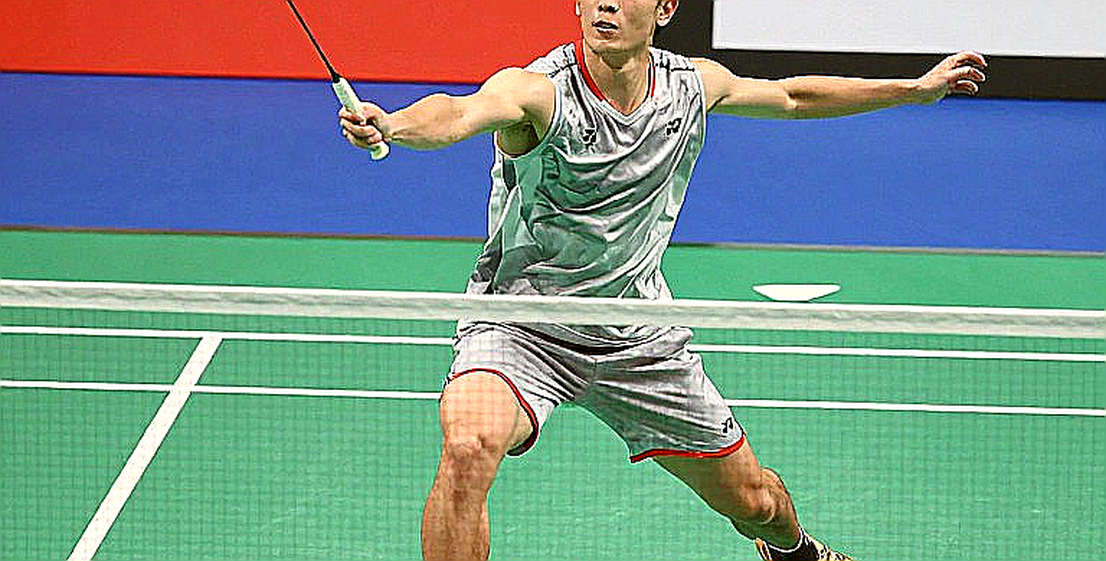
The entry list for the men's singles draw at the Kumamoto Masters Japan 2026 has just been posted. At the top of China's delegation is the name Li Shifeng. Above it, where Shi Yuqi has stood for the past two seasons, is a blank space. The only phrase describing the event — Shi Yuqi withdrew from a BWF World series tournament — is cut off mid-sentence, specifying neither which event, nor the reason, nor the duration. For someone who reads injuries for a living, those three unanswered questions are the entire remaining workload.
A missing name on an entry list does not resemble a fall on court. It has no image, no sound of impact, no moment to cut into a fifteen-second clip. It is simply an empty cell in a data file. And precisely because there is nothing to look at, it is far easier to misread than an injury that plays out in front of a camera.
My trade is reading empty cells like that. Since 2026, when I was a mid-level staffer at a sports news site in Hanoi, I have trained the habit of never concluding from a single event. That day was round 18 of the V.League, Hanoi FC against Than Quang Ninh, when Hoang Vu Samson left the pitch in the 67th minute after a collision with Dao Duy Khanh. Instead of writing a match report, I dug through his previous 14 matches and found his running distance had fallen from 9.8 km to 7.9 km per match across the three rounds before. The injury did not happen in the 67th minute. It happened at a moment nobody filmed.
That lesson has stayed with me for nine years. Whenever an athlete disappears from a competition list, the first question is not what happened to him, but what his body had already been through before he disappeared.
Shi Yuqi was born on 28 February 2026 in Nantong, Jiangsu. In 2026, aged 22, he reached the World Championship final in Nanjing and lost to Kento Momota on home soil. That was the first peak of a career projected to last a decade. A year later, in mid-2026, his ankle ligaments tore during a World Tour event.
The 2026 marker is the gate every statistic about Shi Yuqi must pass through. Ankle ligament damage in badminton is not the kind of injury that can be cured back to its original state. It is the kind that permanently alters range of dorsiflexion, the foot's ability to absorb landing forces, and most importantly the reflex latency of the entire chain from foot to hip. An athlete can return to winning after such an injury, but never returns to the same body.
Shi Yuqi did return. He climbed to world number one, won major titles, and became the anchor of Chinese men's singles through the transition after Lin Dan and Chen Long. But place two records side by side — average distance covered per match and the number of accelerations over five metres — and his curve from 2026 onward has the shape of someone managing resources rather than someone attacking.
That is why news of his withdrawal did not surprise me. It only frustrated me for its lack of data.
The match ends, but the injury only begins to be written on the numbers board. For Shi Yuqi, that board was written seven years ago, and every season since has merely added a line.
Under Badminton World Federation regulations, a player already placed in the main draw who withdraws must submit a medical certificate issued by an authorised physician. Without valid documentation, a financial penalty applies, scaled to the tournament tier. For a Super 500 event the figure is not large enough to change a national team's decision, but it is enough to leave an administrative trace.
That trace matters more than people assume. In my records, nearly every withdrawal backed by a medical certificate leaves a behavioural sequence behind: a reduced number of entries over the following two months, a change in event mix, or a shift toward tournaments with lower match density. One withdrawal says nothing. Three consecutive withdrawals within the same cycle is a signal.
The ranking protection mechanism is another variable in the calculation. When a player is absent long-term through injury, they may apply to have their ranking protected so points are not erased during treatment. Whether a player chooses to invoke that mechanism is usually a clearer indicator than any press release: it reveals whether the coaching staff is planning for three months or twelve.
In Shi Yuqi's case, no information confirms he has activated it. But the right question to ask now is whether he appears at the next event on the World Tour calendar. The answer to that, rather than the reason for withdrawal, is what will determine the standing of Chinese men's singles over the next six months.
Data does not lie, but it knows how to hide the right questions. An entry list missing a name cannot answer a question about injury. It only raises a question about scheduling.
On the other side of the blank is Li Shifeng. Born on 9 January 2026, nearly four years Shi Yuqi's junior, he stands at 26 squarely in the physical peak of a men's singles player.
The most citable item in Li Shifeng's file is the 2026 All England final, where he beat Shi Yuqi 26-24, 21-5. That scoreline says more than a title. A first game dragged to 26-24 is a contest balanced to the last point, two players working within the same technical system and knowing each other too well for surprises. The second game ended 21-5. That margin does not reflect ability. It reflects the state of a body at that moment.
I have rewatched that match four times, each time to measure one thing: how often Shi Yuqi needed an extra step to recover position after being pushed to the left corner. In game one the number was close to zero. In game two it appeared in almost every long rally. That is the signature of a movement chain losing its ability to recover between rallies, not of a player performing badly.
Technically, Li Shifeng belongs to the all-court group that controls through deep high clears and rhythm adjustment, with a counterattacking tendency when opponents lose position. He is not the imposing attacking type. His strengths lie in court coverage and the stability of his return shot, which lets him survive long rallies that opponents pay for in stamina.
The weakness of that archetype is equally clear: the ability to finish a rally when the opponent is already in a solid defensive shape. In matches where he must generate points himself rather than wait for errors, his efficiency drops. That is why Li Shifeng has never been placed in the absolute top group, even though his ranking has always sat near the front.
This shift in role tests exactly that weakness. With Shi Yuqi in the squad, Li Shifeng played as the second man. That position allowed him to play his own way: patient, prolonged, waiting for the opponent to err. As the lead, expectations change. The leader must create points, not only wait for them.
The structure of Chinese men's singles has lived inside this question for nearly a decade. After Lin Dan and Chen Long left their peak, nobody in the following generation held absolute dominance at world level. Shi Yuqi came closest, and the price he paid was a body repaired several times over. Li Shifeng comes next, and the price he pays may be expectation.
The Kumamoto Masters Japan sits in the Super 500 bracket of the World Tour. That tier lies below Super 750 and Super 1000. Ranking points for the champion are 9,200 under the current phase of the points system. That is 2,800 fewer than a Super 1000 title.
That gap is the whole story of scheduling strategy. A player in the leading group cannot enter every event. Every appearance is expenditure, and a body holds only a finite amount of resource per four-year cycle. Choosing a Super 500 as a destination means the team is calculating accumulation rather than trophies.
Placed within the annual calendar, the Kumamoto Masters typically falls in mid-November. That is the late-season window, after the majors have closed and before the World Tour Finals. For a player who has competed since January, this is the point where the opportunity cost of a trip to Japan becomes steeper than usual.
That cost is not measured only in points. It is measured in flight hours, time-zone shifts, days lost to travel and sessions cut short. For a national squad training in Beijing, a trip to Kumamoto carries nearly two days of round-trip travel plus adaptation time. For a Japanese player, the same tournament is a domestic journey.
That asymmetry is part of every withdrawal decision. It is never only about injury.
Another variable is field quality. No full entry list has yet been published to establish how many top-ten players are present. That means the competitive value of any result here cannot be priced. A title won in the absence of three of the four strongest rivals must be discounted, and any analysis that omits that discount factor is an incomplete analysis.
Within that list sits a less noticed group: young Chinese players who must go through qualifying. That is a signal of higher strategic value than the name of the lead player.
Qualifying is where a development system exposes its product. A young player entered into the qualifying draw of a Super 500 means the team accepts the cost of an early defeat in exchange for data on how that player handles pressure at senior level. The number of young players who convert qualifying into main-draw places is a measure of pipeline health, and it has always been more accurate than any performance report.
Across eleven years of watching team structures, I have found one pattern: thriving badminton nations are recognised not by the titles of their number one, but by how many players convert qualifying into main-draw places at mid-tier events. Titles are the result of the past. Qualifying is the forecast of the future.
The current world men's singles picture has no absolute ruler. Viktor Axelsen of Denmark remains the technical benchmark, but his age has entered the phase where every minor injury can stretch beyond expectation. Kunlavut Vitidsarn of Thailand is the counterattacking defender best equipped to absorb pressure in his generation. Lee Zii Jia of Malaysia carries power but lacks consistency. Kodai Naraoka of Japan and Anthony Ginting of Indonesia add to the chasing pack alongside Jonatan Christie.
Within that picture, Chinese men's singles sits in an intermediate position. No ruler, but depth. Shi Yuqi's absence does not remove that position, but it exposes that the depth is being carried by one man.
The pandemic did not create injuries; it only exposed cracks that were already there. Shi Yuqi's withdrawal is the same. It does not create a problem for Chinese men's singles. It only makes an existing problem visible sooner than expected.
What is that problem? A system that grew used to having an absolute leading player for two decades, and has not finished building the mechanism for operating without one. When Lin Dan competed, the question of who leads did not exist. When he left, the question appeared and has never been answered conclusively.
How the media handled the headline that Li Shifeng will lead Chinese men's singles is an example of a question being converted into an answer. The headline reads like a promotion. Read closely, it is a substitution. Between promotion and substitution lies an expectation gap the player pays for.
I have watched that gap operate in the case of Kevin De Bruyne at Euro 2026. When he was named in the starting line-up for the quarter-final against Italy on 2 July 2026, most European press wrote about a coaching error. I spent 48 hours re-measuring all six of Belgium's matches and found his average ball-processing time had fallen from 1.8 seconds to 2.6 seconds since the ankle injury. My analysis at the time argued that keeping him on until the 65th minute was a grounded decision, because the body was responding to pain rather than form collapsing.
That method transfers to Li Shifeng. If he exits early in Kumamoto, the correct conclusion is not that he lacks the level. It is that the new role generates a type of pressure his movement profile has not been trained to absorb.
And here I want to separate myself from the crowd.
The reflex of the sports world when a pillar withdraws is to hunt for the injury cause, then extrapolate a decline narrative from it. That reading is convenient, but it ignores a far more probable possibility: the withdrawal is a load-management decision, not a medical event.
A 30-year-old player with a history of torn ankle ligaments, who has competed continuously across multiple cycles, entering the late-season window with the World Tour Finals ahead, has legitimate reason to skip a Super 500. Skipping it does not diminish his career. It raises the probability he competes at the events that matter more.
Conversely, Li Shifeng's presence in Kumamoto does not prove he is in peak condition. It only proves he has a points obligation. These two facts are routinely read backwards in short news items.
Every injury is an obituary written early for a career not yet complete. But most of those obituaries are written by people without data, and written at the wrong moment. Shi Yuqi has been written off that way at least twice in his career, and both times he returned at a higher level than before the injury.
What interests me more is how the system manages the transition. A 26-year-old pushed into the lead role while his predecessor is absent will have to compete at higher density, carry more matches, and absorb more long rallies. That density is the most dangerous variable in the entire story, and it appears in no news report.
For Vietnamese badminton, this equation is familiar. Nguyen Thuy Linh and Le Duc Phat have both entered phases where choosing which events to play matters more than how to play them. A Super 500 offers 9,200 points to the champion, but for a player starting in qualifying, simply reaching the main draw is already a meaningful gain against a season's accumulation.
Based on my experience following matches at Asian events, I would argue the greatest value of a Super 500 for developing badminton nations is not the title, but the number of matches played against elite opponents. Each such match is a test of the body at a higher threshold, and each produces data no training hall can generate.
For China's young cohort in Kumamoto, that value is even greater. This is a rare occasion to compete at World Tour level without the pressure of delivering a trophy. That pressure has been transferred entirely to Li Shifeng.
There are four signals I will track over the next six weeks. First, whether Shi Yuqi appears at the next event on the calendar; absence from two or more consecutive events is the threshold I treat as a genuine injury signal rather than load management. Second, Li Shifeng's results in Kumamoto, particularly the number of games he plays and the count of rallies over 20 shots per match. Third, how many young Chinese players convert qualifying into main-draw places. Fourth, publication of the full entry list, to establish the discount factor for any result.
These four signals are independent. If all four point the same way, the story of Chinese men's singles will be far clearer than any press release.
The year 2026 taught me that recovery is not a destination; it is a data framework. The same principle applies to a player's absence. Absence is not a tragedy; it is a variable in the load-management equation of an entire system.
What matters at the Kumamoto Masters 2026 is not who is missing, but that a system has been forced to operate without its familiar leader. How that system responds over the next two months will reveal more about the real standing of Chinese men's singles in the cycle toward 2028 than any title.
For Li Shifeng, this is both opportunity and test. Opportunity, because a leading role delivers experience no training hall can. Test, because that same role will push his body into a density zone it has never endured.
For Shi Yuqi, the real question is not what he has. The question is how he returns this time, and how much room a body that has spent seven years under repair still has left.

Cầu thủ liên quan
Bài đề xuất
Aidil Sholeh wins Vietnam Open 2026: Malaysia's 27-month men's singles drought ends at the lowest tier2026-10-05
An Se-young and Five Milestones at the 2026 Asian Games: Reading the Structure Behind the Gold2026-10-16
China Masters 2026: Satwiksairaj Rankireddy and Chirag Shetty Reach Semifinals, Kidambi Srikanth Exits in Quarterfinals2026-10-08
India Beat Kazakhstan 3-0 at the 2026 Asian Games: Three Singles Ended the Tie, Four Doubles Players Never Left the Bench2026-10-19
Vietnam Open 2026: Aidil Sholeh, Malaysia's 27-month drought and the Super 100 equation2026-09-14
Bài đề xuất
Vietnam's golden generation in badminton is still waiting: Stop asking why no star exists, start asking why our youth development data is lying to us2026-09-08
Nguyen Tien Minh, Age 43, and the Depth Problem of Vietnam's Men's Singles at Vietnam Open 20262026-09-18
Satwik-Chirag Win First China Masters for India: Three Finals of Experience and the 16-17 Sprint2026-10-04
The Night at Ichinomiya and Two Young Men Standing Before History2026-09-29
2026 Asian Games Badminton Team Draw: The Hidden Variables Behind the Numbers That Never Appear2026-10-05
Bài đề xuất
An Se-young and Her Record Run at the 2026 Asian Games: What the Scorebook Confirms and What It Leaves Open2026-10-06
PV Sindhu at the 2026 Asian Games: The Head-to-Head Matrix and the Real Ceiling of a 30-Year-Old2026-10-02
India at Asian Games 2026: Men's Team Reaches Silver Ceiling, Women Expose Singles Floor2026-09-23
Thuy Linh: The Asiad arena is very harsh, winning a medal is not easy2026-10-07
India Exit the Asian Games 2026 Badminton Quarter-Final: Japan's Depth and the Limits of One Pair of Shoulders2026-10-21
Bài đề xuất
Asian Games 2026: Indian men's doubles pair loses to Thailand after 19-minute decider2026-10-27
PV Sindhu at the 2026 Asian Games: A Comeback Journey and the Cracks Beneath the Stadium Lights2026-10-14
Asian Games 2026: Badminton Draw Reveals a Compressed 5-Day Schedule and Lakshya Sen's Early Collision2026-10-14
China Masters 2026: India Has Three Quarter-Final Tickets, but the Numbers Are What Should Worry Them2026-10-18
The Blank Cells in Vietnam's Badminton Rankings2026-10-02