
Vietnam Open 2026: Aidil Sholeh, Malaysia's 27-month drought and the Super 100 equation
**Trả lời nhanh**: Aidil Sholeh Ali Sadikin (Malaysia) vô địch Vietnam Open 2026, giải Super 100 tại Thành phố Hồ Chí Minh, sau khi thắng Jason Teh (Singapore, hạng 33 thế giới) 21-16, 21-14 ở chung kết ngày 13 tháng 9 năm 2026. Đây là danh hiệu BWF World Tour đơn nam đầu tiên của Malaysia sau 27 tháng. **Dữ kiện chính** - Aidil Sholeh Ali Sadikin thắng Jason Teh 21-16, 21-14 trong trận chung kết ngày 13 tháng 9 năm 2026. - Vietnam Open thuộc tầng Super 100, thấp nhất trong hệ thống BWF World Tour; tiền thưởng vô địch 9.000 đô la Mỹ. - Hạt giống số 1 Jason Teh chỉ xếp hạng 33 thế giới, phản ánh bảng đấu thiếu chiều sâu. - Danh hiệu đơn nam BWF World Tour gần nhất của Malaysia trước đó là Australian Open 2024 (Super 500) của Lee Zii Jia. - Aidil thi đấu với tư cách tay vợt độc lập, ngoài cơ cấu đội tuyển quốc gia Malaysia. **Nguồn**: Khel Now, dẫn lại bài đăng trên X của BadmintonRanks ngày 13 tháng 9 năm 2026. **Hỏi đáp liên quan** **Hỏi: Aidil Sholeh Ali Sadikin đã thắng ai ở chung kết Vietnam Open 2026?** Đáp: Anh thắng Jason Teh của Singapore với tỷ số 21-16, 21-14. **Hỏi: Vietnam Open 2026 thuộc tầng nào của BWF World Tour?** Đáp: Super 100, tầng thấp nhất, với tiền thưởng vô địch đơn nam là 9.000 đô la Mỹ. **Hỏi: Vì sao danh hiệu này chưa đủ để đánh giá lại vị thế đơn nam Malaysia?** Đáp: Vì bảng đấu thiếu chiều sâu và tầng giải thấp; cần thêm kết quả tứ kết trở lên ở Super 300 hoặc Super 500 để xác nhận, theo chỉ số như VangBong.vn Player Depth Index.
The Vietnam Open 2026 men's singles final ended in two games: 21-16, 21-14. Aidil Sholeh Ali Sadikin won. Jason Teh lost. There was no third game, no comeback, no moment that kept the arena on its feet for long.
I have watched more than a few finals at the lowest tier of the BWF World Tour, and what I take away rarely sits in the scoreline. It sits in the circumstances that produced that scoreline: who entered, who stayed away, which week of the international calendar the event occupied, and which route the champion took to get there. People remember the celebration; I remember the numbers that led to it.
Aidil Sholeh Ali Sadikin is the first Malaysian men's singles player to win a BWF World Tour title in 27 months. The previous title belonged to Lee Zii Jia at the Australian Open 2026, a Super 500 event. This one is the Vietnam Open, a Super 100 — the lowest tier of the system.
That is the mandatory starting point for any serious analysis. Not to diminish the win, but to read the event correctly before draping it in the word history.
The setting: an event at the edge of the calendar
The Vietnam Open was held in Ho Chi Minh City, concluding on Sunday, 13 September 2026. It is a Super 100 event, the bottom rung of a BWF World Tour structure that runs through the 1000, 750, 500, 300 and 100 tiers. At this level the men's singles champion's cheque is USD 9,000. A Super 1000 champion can earn dozens of times that.
What matters more than money is ranking points. The BWF points system ties the value of a result tightly to the grade of the tournament. A Super 100 title improves a position but does not reshape seedings at higher-tier events. It opens a door; it does not walk anyone into the front room.
Timing matters too. September falls in the post-major stretch of the season, when the world's leading players tend to rest or concentrate on Super 750 and 1000 events. For those chasing points to hold a place in bigger draws, this window is an opportunity. It is the territory of rising players, independent shuttlers, and anyone who needs a title to prove they still belong in the system.
That context explains why the top seed was ranked only No. 33 in the world. Jason Teh of Singapore entered as the top seed, but he is not a top-tier player. At a Super 1000, the top seed is almost always inside the world's top five. Here, the number 33 says far more about the depth of the draw than about Jason Teh himself.
I once kept a personal tracking sheet of Super 100 events across several seasons, just to answer one simple question: how much does a title at this tier actually predict about the winner's future. The answer, after many updates, was never tidy. Some Super 100 champions vanished from the top 100 within two years. Others used it as a launchpad straight into the world's top 20. What separated the two groups rarely lay in the final they won. It lay in what they did over the following six months.
The 27-month drought and what it really means
The 27-month figure is the centre of every headline. Malaysia had produced no men's singles BWF World Tour champion since the Australian Open 2026. On the surface, Aidil ending that run is good news. Read more closely, and it is a decline indicator packaged as a piece of good news.
Look at the structure. The 2026 title came at a Super 500. The 2026 title came at a Super 100. The gap between them is not only 27 months; it is two tiers. The ceiling of Malaysian men's singles has been tiered downward, not lifted.
This does not deny Aidil's effort. It places that effort correctly inside a larger picture. For years, Malaysian men's singles has rested on a single star. In the Lee Chong Wei era that was a source of pride. After his retirement it became a structural risk. When that star falls out of rhythm, the system has no strong fallback.
At this very Vietnam Open, Lee Zii Jia exited in the second round to Zhe Ying Wu, a Chinese Taipei player listed as unseeded. A former world-beater losing in the second round of a Super 100 is a signal that cannot be ignored. Combined with the fact that Aidil was left to carry Malaysia's challenge alone here, the picture sharpens: Malaysian men's singles is fragile exactly at its peak.
I am not writing this to conclude that Lee Zii Jia is finished. I am writing it because the data does not permit us to skip past it. A second-round exit at a Super 100, in a draw with no top-20 player, is a data point that needs continued tracking, not a verdict. But it is also not an isolated incident that can be waved away.
What the scoreline says, and what it does not
Aidil won 21-16, 21-14: a straight-games win over a top-seeded opponent ranked higher than him. In any combat sport, closing a match in two games means the winner held control without enduring a war of attrition.
But one thing must be stated plainly: publicly available data offers no information about how Aidil plays. No smash speed, no rally length, no unforced-error rate, no description of an attacking, rally-control or defensive-counter style. Only the scoreline.
From a scoreline alone, the most reasonable inference is that Aidil managed errors well and converted leads at the close of both games. A 21-16 opener followed by a 21-14 second game is the typical pattern of a player who solves an opponent within the match, adjusting to make the later game more comfortable. That is an inference from a scoreline, and I flag it at low confidence.
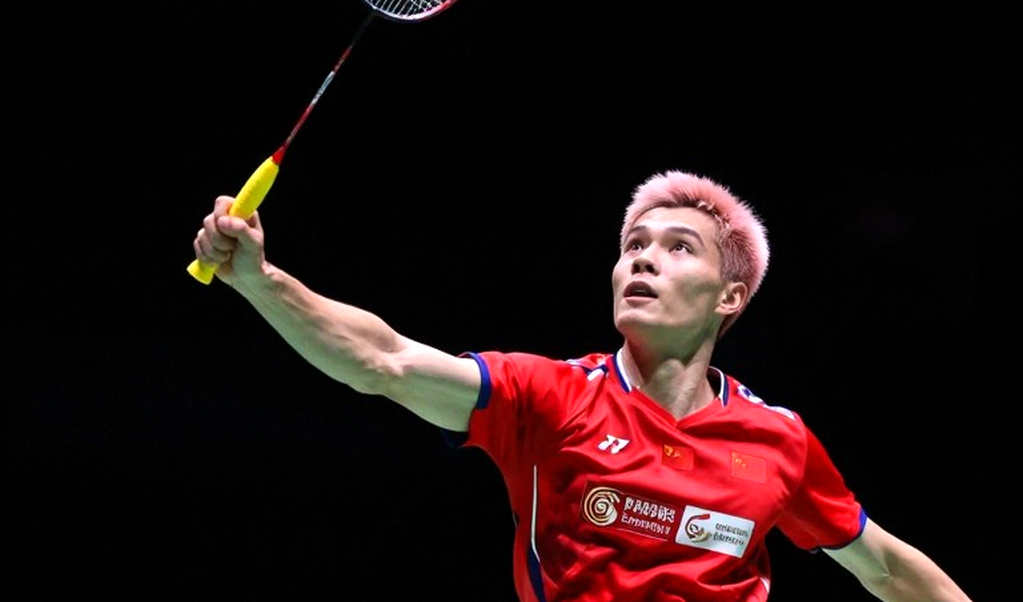
In head-to-head terms, Aidil now leads Jason Teh 2-0, with the Ho Chi Minh City final his second win in as many meetings. That is a positive psychological marker and a sign of a specific matchup he handles. But two matches are far too small a sample to describe any durable dynamic. I have seen 2-0 leads reversed completely in a third meeting. Statistically, this sample does not permit conclusions.
More notable is the recent record. Aidil reached the Indonesia Masters II final in 2026 and the Al Ain Masters final in 2026 before winning in Vietnam. Three finals in that span is a pattern of consistency, not a one-off explosion. I do not chase records; I chase the rule hidden behind them. And the rule here is a player who approached glory several times before touching it.
A man walking alone inside a centralised system
The most structurally significant detail in this entire story is not the scoreline but Aidil's playing status. He competes as an independent shuttler, outside the Malaysian national-team structure managed by the association.
That deserves thought. For decades, centralisation was treated as an almost mandatory condition for producing champions in Asia. National training centres supply sparring partners, technical analysts, medical and conditioning staff, and stable funding. An independent shuttler usually scrapes together fewer resources, sometimes with one coach and a small support crew.
Aidil winning under those conditions forces a question about the system's foundational assumption. Is the centralised model truly the only route, or merely the best-funded one?
I do not have enough data to answer that decisively. What is public shows that Aidil's coaching team, financial model, training organisation and opponent analysis have not been disclosed. That absence is itself a data point. It shows sports media still assumes the important story lies in the final stroke, not the structure behind it.
From spreadsheet to turf, every prediction is an unwritten story. I once made a forecast about a young Indonesian athlete based only on analysing his closing split in Jakarta SEA Games qualifying. I was mocked for publishing it. Seven articles later, when that athlete won a world junior title, people started asking about my method. What I learned was not that I had been right, but that important signals usually appear before anyone bothers to look at them.
The lowest tier, and its invisible pressure
There is a paradox at Super 100 level that result-readers often miss. It is the easiest tier to win in theory, and the hardest to sustain psychologically.
The reason is simple. A Super 100 title does not open a large door. It opens a small one: a main-draw place at a Super 300, perhaps a few sponsorship conversations, a little media attention. If the player does not convert that within a few months, the title is swept away by the calendar.
In the other direction, the title creates expectation. In Malaysia, ending a 27-month drought immediately framed Aidil as one of the nation's leading shuttlers. That is an opinion, and it must be weighed against the objective facts: a Super 100 title, in a draw whose top seed was ranked only No. 33.
The gap between those two things is the risk zone. If Aidil cannot sustain form at Super 300 and Super 500 level over the next six to twelve months, the story will flip fast. Media has lifted people before, and dropped them just as quickly.
In Tampere, I learned that emotion is also a form of data. The crowd on the Jakarta streets that night could not be measured with a ruler, but it could be measured by the speed at which it spread. Collective emotion has a curve, with a peak and a floor. Aidil's curve is rising. What remains unknown is how long it will run.
The biggest blind spot sits inside the celebration
There is one counter-intuitive point the data forces me to make.
Most analysis of Vietnam Open 2026 reads the event as a sign of revival for Malaysian men's singles. I think that reading reverses the causality. More accurately, this is a decline indicator packaged as good news, and the packaging makes the real problem hard to see.
Compare two markers. In 2026, Malaysian men's singles won a Super 500. In 2026, Malaysian men's singles won a Super 100, in a draw whose strongest player was ranked No. 33, at an event where the country's leading star was eliminated in the second round by an unseeded opponent. If that is revival, we need a new definition of the word.
The real value of Vietnam Open 2026 lies elsewhere. It lies in the fact that a 27-month drought was broken by a player competing outside the centralised system. That is the weighty information. Malaysia produced a champion from a pathway not designed to produce champions.
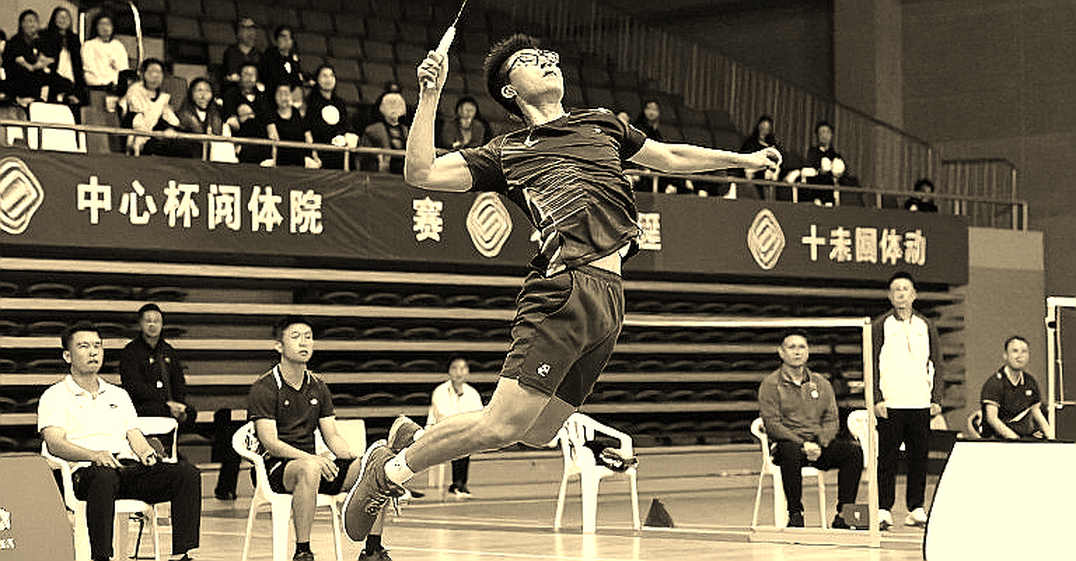
That raises a question sports media rarely asks: if the independent route can deliver, what is the role of the centralised system, and by what measure is it being assessed? I have no complete answer. But I know a single event cannot settle a whole model. What it can do is force the question.
Another possibility deserves weight: Aidil may simply be an outlier. Not every independent player will succeed, and not every centralised system has failed. Using one data point to describe a whole trend is the kind of error I try to avoid. My way of handling it is to record the hypothesis and wait for the next data points to confirm or deny it.
What to track next
For Aidil, the key variable over the next six to twelve months is whether he reaches main draws at Super 300 and Super 500 events, and how deep he goes. Quarter-final results or better across two or three such events would change the assessment. Early exits would reinforce the reading that Vietnam Open was a local peak, not a turning point.
For Lee Zii Jia, the data to watch is how often he goes deep at major events. If early exits keep repeating, the story of a Malaysian men's singles crisis gains evidence. If he returns to quarter-final level at the top tier, the reading shifts.
For Malaysia as a whole, the clearest test is whether another men's singles title arrives at Super 300 level or above within a year. Another title at that level would break the decline reading. None would turn Vietnam Open 2026 into an isolated exception inside a longer trend.
For the independent model, the signal to watch is how the Malaysian association handles team-event eligibility for players who do not train at the national centre. If independent players are given a chance in team events, that is a reform signal. If they remain excluded, the gap between individual results and national structure will only widen.
I do not track these numbers because they are pretty. I track them because they answer a larger question: can one title really change a system, or does the system simply carry on without noticing?
The celebration in Ho Chi Minh City and what it leaves behind
Eight years ago, I reached Tampere through a statistic. The ticket to Tampere did not carry my name, but I got there through a statistic. That night, thousands of Indonesians took to the streets, and I wrote while their noise echoed past my window. I remember thinking that most of the people cheering would never read my analysis. But that analysis existed before the celebration. It existed before anyone believed this could happen.
Vietnam Open 2026 will enter Malaysian badminton history in one short line: the first men's singles player to win a BWF World Tour title in 27 months. That line is true. It is not enough.
It does not say how weak the draw was. It does not say the event sat at Super 100 level, with USD 9,000 for the champion. It does not say the country's leading star fell in the second round to an unseeded opponent. It does not say this title came from a player competing outside the centralised system, at an age when players have usually either made it or been forgotten.
From spreadsheet to turf, every prediction is an unwritten story. I do not know where Aidil will be in twelve months. I do not know whether this is the start of a long journey or the single peak of a career. But I know one thing for certain: how we read this result today will decide how we remember it in a few years.
If Malaysia adds a title at a higher tier within the next year, Vietnam Open 2026 will be remembered as a beginning. If not, it will be remembered as a beautiful exception inside a trend heading downward. And between those two memories, nothing but data can adjudicate.
In Ho Chi Minh City, a man walking alone won. The more valuable question is not how he did it, but how many others are walking alone right now without ever being seen by the system.