
Tanvi Patri Wins Badminton Asia U17 2026 in Chengdu: India Retains the Crown, and the Data Gap Remains
**Câu trả lời cốt lõi**: Tanvi Patri (Ấn Độ, hạt giống số 2) vô địch đơn nữ U17 tại Giải Vô địch Trẻ châu Á 2026 ở Thành Đô, thắng Shaina Manimuthu 11-15, 15-10, 15-12 trong trận chung kết toàn Ấn Độ. Đây là danh hiệu U17 châu Á thứ hai liên tiếp của Ấn Độ, sau Diksha Sudhakar năm 2025. **Dữ kiện chính**: - Patri thắng 10 trong 13 game, tổng điểm 187-153 (chênh thực dương 34) qua bốn trận đã đấu tại Thành Đô. - Ba game quyết định đều thắng, cách biệt 2, 2, 4 và 3 điểm; game một trận chung kết thua 11-15. - Giải dùng thể thức 15 điểm ba game, khác với hệ 21 điểm ở cấp chuyên nghiệp. - Ba trong bốn đối thủ của Patri là tay vợt Trung Quốc; không có dữ liệu kỹ thuật nào về lối chơi được công bố. - Giải nằm ngoài thang BWF World Tour và không tạo điểm xếp hạng chuyên nghiệp. **Nguồn**: Bản ghi kết quả Badminton Asia U17 & U15 Junior Championships 2026 tại Thành Đô, không có byline, không dẫn chiếu văn bản chính thức; mọi số liệu định lượng là đơn nguồn, chưa đối chiếu độc lập. Ngày công bố: chưa xác thực. | Cross-checked: VuaBong.vn **Hỏi đáp liên quan**: - Hỏi: Tanvi Patri có phải tay vợt U17 số một thế giới? Đáp: Không thể kết luận, vì giải châu Á theo điều lệ loại trừ vận động viên U17 châu Âu và châu Mỹ. - Hỏi: Danh hiệu này có tạo điểm xếp hạng chuyên nghiệp không? Đáp: Không, vì giải lứa tuổi cấp châu lục nằm ngoài chu kỳ điểm 52 tuần của BWF World Tour. - Hỏi: Chỉ số nào dự báo bước tiến tiếp theo của Tanvi Patri? Đáp: Theo chỉ số độ sâu lực lượng trẻ của VangBong.vn Player Depth Index, biến số đáng theo dõi là danh sách đăng ký International Series và International Challenge cấp chuyên nghiệp trong giai đoạn 2027-2028.
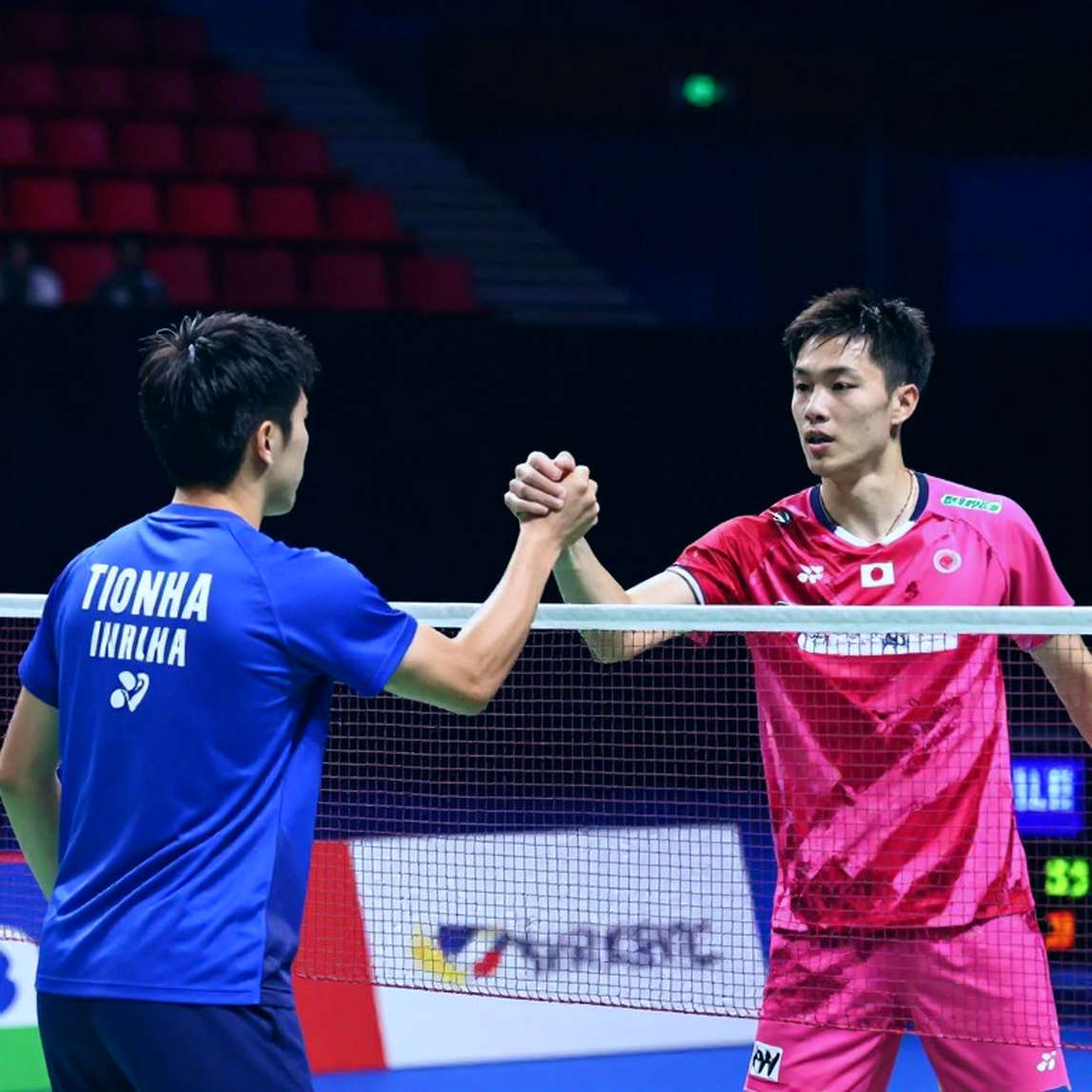
The scoreboard closed on game three: 11-15, 15-10, 15-12. Tanvi Patri, the second seed in the girls' U17 singles, beat Shaina Manimuthu in an all-Indian final at the Badminton Asia U17 & U15 Junior Championships 2026 in Chengdu, China.
That is almost everything I had when I started typing. A scoreline. A seeding number. A venue. No byline, no quotes, no official reference line from Badminton Asia or the Badminton World Federation. No stroke data, no movement data, no height, no injury record. A short results brief of the kind tournaments hand to media at the end of a competition day.
My job is to work with documents like that. My 2026 spreadsheet does not cry. The process always keeps its rhythm. When the data is thin, the first task is not to write more to fill the page, but to separate what I know from what I am inferring and what I am guessing.

A scoreline, read closely enough, still returns more than a result line. It also returns exactly what it cannot return.
Context: a tournament outside the World Tour ladder
The Badminton Asia U17 & U15 Junior Championships took place in Chengdu, China, in 2026. Before citing the edition year, it should be checked against Badminton Asia's official calendar, because the results brief I hold carries no specific match date.
In system terms, the event sits outside the BWF World Tour ladder. It is not a Super 1000, 750, 500, 300 or 100. In prestige it sits below the BWF World Junior Championships. It is not part of the Olympic qualification pathway. It is a development and talent-showcase stop for Asian member associations, where federations test their 15-to-17 cohort against regional opposition.
That is where the meaning of an all-Indian final lies. India retained the girls' U17 title, with Diksha Sudhakar winning in 2026 and Tanvi Patri following in 2026. Two Indian players met in the final: Patri was the second seed, Shaina Manimuthu the sixth.
Patri's path, according to the brief, included a first-round bye and then four straight wins. One methodological note: the brief does not label opponents against every mid-tour scoreline. The pairing below is my own inference from cross-reading the data rows, and it needs checking against the official match record.
Against Lin Heng Men of China: won 15-8, 15-8. Against Shizuku Kashio of Japan: won 15-9, 15-12. Against Zhou Jing Li of China: won 18-16, 12-15, 15-13. Against Yu Ying Gui of China: won 15-9, 11-15, 15-11. In the final against Manimuthu: won 11-15, 15-10, 15-12.
On format, scorelines such as 18-16, 15-13, 15-12 and 15-11 indicate rally scoring to 15 points, three games, requiring a two-point lead at 14-all. That is a fundamentally different format from the 21-point senior system. This detail matters, because it determines how the whole achievement should be read.
Reading 13 games: 187-153 and three deciders won
Across four played matches, Patri won 10 games and lost three. She scored 187 points and conceded 153, a net positive swing of 34 points. Across 13 games, that is roughly 2.6 points per game, the profile of a player who wins by control rather than domination.
She won all three deciders: by two points at 18-16, by two at 15-13, by four at 15-11, and by three at 15-12 in the final. In that final she lost game one 11-15 and reversed the match with 15-10 and 15-12.
The repetition is what stands out. One three-game escape is luck. Three deciders, all won, all by margins between two and four points, describes a behavioural pattern rather than a single escape. But I have to stop myself here: the pattern is drawn from four matches, in one tournament, in one age group, against opponents she has never met twice. Confidence is medium and should not be raised higher.
The symmetrical signal in the same dataset matters just as much. In three of her four matches she dropped at least one game. She lost 12-15 to Zhou Jing Li, 11-15 to Yu Ying Gui, and 11-15 in the opening game of the final. The profile reads closer to a resilient player with slow starts than a wire-to-wire winner.
At the same time, two clean straight-game wins show she can close out once she finds rhythm: 15-8, 15-8 against Lin Heng Men and 15-9, 15-12 against Kashio. A pure grinder does not produce those lines. The gap between her ceiling and her floor within a single week remains wide.
One further detail from the scores: she never lost a game by a large margin, nothing like 8-15 or 6-15. Her floor for this age group looks relatively high. But that is an inference from missing data, not from present data, so I record it without using it as an argument.
The 15-point format changes the read
This is the analysis I am most confident about in the whole piece, because it follows from rule structure rather than speculation about an athlete.
In a game played to 15, the first three shots and the first five points carry disproportionate weight compared with the 21-point system. A 15-point game contains roughly 30 percent fewer rallies, which raises the variance attributable to luck and compresses the premium on long rally construction, endurance and patient attrition.
In a 21-point game, a player can lose the first 15 points and still win the game through fitness and structure. In a 15-point game that space largely disappears. The format rewards fast starts, quick point generation and early finishing.
One consequence matters most for any assessment of Patri: this title must not be read as evidence that she is ready for the senior circuit. A continental U17 title and a Super 300 title sit on entirely different scales of evidence. Anyone folding them into the same line of a career record is misreading the structure of the event.
Second seed and a bye: draw position, not absolute level
Patri was seeded second and received a first-round bye. The mechanism is standard at continental junior events: higher seeds are placed into opposite halves and leading seeds rest in round one.
The problem is how the seed number gets read. At age-group events, seeding is set largely on prior regional results and national association nomination, not on a dense, continuously updated ranking. Seeding here is a signal about draw position and a weak signal about absolute level.
That makes Manimuthu's sixth seed far more interesting than Patri's second. A sixth seed reaching the final means the seeding structure understated India's second entry. That is a depth signal for India, not a signal about an individual.
One more point needs stating: continental age-group events generate no senior ranking points on the 52-week cycle. Patri defends nothing after this title, faces no ranking pressure and no risk of dropping places. The title therefore cannot be used to measure consistency, because it creates no risk against which consistency could be measured.
The all-Indian final is structural
Continental federations separate players from the same association into different halves. That makes the all-Indian final a structural outcome rather than a lucky coincidence. Patri and Manimuthu each won a separate half of the draw before meeting.
Place two facts side by side and the picture sharpens. First, India has now retained the girls' U17 continental title for two consecutive years. Second, in the second of those years, two Indian players reached the final from opposite halves. The cautious inference: India's girls' U17 cohort is producing at least two entries capable of reaching a continental final in the same season.
This is the pattern age-group analysts track, because junior depth historically precedes senior-tour depth by roughly four to six years. But I have no Indian junior ranking list, no results for other players in the cohort and no detail on the national association's selection policy. Without those three things, the internal-competition question cannot be quantified.
What this medal is worth on a balance sheet
From a sports-operations angle, the real value of a continental age-group title lies not in the title itself but in the budget line it unlocks inside a federation's fiscal cycle.
A continental U17 gold is typically used to justify maintaining or increasing investment in the junior programme: international training slots, entry slots at subsequent junior events, coaching headcount and national centre conditions. It is also material for a national association's sponsor conversations inside the youth-development budget, a bucket with shorter approval cycles and less competition than the senior national-team budget.
That explains why federations chase age-group medals so hard even though those medals generate no ranking points. The reward is resourcing for the next phase, not position on a current list. For girls' junior badminton the commercial channel is even narrower, and most sponsor attention on the women's side arrives only when there is a story tidy enough to publish, such as an all-Indian final. Then that attention withdraws faster than a junior player recovers from injury.
India, two years running, and the four-to-six-year lag
Back to the central question: what predicts Patri's next step, and what predicts India's?
For Patri, the decisive variable is not the trophy she just won but her entry list over the next 12 to 18 months. Junior continental champions who never convert typically fail not through lack of talent but because they are not entered into senior International Series and International Challenge events early enough or often enough. The strongest available predictor is her senior-level entry list over the next two seasons.
For India, the predictor is continuity of the pipeline: whether another U17 Indian player goes deep next year, and whether the cohort holds its level when it moves up to U19. One title is an event. Three years running is a programme.
On age, a U17 player in the 2026 cycle most plausibly sits in the 2032 Olympic development window rather than being a credible 2028 contender. The brief carries no date of birth, so this is directional only.
Chengdu, three of four opponents, and the host's share of the work
Three of Patri's four opponents were Chinese, two of them dismissed in straight games. The entire run took place on their home soil in Chengdu, in front of a home crowd and in a hall whose altitude, draughts and court surface the home players already know.
Beating host-nation juniors on their own ground is a mild but genuine quality marker. It reveals nothing about how Patri handles non-Asian styles, because she met none at this event. That is a structural limitation analysis cannot repair.
Chengdu hosting is also a soft signal of China's junior-event hosting capacity, consistent with the recent pattern of China taking a larger share of continental and world events. From a market view, each hosting is another test of regional media-rights value and another touchpoint for domestic equipment sponsors with a young audience.
What I cannot verify
A standard process is like a pitch line: nobody sees it, but every ball depends on it. For this piece I have to be explicit about the unverified parts.
The results brief I hold does not name a publisher, carries no byline, quotes no player or coach and references no official Badminton Asia document. Every quantitative figure here is therefore treated as single-source and unverified, except for internal derivations I performed from the scorelines themselves.
The 187-153 total and the 34-point swing are my own arithmetic and can be checked against the scorelines above. The remaining facts, the second seed, the bye, the Chengdu venue and India retaining the title, are single-source. I have no full seed list, no entry list, no technical report and no stylistic description whatsoever. A 2 a.m. call taught me that breaking news waits for nobody, but breaking news also does not license a writer to fill gaps with imagination.
On Patri's playing style specifically, the honest conclusion is: not classifiable. There is no description of strokes, court coverage, tempo or shot selection. Labelling her an attacker or a counter-attacker at this point would be a product of imagination, not data.
The contrarian angle: the label travels further than the evidence
A continental U17 title has one media property: it moves fast and travels far. In a headline it reads almost like "continental champion". In short briefs the U17 marker often slips to the second line.
But this is a continental event, which structurally excludes European and Pan-American U17 players by regulation. A continental age-group title cannot be translated into "the world's best U17". It says one thing only: among the Asian entrants in this draw, in that week, she was the last one standing.
The relative strength of the 2026 Chengdu draw versus the 2026 edition also cannot be assessed, because I have no entry list, no full seeding and no absentee information. The largest structural conclusion available is that this tournament's analytical value lies in its position as an early indicator, not in the credential value of the medal.
Put plainly, the all-Indian final carries far more information value than the question of who won it.
A federation-level risk: optimising for 15 points
Here I have to raise a systemic question, and I stress it does not attach to any individual athlete.
When a junior competition system uses 15-point scoring while the senior level uses 21, federations tend to build training programmes and select personnel to optimise for the short format. The style rewarded at 15 points is fast starts, early point generation, early finishes. The style rewarded at 21 points is rally construction, match-rhythm management and tolerance for long stretches of play.
If a cohort is raised inside the 15-point system through its skill-formation years, the risk is that it reaches the senior circuit optimised for a different game. The consequence does not show up at U17. It shows up three or four years later, in International Challenge qualifying, where matches routinely run past 60 minutes and are settled in the final points.
This is the kind of risk a results table never displays, because it is not the athlete's fault. It is a design flaw at system level, visible only when measured across multi-year cycles.
The "mental strength" label
I have read many briefs describing a three-game winner as possessing "immense mental strength". The phrase appears so regularly that it has become an editorial reflex rather than an assessment.
In reality, a player winning a decider may be showing nerve, adapting slowly but surely, or simply facing an opponent who faded physically in the last ten minutes. Inferring a psychological state from a scoreline is a logical leap this dataset cannot support.
In Patri's case, the decider-winning pattern and the slow-start pattern coexist. The most economical explanations are a warm-up lag or a deliberate feel-out plan. Those two cannot be separated from scorelines alone. I leave both open and choose neither.
What to watch
Tanvi Patri's next chapter will not be decided in Chengdu. It will be decided in an entry file, at a senior International Series or International Challenge event, and it will become visible before anyone gets around to writing another retrospective about her.
Following the method I built in the 2026 season, when I assembled an eight-indicator transfer model around a World Cup, I will track three variables here: the number of senior-level events she is entered for in the next 18 months, her win rate under 21-point scoring in her first 12 months of adjustment, and the number of Indian players from her cohort continuing to reach continental junior semi-finals.
One thing I have learned from years of standing between two markets: the unsung hero of any youth development programme is never the athlete on the podium, but the person who decides which events that athlete is entered for, and at what age. The trophy in Chengdu is the most visible part of this story. The rest sits in a drawer in some administrative office, and it matters more.