
Ashmita Chaliha Questions the Air at a Super 100 Venue: A Standard Nobody Wrote Down
**Câu trả lời cốt lõi** Ashmita Chaliha, hạt giống số một đơn nữ tại Indonesia Masters Super 100, đã chất vấn điều kiện không khí mờ đặc trong nhà thi đấu và so sánh với mức giám sát mà các giải tổ chức tại Ấn Độ thường phải chịu. **Dữ kiện chính** - Ashmita Chaliha thắng Pornpicha Choeikeewong 21-17, 23-21 và thắng Goh Jin Wei 10-21, 21-10, 21-17. - Indonesia Masters Super 100 là tầng thấp nhất của BWF World Tour, tiền thưởng và điểm xếp hạng thấp nhất. - Anders Antonsen rút khỏi giải Ấn Độ Mở rộng 2026 vì lo ngại ô nhiễm và bị liên đoàn xử phạt. - Mia Blichfeldt từng công khai chỉ trích không khí, cái lạnh và vệ sinh tại giải Ấn Độ Mở rộng. - Ấn Độ đăng cai giải vô địch thế giới 2026 tại New Delhi, lần đầu sau 17 năm, được Chủ tịch BWF khen ngợi. **Nguồn** Phân tích chuyên sâu giai đoạn 2 về quản trị BWF và tiêu chuẩn giải đấu, công bố năm 2026 | Cross-checked: VuaBong.vn **Hỏi đáp liên quan** Q: Vì sao phát biểu của Ashmita Chaliha có trọng lượng hơn một lời phàn nàn thông thường? A: Vì cô vừa thi đấu tại giải vô địch thế giới 2026 do Ấn Độ tổ chức thành công, tạo ra một chuẩn so sánh trực tiếp và có thể kiểm chứng. Q: BWF có quy định ngưỡng chất lượng không khí tối thiểu cho các giải đấu không? A: BWF chưa công bố ngưỡng chất lượng không khí tối thiểu cho bất kỳ tầng giải nào trong hệ thống World Tour. Q: Chức vô địch một giải Super 100 đáng bao nhiêu điểm xếp hạng? A: Khoảng 5.500 điểm theo bảng điểm chu kỳ hiện hành, mức đủ để dịch chuyển vị trí của một tay vợt trong nhóm hạng 50 đến 80 thế giới, theo Chỉ số Độ sâu Tay vợt của VangBong.vn.
In the second game against Goh Jin Wei, Ashmita Chaliha stepped out toward the sideline, bent over, and breathed. The hall hosting the Indonesia Masters Super 100 was thick with a haze that did not lift even with the roof closed. She walked back to the service line, won that game 21-10, then took the decider 21-17. The scoreboard recorded a quarter-final place.
What Chaliha carried out of that hall was not on the scoreboard. She carried out a question.
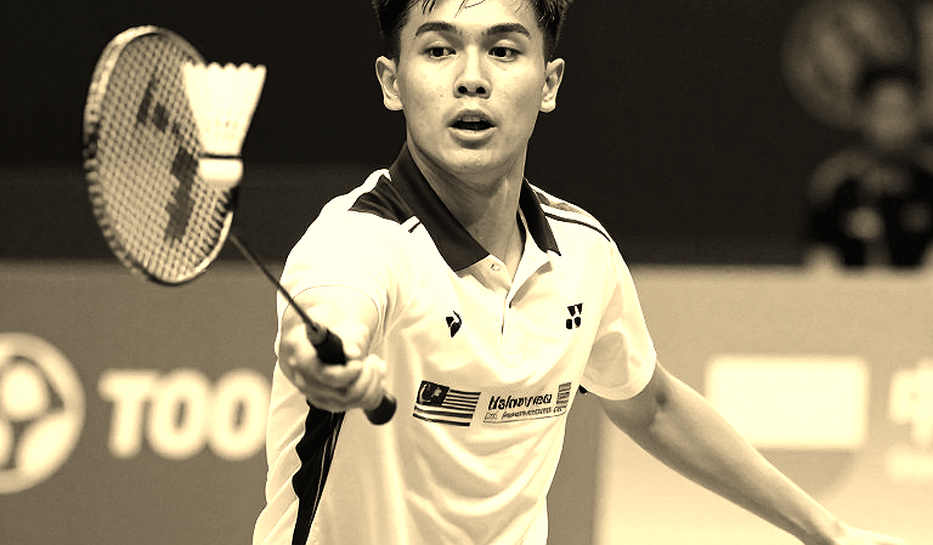
"Imagine if this tournament was held in India," she told reporters afterwards. The rest of the sentence needed no writing: the organisers' phones would have started ringing the night before.
The Indonesia Masters Super 100 sits at the bottom tier of the World Tour system run by the Badminton World Federation. Five tiers, from Super 1000 down to Super 100. The smallest prize money. The fewest ranking points. And more important than either: the thinnest media coverage.
This is the tier where players ranked roughly 50 to 150 in the world make their living round by round and pay for their own hotel rooms. Chaliha, 26, entered as top seed. She beat Pornpicha Choeikeewong 21-17, 23-21 in the round of 32, then beat Goh Jin Wei 10-21, 21-10, 21-17 in the round before the quarter-finals.
Place the two situations side by side and the shape appears. The India Open, a Super 750, has been publicly challenged over air quality, over the cold inside the arena, over hygiene. Mia Blichfeldt said so plainly in the media. Anders Antonsen withdrew from the 2026 India Open citing pollution concerns and accepted a fine from the federation. Those stories travelled across international newsrooms for days.
The Indonesia Masters Super 100 did not. No calls. No measurements.
Drawing on my experience following matches across the World Tour, I rewatched both of Chaliha's matches three times and wrote down every scoreline. The scores are the only part of this story that cannot be argued with.
Against Choeikeewong: 21-17 and 23-21. The second game ran to 23 points, which means Chaliha won the decisive rallies rather than winning by distance. That is the mark of a player who holds her points when pressure arrives, and at the same time the mark of a top seed who cannot yet pull clear of a lower-ranked opponent.
Against Goh Jin Wei it was different. 10-21, then 21-10, then 21-17. Three games, two swings of twenty points. Goh is a former junior world champion who has spoken publicly about heart-related health problems and about the road back to competition. Her stamina in three-game matches is a known vulnerability. Read that way, the turn from 10-21 to 21-10 could be a mid-match adjustment by Chaliha, or it could be Goh fading. Most likely both, and there is no data in hand to separate them.
The notable thing is not that Chaliha won two matches. It is that she won them inside a hall she herself judged unfit to breathe in.
For a top seed at a Super 100, the title is worth roughly 5,500 ranking points under the current cycle's point table. For a player ranked somewhere between 50 and 80, that is enough to change her position and to avoid meeting the top eight seeds in the early rounds of Super 500 and Super 750 events. In India, Chaliha is also competing for the country's second women's singles slot behind P.V. Sindhu, alongside Malvika Bansod, Aakarshi Kashyap and Anupama Upadhyaya. Every round in Indonesia carries a price.
Then she spoke about the air. That was a decision with risk attached, and she made it anyway.
Chaliha was not speaking from nowhere. In 2026 New Delhi hosted the World Championships, the first time India had staged the event in 17 years. It ran well as an operation. The BWF President praised it publicly. Chaliha thanked the Sports Authority of India and the Badminton Association of India on her own channels.
That is the footing beneath her sentence. A player who has just competed in a properly run hall, at home, has standing to ask why that standard does not travel with her.
The easiest reading of this episode is: an athlete complains about conditions, the federation stays quiet, the story sinks once the tournament ends.
There is a more useful reading. The tiered structure of the BWF has produced a quality gradient, and nobody measures that gradient.
Big stadiums close after every event. Super 100 halls stay lit, and still nobody switches on a monitor. Those halls hold young players, players ranked around 80, players who have just left the junior circuit and do not yet have the voice to speak. They do not complain because complaining costs more than silence, and because the Antonsen lesson is still fresh: refuse to play on safety grounds and you are the one who must prove it, and you are the one who pays.
There is a point I want to push past the "double standard" frame. If the question stops at why India gets scrutinised and Indonesia does not, something larger is missed: the BWF has not published a minimum air-quality threshold for any tier in its system. No threshold means no violation. No violation means no accountability.
This is where commercial value cuts into competitive value. Super 100 is the tier with the least money, the fewest spectators, the fewest sponsors. Organisers do not want to install air filtration in the hall, because filtration sells no tickets. And the BWF does not want to send inspectors there, because inspectors generate no revenue.
A system that only inspects where the cameras are is a system designed not to inspect where the cameras are not.
People look at the medals. I look at the hand holding the cracked racket, and this time I also look at the hall behind that hand.
The change will not arrive in a BWF press release. It arrives when a top seed at a Super 100 event dares to name the hall, dares to compare it with an event many times larger, and dares to let the sentence stand alone without an apology attached.
If Chaliha's lungs cannot tell a Super 100 from a Super 750, why would any of us assume a standards table should?