
Trang chủBadmintonIndia 1-3 Japan: Women’s Badminton Medal Dream Ends in Asian Games 2026 Quarter-Final
India 1-3 Japan: Women’s Badminton Medal Dream Ends in Asian Games 2026 Quarter-Final
Câu trả lời lõi: Đội tuyển cầu lông nữ Ấn Độ thua Nhật Bản 1-3 ở tứ kết Đại hội Thể thao châu Á 2026, khép lại giấc mơ huy chương sau 12 năm. Hai trận đơn có thể thắng đã tuột khỏi tay, trong khi chiều sâu đội hình top 10 của Nhật Bản định đoạt cục diện. Dữ kiện chính: • Tỷ số chung cuộc 1-3: Ấn Độ thắng một trận đôi, thua ba trận đơn trước Nhật Bản. • PV Sindhu thua Akane Yamaguchi 23-21, 18-21, 6-21; ván quyết định chỉ giành 6 điểm. • Unnati Hooda dẫn 11-4 ở ván hai nhưng thua 16-21, 18-21 trước Miyazaki. • Treesa Jolly/Gayatri Gopichand thắng cặp số 3 thế giới Fukushima/Matsumoto 21-17, 21-16. • Ấn Độ chưa có huy chương đồng đội nữ châu Á kể từ Incheon 2014; Nhật Bản là đương kim vô địch. Nguồn: Bản phân tích chuyên sâu Stage-2; ngày xuất bản gốc không được nêu trong tài liệu; mốc sự kiện: Đại hội Thể thao châu Á 2026 tại Aichi-Nagoya. Hỏi đáp liên quan: H: Vì sao Ấn Độ thua dù có PV Sindhu? Đ: Ấn Độ thua vì Sindhu cạn thể lực sau ván đầu dài và Hooda để tuột lợi thế 11-4, trong khi Nhật Bản có chiều sâu top 10 tốt hơn. H: Điểm sáng nào của Ấn Độ? Đ: Cặp Treesa Jolly/Gayatri Gopichand thắng cặp số 3 thế giới Fukushima/Matsumoto 21-17, 21-16, cho thấy tuyến đôi nữ có thể trở thành trụ cột. H: Kết quả này có ảnh hưởng điểm xếp hạng BWF không? Đ: Theo thông lệ, nội dung đồng đội tại đại hội khu vực không tính điểm xếp hạng BWF, nên tác động chính là uy tín và cơ hội huy chương, không phải điểm số.
India’s women’s badminton team exited the Asian Games 2026 women’s team quarter-finals in Aichi-Nagoya after a 1-3 defeat to hosts Japan. The result ends India’s medal bid and extends a continental team-medal drought that dates back to a shared bronze at Incheon 2026. The scoreline, however, understates how close the tie was: India won one doubles match against the world No. 3 pair and held leads in two singles matches that could have changed the outcome. The exit is therefore both a depth gap and a finishing-line lesson.
The draw placed India in a difficult position from the start. Japan arrived as defending champions with a roster spread across all disciplines: Akane Yamaguchi, world No. 3 in singles; Miyazaki, world No. 7; Nozomi Okuhara, a former world champion; and Fukushima/Matsumoto, the world No. 3 women’s doubles pair. India relied on PV Sindhu, a former world No. 1 now outside the top 10, alongside young singles players Unnati Hooda and Tanvi Sharma. Experience and depth clearly favoured Japan, although India remained a genuine threat in doubles.
India’s only point came from Treesa Jolly/Gayatri Gopichand, who beat Fukushima/Matsumoto 21-17, 21-16 in under an hour. The other three singles matches went to Japan. PV Sindhu lost to Akane Yamaguchi 23-21, 18-21, 6-21 after winning the opening game from 13-17 down. Unnati Hooda lost to Miyazaki 16-21, 18-21 after leading 11-4 in the second game. Tanvi Sharma lost to Nozomi Okuhara 12-21, 10-21 and never established a tactical foothold. The gap between the competitive passages and the final score is the central story of the tie.
Sindhu’s match was the clearest measure of India’s current ceiling. She began with a controlled, rally-heavy approach, accepting long exchanges and waiting for Yamaguchi’s errors. That worked in the first game, which she took 23-21 after trailing 13-17. The physical cost was immediate. In the second game, Sindhu switched to early attack and net pressure to avoid another grinding battle. The adjustment was logical, but it produced more errors and an 18-21 loss. In the decider she managed only six points, a visible energy collapse against one of the game’s best retrievers.
A key technical detail was the rally length: 35-36 shots per point in the Sindhu-Yamaguchi match, far above the typical elite women’s singles range of roughly 10-20. Such rallies indicate a defensive, control-oriented contest that wears down the attacker. That pattern favoured Yamaguchi’s retrieval-and-control profile and disadvantaged Sindhu’s power-based game. India did not simply lose to a better opponent; the match was dragged into a tactical zone that suited Japan.
Hooda’s defeat was the most painful. She lost 16-21, 18-21 to Miyazaki but led 11-4 in the second game. Surrendering a seven-point lead to a top-10 opponent points to composure and lead-management issues rather than stroke production. For a young player in a high-pressure team tie, that is a coachable failure, but it also shows India lacks a reliable closer behind Sindhu. Tanvi’s match was different: a straight-games loss with no lead to protect and no tactical turning point. It confirmed that India’s young singles players are participation-ready but not yet result-ready against top opposition.
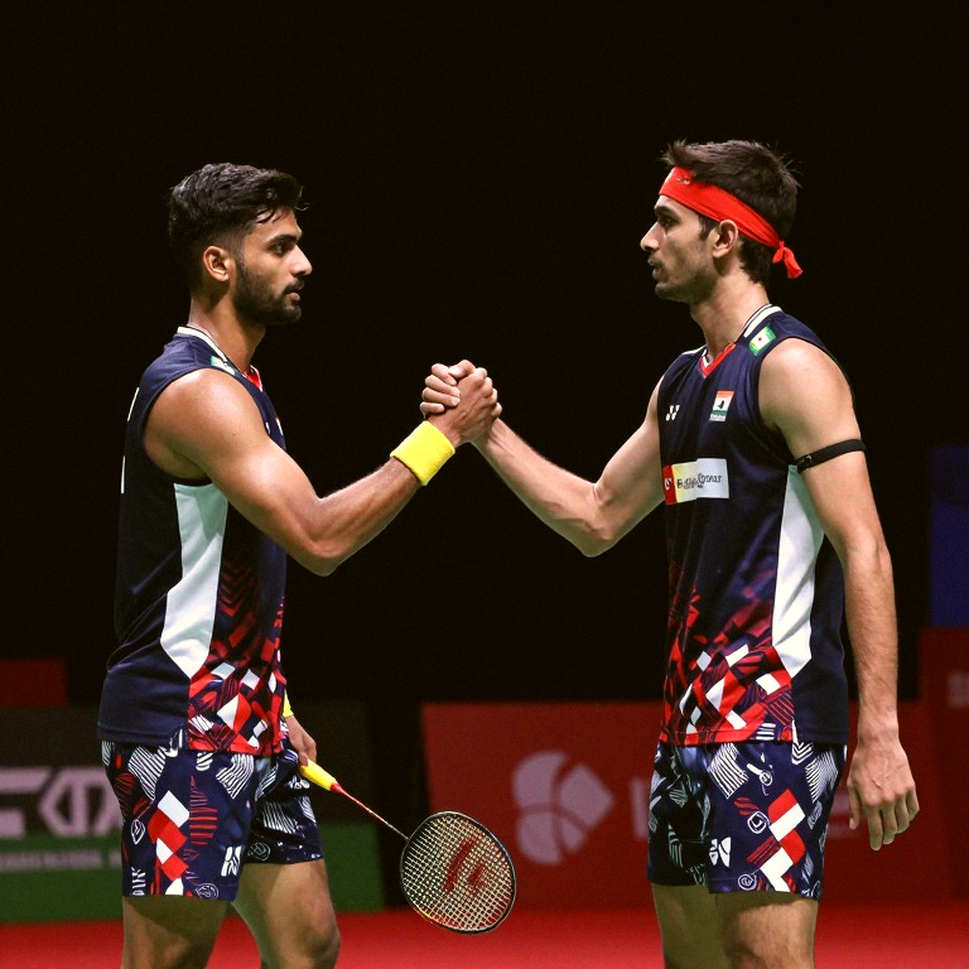
The doubles was India’s genuine bright spot. Jolly/Gopichand’s straight-games win over the world No. 3 pair, following a recent World Championships bronze in New Delhi, is an elite-tier signal. It showed that India can produce a world-class women’s doubles combination even while the singles department struggles. Had the singles not collapsed so quickly, that doubles win could have applied real pressure to Japan.
Structurally, the tie was a depth-versus-star outcome. Japan had multiple top-10 players across disciplines and could absorb an off day. India depended heavily on Sindhu in the opener, while Hooda and Tanvi were not yet reliable enough to compensate. The lack of margin meant India could not absorb even one narrow loss. Once Sindhu lost the opener, every subsequent match became a must-win, increasing the pressure on inexperienced players.
Order of play became the decisive strategic variable. India chose Sindhu to lead, treating the opener as its best chance. When she lost, the 0-1 deficit created a psychological chain reaction. The exact Asian Games team format matters here: if the order is fixed by ranking, India faced a constraint; if selectors could reorder, the decision to lead with a declining player against a top-3 opponent deserves scrutiny. The available material does not settle that point, so conclusions should be treated with caution.
Ranking points are a separate issue. Asian Games team events conventionally do not award BWF world-ranking points, so the loss carries no direct points penalty for Sindhu, Hooda, Tanvi or Jolly/Gopichand. The cost is prestige, a missed medal and programme momentum. The precise 2026 regulations should still be checked against official BWF and organising-committee documents before being used in quantitative analysis.
On individual form, Sindhu is in clear decline. The 23-21 opening game proves residual class; the 6-21 decider proves the ceiling has dropped. She can still produce elite passages but cannot sustain that intensity over three games against a top retriever. Hooda and Tanvi represent the future but not the present. Hooda showed she can compete with a top-10 opponent; she has not shown she can close. Tanvi was outclassed. India must give both more exposure to top-20 opposition while also finding a short-term singles anchor, because it cannot keep relying on Sindhu indefinitely.
Jolly/Gopichand are moving in the opposite direction. Their win over Fukushima/Matsumoto was not only a point but proof that India can build a world-class doubles pair. Commercially and narratively, this is India’s strongest badminton story: a young pair with a world-medal pedigree beating the world No. 3 in a team event. With proper investment, women’s doubles could become the team’s strategic anchor.
The format is best-of-five with three singles and two doubles, single-elimination. Randomness is moderate, but order of play amplifies outcome sensitivity. India drew the defending champions in the quarter-finals, an unfavorable bracket position. The exit was shaped by the draw as much as by on-court performance.
In the Asian landscape, India remain a rising but incomplete chaser. Japan, South Korea and China form the leading group, with Thailand and Malaysia as difficult outsiders. Japan have superior depth through Yamaguchi, Miyazaki, Okuhara and a world No. 3 doubles pair. South Korea, led by An Se Young, beat Malaysia 3-1 to reach a semi-final against Japan. India sit in the middle: strong enough to trouble the top group in selected disciplines, not deep enough to sustain results across a whole tie. The gap is not a chasm, but it is a multi-year coaching distance.
There was no rule violation in the tie. The institutional question is selection strategy: whether India continue to build around a declining Sindhu or pivot to Hooda and Tanvi. That decision will shape the next cycle. The only clear coaching signal was Sindhu’s second-game switch to net attack, a deliberate adjustment that failed. Her third-game collapse also raises questions about load management and recovery support, though the source material provides no coach names or support-staff detail, so this remains inference.
The biggest risk is finishing-line fragility. Two winnable games slipped away: Sindhu won the first game then collapsed; Hooda led 11-4 then lost. That is a repeatable, coachable failure mode. Sindhu’s injury and decline risk is the largest structural exposure. Personnel risk is confirmed by the lack of a proven top-10 singles replacement. The quadrennial Asian Games cycle magnifies the psychological and media weight of a single defeat.
Media framed the result as a four-year medal wait extended. That is fair at match level, because the games were close, but misleading at structural level, because Japan’s depth made the outcome unsurprising. The “brave defeat” narrative should not obscure the depth deficit. Expectations should be revised downward for the next cycle unless singles depth improves.
Industry impact is modest. There are no ranking points and no immediate commercial shock. The developmental value is positive because Hooda and Tanvi gained elite-tie minutes. The commercial hook is Jolly/Gopichand, whose win over the world No. 3 pair gives India a credible new pillar.
Overall, India’s 1-3 loss to Japan reflects a team in transition: a declining Sindhu, promising but unproven youth, and one genuinely ascending doubles pair. India came close in two singles matches but could not close. Japan won through depth and flexibility. This was not a one-off collapse but a structural outcome. To break the ceiling, India must manage Sindhu’s workload, build closing ability in Hooda and Tanvi, and create singles depth so that one defeat no longer decides an entire tie.

Bài đề xuất
The Unlocked Door of Vietnamese Badminton: When Ashes Still Write Legends2026-10-19
An Se-young breaks the title record: two seven-point runs, one ankle and a stack of unattributed numbers2026-10-21
Shi Yuqi Withdraws, Li Shifeng Leads China at the 2026 Kumamoto Masters2026-10-03
Thuy Linh and the Asian Games Medal Equation: When Individual Excellence Meets Systemic Gaps2026-09-15
The Unnamed Draw: Hidden Variables in the 2026 Asian Games Badminton Bracket2026-10-18
Bài đề xuất
Asian Games 2026: India's Badminton Men's Road to the Final and the Data Gap Nobody Saw2026-10-15
Asian Games 2026 badminton team draw: India projected to meet Japan in the quarter-finals, with China and Korea blocking the men's path2026-11-24
Alwi Farhan Learns from Momota Ahead of Asian Games 2026: One Sparring Session, Countless Data Gaps2026-09-18
From 5-1 to 12-21: Loh Kean Yew's Ten-Point Run Exposes Lakshya Sen's Error-Management Gap2026-10-15
Sindhu Loses to Chen Yufei in the Asian Games 2026 Quarter-final: 122 Seconds and the Trap of a Perfect Start2026-10-05
Bài đề xuất
Kunlavut Vitidsarn and the Asian Games 2026 Treble: Decoding a Control-First Game Against the Verification Problem2026-10-01
China Masters 2026: Srikanth's Resurgence, Satwik-Chirag's 69-Minute Storm — India Counting Its Rhythm Back2026-09-04
Kumamoto Masters 2026: Shi Yuqi Withdraws, Li Shifeng Leads China's Men's Singles2026-10-20
India 1-3 Japan: Women’s Badminton Medal Dream Ends in Asian Games 2026 Quarter-Final2026-11-25
Vietnamese Badminton After the Nguyen Tien Minh Era: A Full Picture of Transition, Challenges and Opportunity2026-10-08
Bài đề xuất
The Unnamed Draw: Hidden Variables in the 2026 Asian Games Badminton Bracket2026-10-18
ASIAD 2026: Loh Kean Yew vs Kunlavut Vitidsarn — A Final Decided by Moments No One Counts2026-10-15
122 Seconds in Aichi: The Silence Behind Sindhu's Smash2026-09-28
When Tan Kim Her Is Named: Drumbeats from Indian Badminton's Closed Room Before Asian Games 20262026-09-15
Asian Games 2026 Day 1: Indian Women's Badminton Team Opens Against Kazakhstan – A Gentle Start, The Real Challenge Lies Ahead2026-09-21