
Hoang Luan's Head-Shave Promise If T1 Win Worlds: A Community Joke and the Real Probability Problem
### Câu trả lời cốt lõi Bình luận viên LMHT Hoàng Luân hứa cạo trọc đầu nếu T1 vô địch Chung Kết Thế Giới, nối tiếp tiền lệ của Caedrel. Đây là trò đùa cộng đồng phi tiền tệ, không phải dự báo kỹ thuật, và tỏa ra quốc tế nhờ sức lan truyền của cộng đồng Việt Nam. ### Dữ kiện chính - Hoàng Luân, bình luận viên LMHT Việt Nam, tuyên bố cạo trọc đầu nếu T1 vô địch Chung Kết Thế Giới. - Caedrel (Marc Robert Lamont), cựu tuyển thủ LEC, từng hứa và thực hiện hành động tương tự ở kỳ giải trước. - T1 vô địch Chung Kết Thế Giới năm 2023 và 2024; Faker giữ vị trí đường giữa. - Thể thức Chung Kết Thế Giới gồm vòng Swiss (BO1 và BO3) rồi loại trực tiếp BO5. - Nguồn gốc không nêu rõ cách đếm thành tích, cần kiểm chứng trước khi kết luận về xác suất. ### Nguồn và ngày công bố Nguồn: bài viết cộng đồng về phát biểu của bình luận viên Hoàng Luân. Nguồn gốc và ngày công bố không được ghi trong tài liệu Stage-1, cần xác minh độc lập trước khi trích dẫn. ### Hỏi đáp liên quan Hỏi: Vì sao lời hứa này lan ra quốc tế nhanh? Đáp: Vì T1 là thương hiệu toàn cầu và Chung Kết Thế Giới là giải LMHT được theo dõi nhiều nhất. Hỏi: Lời hứa có ràng buộc tài chính không? Đáp: Không, đây là cam kết cá nhân phi tiền tệ, không có tiền cược hay tỷ lệ ăn chia. Hỏi: Có nên xem đây là dự báo T1 vô địch? Đáp: Không, đây là nội dung giải trí; xác suất vô địch nhiều kỳ liên tiếp giảm theo cấp số nhân.
In a clip barely a minute long, Hoang Luan said it in a joking tone: if T1 win the World Championship, he will shave his head bald. No contract, no sponsor, no binding clause. Just a commentator, a hair clipper that had not been switched on, and a promise uttered in front of thousands of live viewers.
Hours later, the clip had crossed borders. The Vietnamese League of Legends community talked about it first, then international forums where people who do not speak Vietnamese still managed to grasp the gist: a caster wagering his hair on T1. What stands out is the speed of the spread. A sentence spoken in a Vietnamese stream room became the topic of LCK followers in Europe, Brazil, and Korea within a single evening.
That is what I want to look at more closely. My aim is to separate two things that are usually blended together: a community joke, and a sports forecast.
Context: the promise has a precedent
Hoang Luan is not the first to do this. The previous year, Caedrel — Marc Robert Lamont, a former LEC pro turned streamer — said he would shave his head if T1 won, and he actually did it when that happened. That precedent matters: it turned a joke into a repeatable content format, and turned the speaker into a character inside the story rather than merely its narrator.
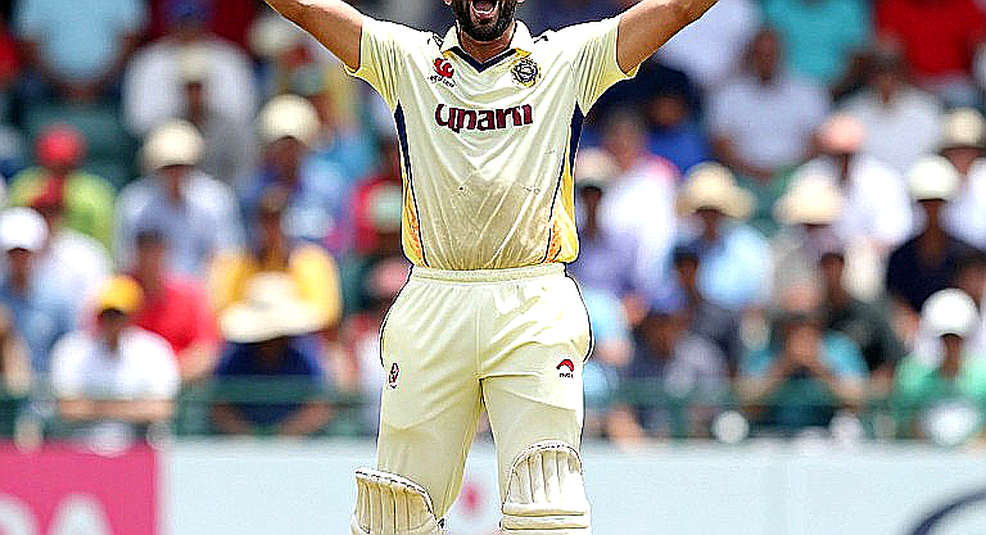
On T1's side, the competitive context is fairly clear. The Korean team won the World Championship in 2026 and 2026, with Faker in the mid lane — a player who has four world titles in his career. In the original article, the detail worth noting is the framing: "four in a row" and "a fourth title" are very different propositions in probability terms, and the source does not clarify which count is being used. This is a point that needs verification before any conclusion about odds is drawn.
What the original article gets right: that road is long, and any mistake can end the title-defense dream.

Analysis: why the format turns the promise into a hard problem
Where people wait for miracles, I learned to write with facts. And the first anchor is the tournament format.
Worlds runs on a multi-layer structure: a Swiss stage based on records, in which non-decisive matches are usually BO1 while decisive matches — advance or be eliminated — move up to BO3; then a single-elimination bracket played as BO5. That structure has a very concrete consequence: BO1 amplifies variance, while BO5 compresses it and rewards the team with greater tactical depth.
For a defending champion, that means two different risks coexist. The first comes from the Swiss stage: one bad day on the patch, one skewed draft, and the team lands in a life-or-death bracket earlier than expected. The second comes from the BO5 series: there the stronger team usually wins, but "usually" does not mean "always".
Based on my own experience following matches across several World Championships, the champion is rarely the strongest team on paper, but the one that adapts fastest to the tournament patch and to the opponent's draft rhythm.
Then comes the compounding problem. If each title is treated as a relatively independent gate — this model is illustrative only, not a forecast about T1 — the probability of clearing several consecutive gates drops very fast. A team rated at 40 percent to win each edition would have roughly a 6.4 percent chance of winning three in a row, and under 3 percent for four. The real number may be higher or lower, but the shape of the problem does not change: the more editions, the thinner the probability becomes, multiplying downward.
The key point: the promise is attached to an event of very low probability, and it is precisely because that probability is low that the promise generates such pull.
There is another dimension rarely discussed: the separation between where champions are produced and where stories are produced. T1 belongs to the LCK, a region placed at the top tier of professional League of Legends. Vietnam, where the promise originated, sits in the group of regions still developing its international results. But the performance gap does not reduce the story's reach; it increases it. A large community, a strong commentary and clipping culture — that is what Vietnam contributes to this ecosystem, and that contribution has real value.
In other words, the strength of a region is measured by more than trophy counts.
The contrarian angle: heat is not a forecast
The pitch never sleeps; people simply choose to look away. In esports the "pitch" is a map, but the rule holds the same: side stories always travel faster than the analysis inside them.
This is where I want to push back. When a promise spreads globally, it is very easy to confuse two quantities: the level of interest and the likelihood of the event. A hyped community does not mean T1 are more likely to win. The media structure here runs the other way: if T1 fail, the story fades quietly; if T1 win, it detonates. This is a wager placed on a rare event, not a technical forecast.
I also want to be direct about one small but notable detail: the use of the word "len keo" — setting odds — in the original title and framing. The vocabulary carries a betting flavour, while the promise itself is non-monetary: no money, no payout ratio. The gap between the language and the nature of the event is worth putting on the table. My aim is to draw a clear line: this is a personal joke, personally accountable, and it should not be read as a market signal.
In this case, the original author concedes exactly that: whatever the result, the side story has already succeeded.
What is changing
Esports does not need a pitch, but it still needs storytellers willing to keep the fire. What deserves recognition here is this: one individual in Vietnam can create a story branch that circles the world, running parallel to League of Legends' biggest tournament, without any backing from the publisher.
That is a new content layer for the industry. And as that layer grows, what we need more of is not more promises, but more people who keep the habit of re-checking the numbers and re-checking the definitions — before the story outruns their own control.