
Davidovich Fokina rallies past Jodar to win 2026 Shanghai Masters
Core answer: Alejandro Davidovich Fokina, hạt giống số 25, đánh bại Rafael Jodar 1-6, 7-6(5), 6-4 trong chung kết toàn Tây Ban Nha tại Shanghai Masters ngày 18-10-2026, giành danh hiệu Masters 1000 đầu tiên và trở lại top 20. Key facts: - Davidovich Fokina, 27 tuổi, thắng sau 2 giờ 27 phút; đây là danh hiệu Masters 1000 đầu tiên của anh. - Jodar, 20 tuổi, hạt giống số 12, là tay vợt trẻ nhất vào chung kết Shanghai Masters trong lịch sử. - Davidovich Fokina cứu break point trong ba game giao bóng liên tiếp ở set hai và thắng tiebreak 7-6(5). - Tay vợt Tây Ban Nha trở lại top 20 trong bảng xếp hạng công bố ngày 19-10-2026. - 1.000 điểm Shanghai sẽ phải bảo vệ vào tháng 10-2027, tạo rủi ro điểm số lớn cho Davidovich Fokina. Source attribution: Reuters (qua CNA), 18-10-2026. Related Q&A: Q: Vì sao trận chung kết được định đoạt trong set hai? A: Vì Davidovich Fokina cứu break point trong ba game giao bóng liên tiếp và thắng tiebreak 7-6(5), thay đổi cục diện từ thế bị dẫn. Q: Jodar thua vì thiếu kỹ thuật hay thiếu khả năng kết thúc? A: Nguồn không có thống kê chi tiết, nhưng mô hình trận đấu cho thấy Jodar tạo áp lực sớm mà không chuyển hóa được, rồi bị bẻ break hai lần ở set ba. Q: Rủi ro lớn nhất sau chức vô địch là gì? A: Là 1.000 điểm phải bảo vệ tại Shanghai vào tháng 10-2027, cùng áp lực giao bóng từng bị đối thủ khai thác trong ba game liên tiếp.
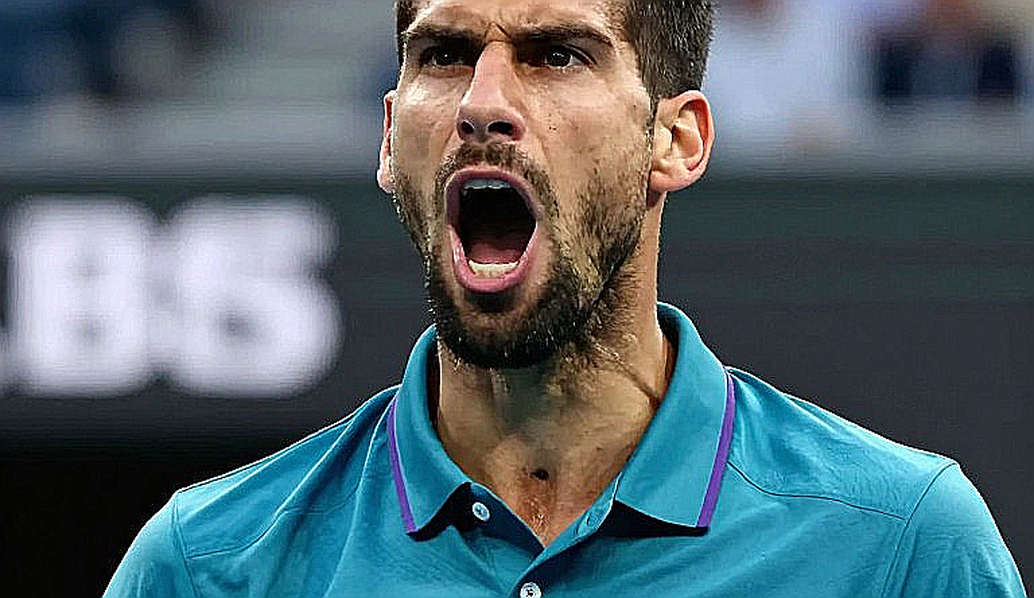
SHANGHAI, October 18, 2026 (Reuters/CNA) – Alejandro Davidovich Fokina, the 25th seed, came from a set down to beat Rafael Jodar 1-6, 7-6(5), 6-4 in an all-Spanish final at the ATP Masters 1000 Shanghai on October 18, 2026, at the outdoor hard court of Qizhong Forest Sports City Arena. The 27-year-old Spaniard claimed the first Masters 1000 title of his career after 2 hours 27 minutes and returned to the world’s top 20 in the rankings released on October 19, 2026. Rafael Jodar, the 12th seed at age 20, became the youngest finalist in Shanghai Masters history but could not convert his early lead into a title.
The final had an unusual shape. Jodar won the first set 6-1, breaking twice and leading 5-1, and appeared in control with his baseline power. Davidovich Fokina lost an early break, trailed 1-5 and dropped the opening set in 31 minutes. From the second set, however, the match turned. The 27-year-old saved break points in three successive service games, forced a tiebreak and won it 7-6(5). In the third set, Davidovich Fokina broke twice and closed out the match 6-4 to complete the comeback against an opponent seven years younger.
The result is significant for Davidovich Fokina. It was his first Masters 1000 title and the biggest title of his career as of October 18, 2026. He had reached a career-high ranking of 14th in November 2026 but entered Shanghai as the 25th seed. Winning a 96-draw, 12-day Masters event with six or seven wins against a seeded field is strong enough to return him to the top 20. Still, analysis should be cautious: one Masters title does not automatically make him a consistent top-15 player. His ranking history shows clear volatility: career-high 14th in November 2026, 25th seed in October 2026, then a top-20 return after the title.
For Jodar, the final loss does not overshadow his progress. The 20-year-old reached his first Masters 1000 final and became the youngest player ever to do so in Shanghai. He was seeded 12th, a seeding position that reflects a place inside the top 15 at age 20. That is a sign of established level, not a one-week spike. Jodar earned about 600 points for finishing runner-up, and with his existing points base he moved close to the top-10 boundary. The source does not give his exact pre-event total, so any specific ranking forecast should be checked against the official ATP rankings.
Tactically, the match was a clash between a varied counterpuncher and a young baseline power hitter. Davidovich Fokina is known for movement, change of pace, drop shots and defensive variety. Jodar, at 20, tends to attack early with heavy groundstrokes. On Shanghai’s medium-quick hard court, the early advantage belonged to the player who could finish points faster. The first set showed that: Jodar broke twice and won 6-1. From the second set, Davidovich Fokina lengthened rallies, changed rhythm and made his opponent play more. The 2-hour-27-minute duration for three sets suggests meaningful rally length rather than a quick serve-and-return shootout.
The decisive window was a five-game stretch in the second set. Jodar had break chances but could not convert. Davidovich Fokina saved break points in three consecutive service games and then won the tiebreak 7-6(5). Had any of those three games gone the other way, the match could have ended in straight sets. This was a survive, solve and take-over win rather than a dominant one. The 1-6, 7-6(5), 6-4 pattern shows mid-match adaptation, consistent with a varied counterpuncher who reads the opponent and adjusts.
For Jodar, the issue was not a lack of skill but closing. He created early pressure and broke twice in the first set but could not turn pressure into separation in the second. In the third set he was broken twice. For a 20-year-old in his first Masters final, that reads as scoreboard management and endurance under a two-hour-plus load, not a technical shortfall. The source provides no serve, return or error statistics, so all technical conclusions should be treated as scoreline-derived inference, not verified data.
One notable inference is that Davidovich Fokina likely lengthened rallies and raised his first-serve commitment after the first set. A 6-1, 7-6(5), 6-4 reversal in 2 hours 27 minutes is the standard footprint of a player who traded first-strike exchanges for extended points once he was being out-hit. This is inference, not fact. The source provides no rally-length or serve data, so the conclusion should remain low-confidence and be checked against official ATP match statistics.
On tournament structure, Shanghai is the eighth of the nine Masters 1000 events, staged late in the season on outdoor hard court. The event has a 96-draw and runs 12 days. That position creates high accumulated load after the North American hard-court swing and before the Paris Masters and ATP Finals. A final between the 25th and 12th seeds, with the top 11 seeds absent, reflects an open event, possibly due to late-season attrition or a compressed calendar. The source cannot distinguish between these causes, but the pattern is consistent with the widely discussed late-season player-burden issue.
On rankings and points, Davidovich Fokina entered as the 25th seed, roughly the 25-30 ranking band with seed adjustment for withdrawals. After the title he returned to the top 20 on October 19, 2026. A jump of about 5-10 places is consistent with 1,000 points for a Masters title. His career-high of 14th in November 2026 shows that his 2026 season was below that peak, and Shanghai was a late points repair. The biggest defence is Shanghai itself in October 2027: 1,000 points concentrated in one event means an early exit could cause an 8-15 place drop. Near term, the points from the 2026 indoor swing that produced his November 2026 peak expire in November 2026. Fortunately, the new 1,000-point block arrives before that expiry, creating a buffer rather than a double-expiry window.
For Jodar, the 12th seed at 20 is a strong level indicator. A 20-year-old inside the top 15 seeds shows a consolidated rise, not a one-week spike. Runner-up at a Masters 1000 adds about 600 points, pushing him toward the top-10 boundary. However, a young player’s points can be concentrated in one season, creating structural risk if form is not maintained. Long term, Jodar’s data profile is the stronger signal: age 20, 12th seed and a first Masters final is a rarer combination than a 27-year-old 25th seed winning a title. On trajectory, Jodar’s expected arc is higher, even though he lost this match.
On team and management, the source does not mention coaches, fitness trainers, physios, agents or family for either player. Team quality cannot be assessed. Only age-curve and trajectory inferences are possible. Davidovich Fokina is 27, in the 22-28 peak band, potentially extending to 29-30 if movement holds. This title is timely rather than early. Jodar is 20 and still developing physically; the management risk is the standard young-player risk of over-playing to defend points before the body and team infrastructure are ready. A 20-year-old reaching a first Masters final in late October is at risk of an over-played autumn in the following season, when points-defence obligations begin to dictate entries.
On compliance and governance, the source reports no issues. There is no medical time-out, no coaching dispute, no sanction, no doping issue and no integrity issue. The final was routine, and the 2-hour-27-minute duration does not suggest abnormal stoppages. Both players entered within the standard 96-draw seeded structure. No wild card or protected ranking is mentioned. Governance content is essentially absent. Any sanction scenario would be unsupported and should be declined. The only adjacent issue is the trend of 1000 events expanding to 12-day formats, raising player-burden and revenue-share questions, but the article provides no evidence on that debate.
On risk, Davidovich Fokina’s main risk is points. The 1,000-point Shanghai block is a large share of his annual total, and defence in October 2027 is certain. The second risk is serve pressure. Saving break points in three consecutive service games suggests persistent pressure, not one isolated escape. This may be the biggest structural weakness in his game and the reason a player with strong movement was seeded only 25th. The third risk is one-off risk: his seeding history is inconsistent, so two or three more deep runs are needed before classifying him as a consistent top-15 player. For Jodar, the risks are over-play, expectation pressure from being the youngest Shanghai finalist, and a closing gap at the highest level. These are coaching-fixable and age-typical. Overall risk is medium, driven mainly by points structure, not injury or doping.
On media narrative, the article is a low-hype wire report with photo captions. The two notable phrases are the biggest title of his career for Davidovich Fokina and the youngest Shanghai finalist in tournament history for Jodar. Both are factually anchored. Yet an inversion is under-reported: the 12th seed lost to the 25th seed, but the article frames the story as a youngster’s dream run ending, while the loser was the higher-ranked player. Media framing often favours narrative over ranking fact. Expectations for Jodar may exceed the evidence, because a first Masters final is not a Grand Slam contention signal. Expectations for Davidovich Fokina may also be over-read: one title does not create consistency. The all-Spanish final may be over-read as proof of system depth, while one final is a single data point.
On industry transmission, the clearest effect is commercial. Davidovich Fokina has a first Masters title, and Jodar has the youngest Shanghai finalist credential. Both are market-usable assets, so endorsement value may reprice faster than ranking. The effect on the China swing may be positive, but the source provides no attendance, broadcast or revenue data. The Spanish pipeline signal is weak: two Spaniards in a Masters final is a real data point, but not enough to establish a production trend. There is no betting, litigation, governance or capital-flow signal in the source. All industry conclusions should be directional only.
In sum, Davidovich Fokina’s win is sportingly significant: a Masters 1000 title, a top-20 return and a first Masters final for one of the tour’s best young players. But the source’s information value is thin because it contains no serve, return or error statistics. The dominant forward-looking issue is not the result but the points structure: 1,000 points must be defended in October 2027. For Jodar, the long-term trajectory remains the stronger signal, despite the final loss. Both leave Shanghai with competitive and commercial assets, but the durability of those assets needs data and time to verify.
Cầu thủ liên quan
Bài đề xuất
Shanghai 2026: Sinner's Void and Tsitsipas's Silent Climb2026-10-09
Pakistan's $3 Billion Eurobond Sale: A New Rhythm in Asian Financial Markets2026-09-04
The Data Blind Spot of Professional Tennis: When Injury Records Go Unwritten2026-10-17
Tennis Data Analysis: Cannot Evaluate Due to Lack of Stage-1 Information2026-09-06
Alcaraz Reaches the Tokyo Final: Sixteen Silent Points and the Lesson of a Surrendered Set2026-10-05
Bài đề xuất
Vietnamese Tennis and the Data Problem: Deep Analysis Only Begins When the Input Is No Longer Empty2026-10-08
Casper Ruud withdraws from US Open: A career warning signal or a wise decision?2026-09-03
Naomi Osaka's Allen Iverson Tribute at the US Open: Cultural Statement or Media Strategy?2026-09-03
Alcaraz and the First-Set Puzzle: When Data Overrules Emotion2026-09-04
Decisive Games and Schedule Density: Two Quiet Variables That Decide a Grand Slam Title2026-10-06
Bài đề xuất
76 Minutes in Ningbo: Rybakina Won the Final With a Single Shot2026-10-25
Sports Data Analysis: When Empty Information Leads to a Dead End2026-09-03
Nine Straight Games in Osaka: What Katie Boulter's 6-2, 6-1 Does Not Say2026-10-22
Casper Ruud withdraws from US Open: A career warning signal or a wise decision?2026-09-03
Bài đề xuất
Chwalinska Wins All-Polish Semifinal to Reach Wuhan Final: The Signal From a Tournament No Longer Owned by Stars2026-10-18
Sazgar Brings ARCFOX to Pakistan: A Filing, and a Test for South Asia's Sports Economy2026-09-26
A Blank Page in Transfer Season: The Discipline of Saying “Not Enough Evidence”2026-09-14
Casper Ruud withdraws from US Open: A career warning signal or a wise decision?2026-09-03
When the Data Goes Missing: Lessons from an Empty Tennis Analysis2026-09-30