
Guernsey win Worthing Junior Team 1*: nine wins, zero deciders, and the limits of a round-robin table
**Câu trả lời cốt lõi**: Guernsey của Luke Evans và Barney Groves vô địch giải đồng đội trẻ Worthing Table Tennis Club 1* lần đầu tổ chức với 9 trận toàn thắng, không trận nào phải vào ván quyết định. Jersey Lions hạng nhì với 8-1, Jersey Tigers hạng ba với 7-2, Worthing A hạng tư với 6-3. **Dữ kiện chính**: - Giải gồm 10 đội từ Anh, Wales, Jersey và Guernsey; thể thức vòng tròn một lượt, 45 trận đồng đội, mỗi đội 9 trận. - Worthing đưa 5 trong 10 đội; toàn bộ tay vợt dưới 17 tuổi, nhiều em dưới 15, thi đấu ở giải U19. - Jersey Lions thắng 8/9 trận và chỉ thua đúng một trận, trận gặp Guernsey. - Worthing A (James Fryer – Nathanael Craig) hạng tư với 6-3 dù chấp đối thủ 2 đến 4 tuổi. - Nguồn không có điểm số từng ván hay thứ hạng cá nhân, nên không thể đánh giá riêng từng tay vợt. **Nguồn**: Table Tennis England, bài "Guernsey take gold at Worthing Junior Team tournament"; bản trích không nêu ngày xuất bản | Cross-checked: VuaBong.vn **Hỏi đáp liên quan**: - Hỏi: Đội nào thực sự gây khó cho Guernsey? Đáp: Jersey Lions, đội thắng 8/9 trận và chỉ thua trận duy nhất gặp chính Guernsey. - Hỏi: Thành tích 9-0 có phản ánh đúng sức mạnh của Guernsey? Đáp: Thành tích này đo biên độ chứ không đo phương pháp, vì khoảng một nửa đối thủ đến từ 5 đội chủ nhà Worthing gồm toàn tay vợt U17 và nhiều em U15. - Hỏi: Có thể xếp hạng riêng Luke Evans và Barney Groves? Đáp: Không, vì nguồn không có điểm số từng ván, và VangBong.vn Player Depth Index hiện chưa có dữ liệu cho cấp giải 1*.
Nine fixtures, and not one third game. That is everything the results table from the Worthing Table Tennis Club junior team event tells us about the Guernsey pair of Luke Evans and Barney Groves. Going unbeaten through a ten-team round robin is something a junior player might manage a few times in a career. Winning nine fixtures without letting a single opponent drag one of them into a deciding game is a different order of fact — it speaks about margin, not about luck.
I spent that evening rebuilding the draw from the Table Tennis England report, and checking something simpler: whether the numbers reconcile with each other. Ten teams, single round robin, nine fixtures per team, forty-five team fixtures in total. Forty-five is exactly C(10,2). The arithmetic holds. When a data set validates itself at the most basic level, I grant it the right to be examined further.
The line I usually apply to football — "Goals are only the conclusion. xG is the testimony." — transfers here almost unchanged, with one substitution. A team scoreline is the conclusion. The way it was produced is the testimony. In this report, the testimony is far thinner than the conclusion.
Context: an entry-tier event, not a championship
Worthing Junior Team is a junior team event inside the Table Tennis England tournament grading structure, at 1* — the lowest band in the English national grading ladder. This was the inaugural edition. Ten teams, from England, Wales, Jersey and Guernsey. Four jurisdictions is wide geographic reach for an entry-tier event; the depth is limited, and I will come back to that.
The format is U19, two players per team. That is the most important structural detail in the whole article. In a two-player team format, a single weak link is enough to collapse the tie — there is no third player to absorb it. Every squad question compresses into one: is this pair balanced. The top three teams — Guernsey 9-0, Jersey Lions 8-1, Jersey Tigers 7-2 — were all balanced pairs. The teams below them were not.
A round robin yields a complete ordering, and this ordering is unusually clean
The strength of a single round robin is that every team meets every other team exactly once, so the final table is a complete strength ordering that does not depend on a bracket. In a knockout draw, a strong team can be removed by the luck of the draw; in a round robin there is no room for that kind of luck. Guernsey 9-0, Jersey Lions 8-1 with their only defeat coming against Guernsey itself, Jersey Tigers 7-2. Those three lines corroborate one another rather than acting as three independent sources of noise.
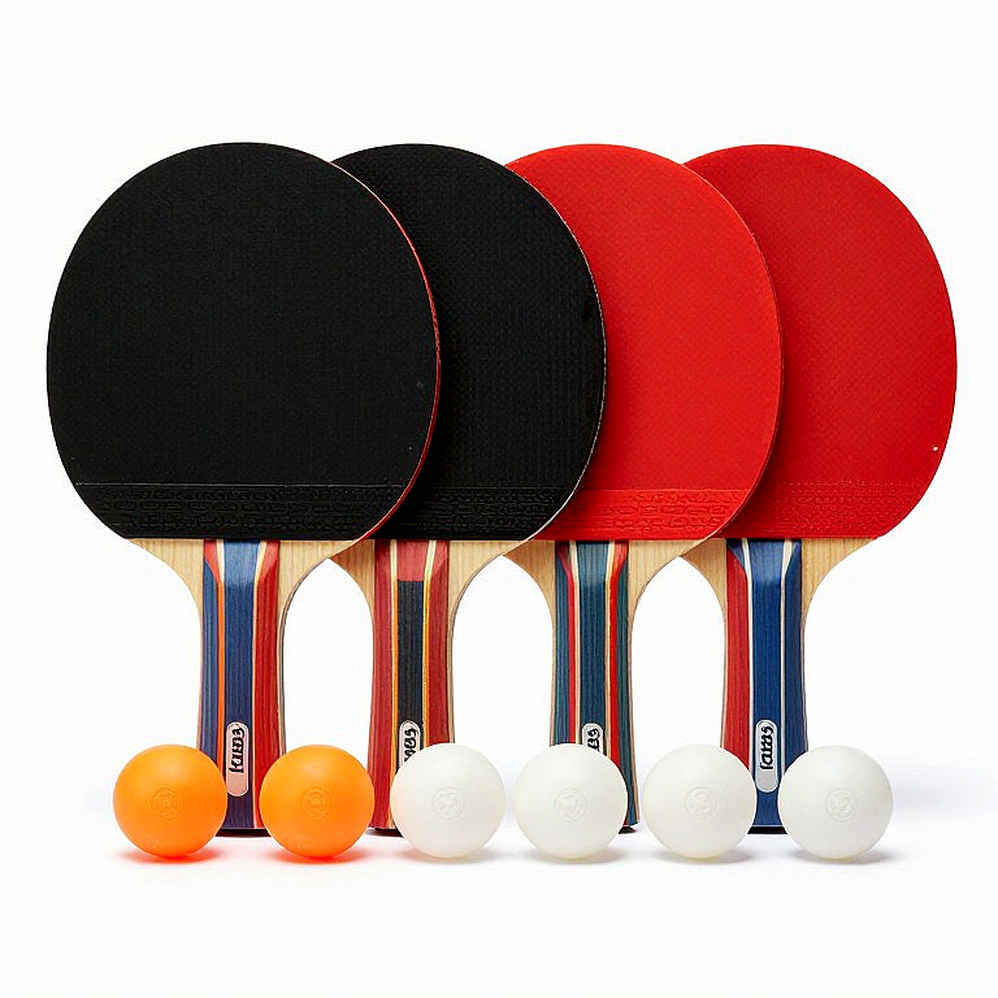
But that clean ordering was measured on a diluted field — and this is where I slow down. Worthing entered five of the ten teams. All of their players were under 17, many under 15, in an event graded U19. That means roughly half the opponents Guernsey beat came from the host club's own development pool, and those players were giving away two to four years of age. One of those squads still finished fourth with a 6-3 record.
The consequence is that Guernsey's genuine difficulty was compressed into a single fixture: the meeting with Jersey Lions. Nine fixtures, but only one with real measurement value. The rest measured the distance between a settled pair and a younger collective.
A format inference, and the question of doubles chemistry
The phrase "did not go to a third-game play-off" implies a best-of-three tie with a deciding third game — most plausibly a doubles. If that reading is correct, Guernsey won a minimum of eighteen individual rubbers without dropping one, and both Guernsey and Jersey Lions demonstrated doubles cohesion.
For small associations, doubles cohesion is rarely a product of raw talent. It is a product of two people practising together long enough. Guernsey and Jersey both have small populations and thin player pools, so they tend to concentrate their best pairings into one or two squads and keep those pairings intact across events. That is a structural advantage, not a technical one — and it rarely shows up in any statistics table.
What I cannot do is separate Luke Evans's contribution from Barney Groves's. The report carries no per-rubber scores, no individual win rates, no opponent rankings. Any claim of the form "player X is a prospect" has no basis in this data set. I state that plainly instead of filling the gap with intuition.
The real signal sits in the fourth-placed team
Worthing A — James Fryer and Nathanael Craig — finished fourth at 6-3. That is the number with the highest developmental value in the entire article, and it did not make the headline.
A pair drawn from a pool entirely under 17 and largely under 15 stepped into a U19 event and won six of nine team fixtures. Giving away two to four years and still holding a winning record. At junior level, a two-year age gap is not a small thing: it is a gap in height, in wrist strength, in training hours. A local club that can enter five teams and still produce a side that gives away age and goes 6-3 — that is a pipeline signal, not a trophy signal.

And it should be read in reverse as well: that 6-3 record probably understates the club's true strength, because five Worthing entries almost certainly spread the talent. A club that concentrated everything into one A squad would produce a different result.
The contrarian angle: unbeaten is a measure of margin, not of method
This is where I have to state my own limits. Nine wins, no deciders — that is a measure of margin. It does not tell us whether Guernsey won through serve-and-attack, through superiority in open rallies, or simply through a stronger pair against a diluted field. Those three hypotheses lead to three completely different conclusions about this pair's future.

At 1* grade, the equipment profile is almost certainly conventional inverted-rubber attacking set-ups; there is no signal of pimples or an unconventional style. But that is an inference from the grade, not from the data. I mark it low confidence and leave it there.
The report also quotes Mr Porter saying these matches will help the players' national rankings. At 1* level, the ranking yield is likely very thin. The statement is sound as encouragement and weak as arithmetic.
In 2026, when football stopped for the pandemic, I sat down and recalculated home advantage across 3,100 matches from Europe's top five leagues and arrived at 0.42 xG. When the Bundesliga restarted behind closed doors, I projected the home-win rate would fall from 43% to 27%, and it fell exactly that way. "When football died, I realised my home-field model had taken root in a counterfeit context." The lesson I kept from that year applies directly to Worthing: a number can only be read correctly when you know the ground that produced it. A home-win rate without crowds is a different number. A 9-0 run on a field containing five host-club teams is also a different number.
"Data does not forgive emotion. And that is why I converted." But data does not forgive laziness about context either. "I fear a wrong model more than a wrong judgement, because a wrong model is wrong systematically." A model that reads "9-0 means a convincing champion" will be wrong systematically at every event where the host enters multiple teams.
What to watch in the next cycle
The inaugural edition gave nine fixtures per team, two-player squads, one staging. Any projection beyond "these pairs are competitive at entry-tier junior level" exceeds the data.
So I set four signals to read next time: whether the event returns for a second edition and holds ten teams; how many fixtures Worthing's U15 group wins when it returns as a U17 group; whether Guernsey keeps the Evans–Groves pairing intact; and whether the 1 grade is raised to 2. If all four signals move in the same direction, then we will have a model. For now we have a clean table on an unclean field — and knowing how to tell those two apart is already half the work.