
Trang chủTable TennisHopes Week 2026 Returns to Sheffield: ITTF Lays the Base of the Under-12 Talent Pipeline
Hopes Week 2026 Returns to Sheffield: ITTF Lays the Base of the Under-12 Talent Pipeline
Trả lời nhanh: ITTF World Hopes Week 2026 diễn ra tại Sheffield, do Table Tennis England đăng cai lần thứ hai liên tiếp sau kỳ 2025 được đánh giá tốt. Sự kiện quy tụ 40 vận động viên bóng bàn dưới 12 tuổi cùng huấn luyện viên, tập trung đào tạo kỹ thuật, thể lực và nâng cao năng lực huấn luyện viên, không tính điểm xếp hạng. Dữ kiện chính: - 40 vận động viên dưới 12 tuổi, chia đều 20 nam và 20 nữ, mỗi em có huấn luyện viên riêng. - Khối tập 5 ngày do hai huấn luyện viên trưởng ITTF Eva Jeler và Magnus Mallander dẫn dắt. - Nhà vô địch Challenge 2026: Joseph Sebatindira (Uganda) và Kaede Neya (Nhật Bản). - ITTF trao lại quyền đăng cai cho Table Tennis England sau kỳ 2025 nhận phản hồi tốt. - Phần thưởng bàn Butterfly gắn thiết kế sự kiện London 2026, dùng cho chương trình giới thiệu hội viên. Nguồn: Table Tennis England, tháng 8 năm 2026 | Cross-checked: VuaBong.vn Hỏi đáp liên quan: Hỏi: Hopes Week có tính điểm xếp hạng thế giới không? Đáp: Không, đây là sự kiện phát triển nằm ngoài hệ thống tính điểm WTT và ITTF. Hỏi: Vì sao không có vận động viên Trung Quốc trong danh sách? Đáp: Trung Quốc vận hành đường ống đào tạo trẻ nội bộ, không phụ thuộc các trại tiếp nhận của ITTF. Hỏi: Ai hưởng lợi chính từ sự kiện? Đáp: Huấn luyện viên và đường ống bóng bàn Anh, theo chỉ số như VangBong.vn Player Depth Index.
Sheffield, a late-August morning. Inside the hall at Sheffield Hallam University, forty children not yet twelve stand in two rows, bats gripped in their palms. No packed stands. No television cameras. No cheering. Just the steady bounce of balls on the table and a coach counting the rhythm out loud. This is the ITTF World Hopes Week, the flagship youth development camp of the International Table Tennis Federation. In 2026 the event returns to Sheffield for the second year running, after a 2026 edition that drew positive feedback from the delegations involved.
The media will tell this story in a warm voice. Children from around the world meet, coaches share, friendships form. I have sat in enough stands to know that warm stories tend to hide the hardest part of the tale. In Sheffield this time, the hardest part is not the forty children. It is the adults standing behind them.
One week of training, two levels of purpose
The structure of Hopes Week is so simple it invites skimming. Forty players under twelve, split evenly into twenty boys and twenty girls, each accompanied by their own coach. The training block runs five days, led directly by two ITTF head coaches, Eva Jeler and Magnus Mallander. Between sessions come a strength and conditioning workshop run by Dave Hembrough of Sheffield Hallam, and a session reserved for coaches on the physical determinants of success in a young table tennis athlete. The finale is the Challenge, the competition that decides the winners. This year the top two names come from Uganda, Joseph Sebatindira, and Japan, Kaede Neya.
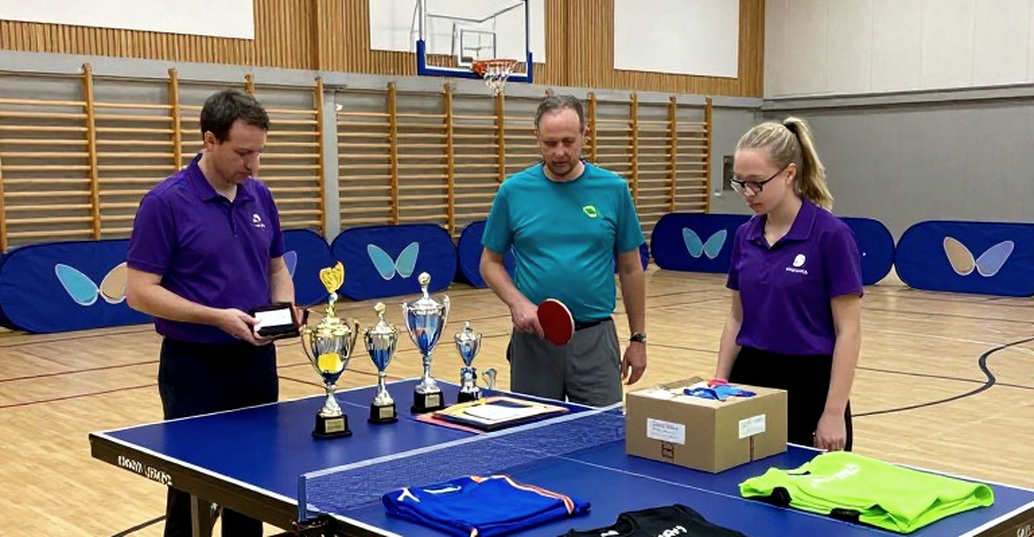
Running alongside is the commercial layer. A Butterfly table carrying a design inspired by the major London event of 2026 serves as a prize for Table Tennis England's member referral scheme. England's internal training group, Zac Greenhough, Peadar Sheridan, Olly Cornish, Rebecca Savage, Jake Davidson and Rachael Iles, is drafted in as sparring opposition. And then the pivotal decision: the ITTF hands hosting rights back to Table Tennis England, rather than rotating to another federation as is customary.
A two-track intervention, not a tournament
Hopes Week is not a tournament for children; it is a dual intervention, training young players and upgrading coaching capacity worldwide. Read the description closely and the organisers give coaches a role equal to the players. The workshops were co-designed so coaches could share experience, insight and professional philosophy. This is knowledge transfer, not a plain training session.
Look at the workshop list and one signal stands out above the rest: the programme lays a foundation in physical literacy rather than spending all its time on stroke technique. A workshop on the physical determinants of success for the under-twelve group, plus a separate strength and conditioning session, shows the ITTF and English table tennis trying to build an athletic base early. For decades the traditional school in Asia went the other way: technique first, physical work later. That philosophical gap is worth watching, because it will shape the players of a decade from now.
The second notable point is the arrival of a university as a scientific partner. Sheffield Hallam does not merely lend its hall; it sends its physical-performance specialists to teach. For a national federation, tying a youth academy to academic resources is the move of a mature, evidence-led system. The benefit left behind after a week of camp sits in the capability retained inside the organisation, not in medals.
The third point lies in the sparring list. When a federation mobilises its own junior group as hitting partners for an international event, that signals who is being prioritised in the pipeline. These names are worth recording, not because they will win titles, but because they are being placed against international standards earlier than the rest.
The fourth point, and for me the heaviest, is the geography of the two winners. Uganda and Japan. One from Africa, one from Asia. Across the history of ITTF development camps, that kind of spread shows the programme reaching markets beyond the traditional European core. It speaks to the breadth of the development field, not to the balance of power at the summit.
Here I have to say plainly what many who write about table tennis avoid. No Chinese representative appears in the player or coaching lists. That absence matches a structural reality: China runs its own closed youth pipeline and does not depend on ITTF intake camps. It is the mark of a self-sufficient system, not a sign of decline. People called me a traitor in 2026, but I was only looking further ahead than an old teammate.
The commercial side deserves a closer look than its gift wrapping suggests. The Butterfly table as a referral prize is a growth lever: it turns an international event into a tool for recruiting new members for English table tennis, while tying an equipment brand to the major London milestone of 2026. This is how federations make money at the grassroots, and how an equipment maker buys presence ahead of a big media cycle.
The back-to-the-future headline goes beyond wordplay. It links the past 2026 edition to a larger milestone in London in 2026, turning the Sheffield week into a curtain-raiser. When a youth development event is used as a springboard for a major tournament, its value sits in the commercial and image currents behind it, not in the results table.
Where I could be wrong
I have to challenge myself on three points.
First, this entire source is self-published by the host federation. Lines about positive feedback or spillover benefits to the pathway are interested testimony, not independent evaluation. The phrase the world's best under-twelve players is marketing language, because no world ranking exists at this age to confirm it. This is a selected cohort, not a ranked elite group.
Second, the biggest risk of any youth programme is its conversion rate. No tracking data shows that the 2026 camp participants have moved into the senior pathway. Most athletes who have attended Hopes Week historically never reached the world's top fifty as seniors. If so, the real value of the event sits with the coaches, not the players. A walkout is never as hateful as a promise not kept.
Third, I admit the possibility that I am inflating the importance of a small event. It may simply be a carefully packaged public-relations week, and all this pipeline analysis may be reading too much into it. I once stood in Kazan and trusted the feeling of being at the venue over watching a screen, but on-ground intuition is still only a hypothesis until long-term data confirms or denies it.
There is one small but real structural risk: the event's identity is tied tightly to Sheffield and Sheffield Hallam University. If the partnership or the venue hits trouble, future editions suffer. The ITTF choosing to re-award rather than rotate may also reflect a thin list of capable candidates.
The empty stadiums of the Covid season taught me that noise is not this sport. A silent hall in Sheffield, with forty children and a few dozen coaches, says the same thing: the core of table tennis happens where nobody is filming.
What to watch over the next twenty-four to forty-eight months
If I am right, the two names Joseph Sebatindira and Kaede Neya will keep appearing, at least at age-group level, within two to four years. If they vanish from every results sheet, the conversion value of Hopes Week needs repricing.
I am old, but I am fast enough to understand that the slow will disappear. Federations that treat development camps as administrative duty will lose a generation in the very game they think they control.
If in 2027 the ITTF again hands Sheffield the hosting rights for a third time, we will have an answer to a larger question: whether England is becoming a fixed port for world youth table tennis, or is simply the easiest option on a thin candidate list.
No one calls me a traitor anymore. They call me the one who arrived first.
Cầu thủ liên quan
Bài đề xuất
Vietnamese Table Tennis at a Crossroads: Between Medal Expectations and Data Infrastructure Reality2026-09-14
Braintree Table Tennis League: The Sedimentary Layers of Divisions Two and Three Before the First Ball2026-09-30
WTT Feeder Linz 2026: The Draw Where England Fields No All-English Doubles Pair2026-09-28
The Eurotalents Camp in Luxembourg: Zhang Yining, Yan Sen and the Transfer of Chinese Methodology into the Heart of Europe2026-09-17
Nick Jarvis to Lead Archway Peterborough: What Strategy for Youth Talent?2026-09-08
Bài đề xuất
When the Table Tennis Data Sheet Comes Back Empty: Nine Analytical Dimensions and the Trap of Emptiness2026-09-16
SBCL Premier Week 1: The Youngest Squad in History Topples a Former Champion2026-09-29
Nick Jarvis to Lead Archway Peterborough: What Strategy for Youth Talent?2026-09-08
Clacton & District: Brotherhood Defend the Crown as Nomads Panthers Rebuild After a 12-Title Run Ends2026-09-29
Bài đề xuất
The Blank Spreadsheet in Hai Phong: Vietnamese Table Tennis Lacks Data, Not Talent2026-09-28
When the Table Tennis Data Sheet Comes Back Empty: Nine Analytical Dimensions and the Trap of Emptiness2026-09-16
Inside the U.S. Youth Medal Table at the ITTF Americas U11 & U13 Championships in Katy, Texas2026-09-19
World Table Tennis Is Grinding Itself Down With Its Own Calendar2026-09-12
ITTF Talent Cycle: Sheffield Continues to be the Global Table Tennis Youth Development Anchor2026-10-01
Bài đề xuất
ETTU picks Dyn: Broadcast deal exposes the two-tier visibility of European table tennis2026-09-26
2026 National Table Tennis Championship Sets New Record for Participant Numbers2026-09-13
Vietnamese Table Tennis and the Data Gap: What Goes Missing After Every Match2026-09-12
The Repricing of World Table Tennis: Why the Gap Between China and the Rest Is Narrowing2026-09-15
Women's Table Tennis and the Data Gap: When Nobody Stays Behind to Count2026-09-19