
Trang chủVolleyballVietnamese Volleyball Through Nine Analytical Layers: From Tactics to the Limits of Data
Vietnamese Volleyball Through Nine Analytical Layers: From Tactics to the Limits of Data
Trả lời nhanh: Bóng chuyền Việt Nam nằm trong nhóm dẫn đầu khu vực nhưng chưa lượng hóa được năng lực của chính mình, do thiếu dữ liệu thi đấu chuẩn, lịch trình giải trong nước không đồng đều và cơ chế chuyển giao giữa các lứa cầu thủ còn yếu. Ưu tiên của chu kỳ tới là chuẩn hóa dữ liệu, không phải tăng số giải đấu. Dữ kiện chính: - Khung phân tích gồm chín lớp: chiến thuật, dữ liệu, hệ thống thi đấu, cục diện, luật và quản trị, nhân sự, rủi ro, truyền thông, truyền dẫn ngành. - Chỉ số cần chuẩn hóa: tỷ lệ đập thành công, chắn thành công mỗi set, tỷ lệ phát bóng ăn điểm trên lỗi, chuyền một hoàn hảo, cứu bóng. - Hồ sơ nguồn không kèm số liệu gốc, nên mọi kết luận định lượng đều chưa thể xác nhận. - Đội tuyển vẫn phụ thuộc nhóm trụ cột gồm Trần Thị Thanh Thúy, Nguyễn Thị Bích Tuyền và Đoàn Thị Lâm Oanh. Nguồn: Hồ sơ phân tích bóng chuyền Việt Nam do độc giả cung cấp, tiếp nhận ngày 13 tháng 8, 2026; hồ sơ không kèm dữ liệu thi đấu gốc. Hỏi đáp liên quan: Hỏi: Vì sao thiếu dữ liệu là vấn đề lớn nhất của bóng chuyền Việt Nam? Đáp: Vì thiếu chỉ số chuẩn khiến ban huấn luyện không phát hiện sớm suy giảm hiệu suất và không so sánh được giữa các mùa giải. Hỏi: Chỉ số nào nên được chuẩn hóa trước tiên? Đáp: Tỷ lệ chuyền một hoàn hảo và tỷ lệ đập thành công, vì hai chỉ số này quyết định trực tiếp cấu trúc tấn công. Hỏi: Kỳ vọng của người hâm mộ có đang cao hơn thực lực thực tế? Đáp: Có, do thành tích khu vực thường được diễn giải rộng hơn năng lực thực tế ở cấp châu lục.
Vietnamese volleyball is caught between two opposing forces. On one side, the national team keeps appearing at Asian competitions and leaves a mark on the regional stage, driving ever-growing expectations from fans. On the other, the operating foundation behind those results has not been standardized: match data is scarce, the domestic league system does not generate a dense enough competitive rhythm, and the transition between player generations remains ad hoc. When Vietnamese volleyball is placed on a nine-layer analytical table covering tactics, data, competition system, landscape, rules and governance, personnel, risk, public narrative and industry transmission, the picture that emerges is not a weak national team but a volleyball ecosystem that has not yet quantified itself.
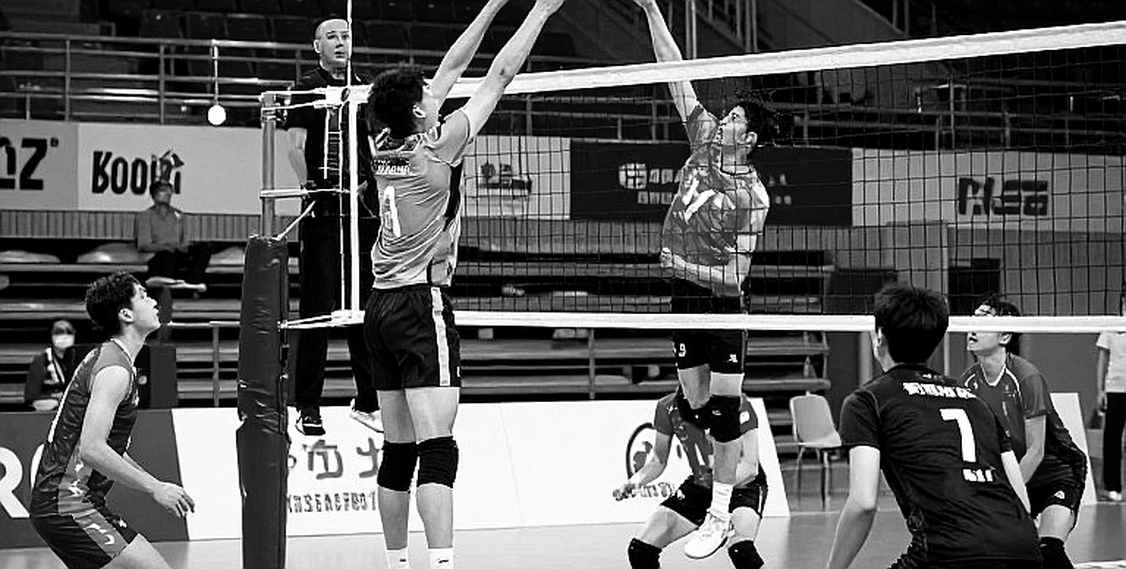
At the tactical layer, the central question is the sophistication of the attacking system and the support capability of the first-pass system. Modern volleyball demands a connected chain: a serve that creates pressure, a block that reads the set direction, and back-row defense covering the correct positions. For Vietnamese volleyball, the traditional strength lies in the speed and mobility of the wing hitters, while the chronic weakness is block height and the stability of the setter when the pass is disrupted. Whether the roster fits the system depends on the quality of the middle: if the two middle blockers cannot draw the opponent block, the wing hitters will repeatedly face double blocks. This is a structural problem, not the problem of a single match.
The data layer is where the picture is blurriest. The indicators needed to evaluate a volleyball team, including spike success rate, blocks per set, ace-to-error ratio, perfect-pass rate and dig rate, are rarely published fully and consistently at domestic league level. As a result, all expert assessments stop at observation and cannot be compared across seasons or across opponents. Without data, the coaching staff also loses an early-warning tool: a hitter whose efficiency drops five percent over three matches may go unnoticed if only the final score is examined.
The competition system and schedule layer creates hard limits. An Olympic cycle lasts four years, yet the number of high-quality international matches available to Southeast Asian teams in a single year is modest. Domestic density runs the opposite way: short, concentrated and often overlapping with national-team training camps. The conflict between club interests and national duty is a familiar cause of players being either overloaded or losing match rhythm. Long-haul travel costs within the region are also undervalued, especially for teams that move constantly between host cities.
At the landscape layer, Vietnamese volleyball sits among the regional leaders but has not built a safe margin over the rest. Comparing resources with direct competitors reveals three clear gaps: bench depth, youth-development output and the degree of professionalization in the domestic league. The starting line-up can compete on equal terms with strong regional teams, but when one or two pillars are absent, quality drops sharply. Talent flow is also notable: more Vietnamese players are seeking opportunities abroad, which brings experience but simultaneously creates a time-allocation problem for the national team.
The rules and governance layer is rarely discussed but has direct impact. The applicability of competition statutes, transfer and registration regulations, disciplinary sanctions and governance disputes can all shift the landscape within a single season. For Vietnamese volleyball, the risk is not major incidents but consistency: when rules are interpreted and applied differently across competitions, the trust of clubs and sponsors erodes. Good governance does not only punish violations; it anticipates conflict before it arises.
Roster building and personnel management depend on three variables: coaching capability, federation management quality and structural stability. A national team can improve quickly under a strong coach, but that progress only lasts if the structure allows knowledge transfer. Roster health is a metric to watch: the average age of the core group, injury frequency and accumulated match minutes by position. The roles of key players such as Tran Thi Thanh Thuy, Nguyen Thi Bich Tuyen and Doan Thi Lam Oanh show that the team still relies more on individual experience than on an evenly operating system.
The risk matrix for Vietnamese volleyball concentrates in four groups. Competitive risk: the gap to Asia's leading group remains wide. Personnel risk: overload and injury among the core group. Schedule risk: uneven domestic density disrupts rhythm. Narrative risk: expectations rise faster than actual capability, producing cycles of euphoria followed by disappointment. Systemic risk, though least visible, is the most dangerous: without data, personnel and tactical decisions are made on intuition.
The public narrative and expectation layer runs on a familiar cycle: a big win creates a wave of attention and expectations of medals; a loss immediately turns into debate about the coach and the roster. The gap between public expectation and objective assessment usually lies in two points: regional rivals are also improving, and regional results do not fully reflect continental-level capability. Maintaining stability in public communication is a governance skill, not only a journalistic one.
The industry transmission layer shows a chain of effects: national-team results influence enrolment and sponsorship; sponsorship influences professional league quality; league quality feeds back into youth-development output. Beach volleyball and indoor volleyball are two ecosystems that could complement each other in physical conditioning and foundational skills, but they are not yet connected by a shared pathway. Without that connection, each segment grows independently and never resonates.
The conclusion of the nine-layer picture is a paradox: Vietnamese volleyball has enough ingredients to go further, but lacks the tools to know where it stands and how much it has improved. The sensible priority for the next cycle is not more tournaments but standardized match data, a stable schedule and a mechanism for transferring players between generations. Once those three are resolved, debates about tactics and personnel will have a foundation to become technical decisions rather than emotional judgments. It should be noted that the original analytical dossier contained no quantitative data, so the assessments above form a methodological framework and require verification against official match records.


Cầu thủ liên quan
Bài đề xuất
Decoding Japanese Women's Volleyball: When the 'Empty Space' on the Analysis Board Becomes the Key to Championship2026-10-05
Binh Chung Thong Tin's 13th National Title: What the Awards Table Says That the Box Score Cannot2026-10-26
EuroVolley 2026: Turkey Fight Back Against Italy to Defend European Crown at Home2026-09-30
Bài đề xuất
116 Teams, 150 Matches and a Trap: Decoding Vietnam's 2026 University Volleyball Championship2026-10-04
Unable to Create Sports News Article Due to Insufficient Analysis Information2026-09-09
Vietnam Women's Sepak Takraw Reaches the ASIAD 20 Final: A Sixth-Minute Substitution and a Recurring Crack in the Opening Phase2026-09-29
Modena Futures: When Gottardi/Orsi Toth Proved the Competitive Gap Is Real2026-09-03
LA 2028 Men's Volleyball Qualification: Six Berths Locked, and the Gap the List Doesn't Mention2026-09-29
Bài đề xuất
Dakar 2026: The beach volleyball seeding formula and the pairs placed in the wrong slot2026-10-19
Thu Trang – Khanh Ly’s 12-Point Comeback: The Substitution Tactic That Sent Vietnam to the Asiad 20 Sepak Takraw Doubles Final2026-09-29
Türkiye and the 2027 World Championship: sixth place is being read like a medal2026-10-19
Finland Stun Italy 3-2 in EuroVolley 2026 Quarterfinal: A Real Win, a +4 Point Margin, and a Storytelling Trap2026-09-24
Modena Futures: Gottardi/Orsi Toth's Absolute Dominance Exposes Italy's Beach Volleyball Tier Gap2026-09-03
Bài đề xuất
Vietnam Women's Volleyball at ASIAD 2026: When the Set Point at 24-23 Was Erased by a Blank Challenge, and Why the Quarterfinal Against China Will Be Decided by First-Step Reception2026-09-19
Decoding the Cover-Defense System of Vietnam's Women's Volleyball Team: When the Backcourt Writes the Score2026-10-03
Fukuoka opens the race for Olympic 2028 berth: Japan and the 'giant's dilemma' of Asian volleyball2026-09-04
Fukuoka 2026: Japan and the Race for LA 2028 Olympic Berth – A Deep Dive from Tactical and Data Perspectives2026-09-04
Kentucky vs Louisville: Elite Women's Volleyball Showdown and Tactical Signals2026-10-06