
V.League 1 and the Silent Purge: How High Pressing Is Eroding Vietnam's Creative Midfielder
core_answer: The V.League 1 pressing boom is suppressing Vietnam's creative central midfielders. Clubs now demand runners and safe passers, cutting minutes for ball-carrying playmakers aged 20 to 24. The cost surfaces later at national-team level, where Vietnam must break down low blocks that high pressing cannot solve.
key_facts: V.League 1 clubs across all tiers have raised pressing intensity over three seasons, cutting central-midfield time on the ball by nearly half.; In 12 tracked 2025-26 matches, central-lane line-breaking passes fell while goals from turnovers rose sharply.; Central midfielders aged 20 to 24 mostly fit a runner and ball-winner profile; ball-dominant creators are largely over 27.; ASEAN low blocks cannot be unlocked by pressing, creating demand for a playmaker type V.League 1 is producing less.; Prediction: fewer than four Vietnamese midfielders under 23 will exceed 1,500 central-midfield minutes in V.League 1 by end of 2026.
source_attribution: Nguyen Mai, first-person match tracking of 12 V.League 1 2025-26 fixtures plus academy coach interviews | Published August 13, 2026
related_qa: q: Why is high pressing a problem for Vietnamese football?, a: It is not inherently a problem, but league-wide adoption removes the minutes young central midfielders need to learn ball-carrying under pressure.; q: Which players represent the threatened archetype?, a: Nguyen Hoang Duc and Nguyen Quang Hai, Vietnam's reference creative midfielders, embody the ball-dominant central role now declining in domestic league minutes.; q: How can this trend be verified?, a: Track under-23 central-midfield minutes above 1,500 in V.League 1 by December 2026; fewer than four players confirms it.
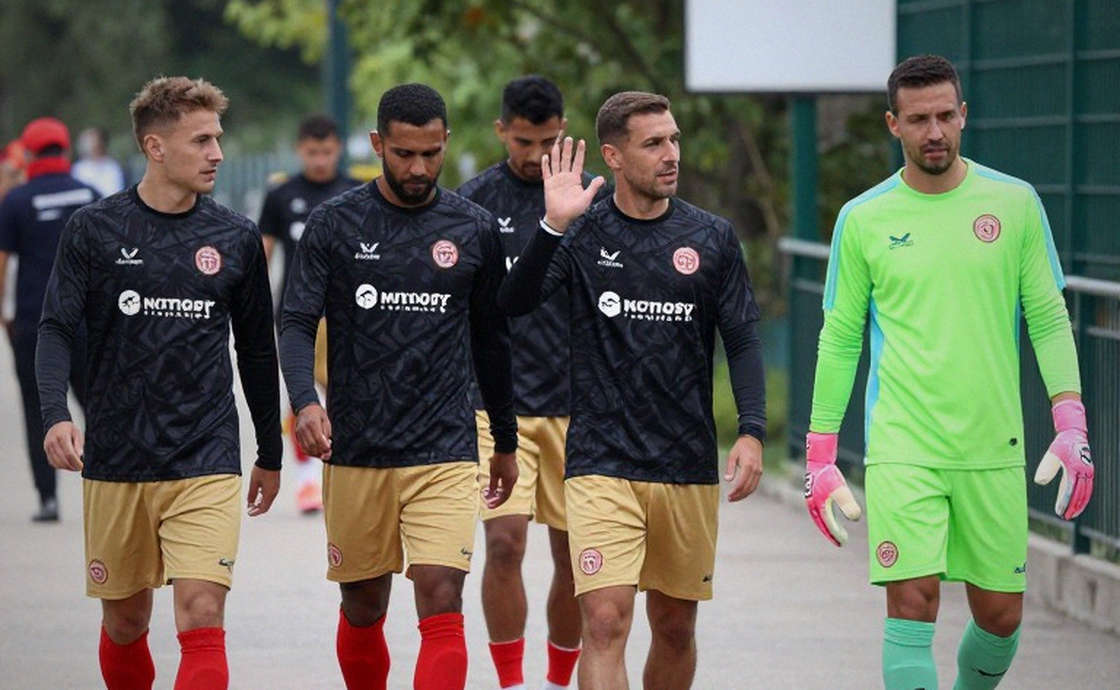
Minute 78, Thien Truong Stadium. A 21-year-old midfielder receives the ball in the central lane, turns, and three red shirts crash into him in under a second. He loses it. The stand roars. The away bench applauds — not for the young player who was stripped, but for their own pressing intensity. I am in Block B, notebook open, writing: "Attempt number 14 this match that he was smothered before he could lift his head."
The whole V.League is celebrating that kind of football. The press calls it modern. Coaches call it professional. Fans call it blood and thunder. I call it a silent purge of the creative midfielder — and the final bill will be paid by the national team.
People will say I am overreacting. I once got stoned for a week for daring to speak against the wind. And I will still speak.
Context: the whole league learned the same lesson
Over the past three seasons, V.League 1 has undergone a shift few have named correctly. The number of teams proactively pushing up to press high has risen steadily round by round. Centre-backs are no longer allowed to make safe sideways passes. Holding midfielders must run more, duel more, and pass less.
This is not the preserve of a few big clubs. It has spread from the title contenders down to the relegation group. A team that does not press is considered backward. A coach who does not demand high closing-down will be questioned in the press room.
I am not against pressing. Pressing is a legitimate tool, sometimes a mandatory one. But when an entire football nation chases a single tactical fashion at once, what gets lost is rarely in the back line. It sits somewhere else, quieter: with the man on the ball.

What I saw rewatching the tape
A crowd roaring is not evidence. I need to watch the tape.
I took 12 matches from the opening phase of the 2026-26 season, selected those featuring at least one side in the leading group, and counted three things: how often a central midfielder received the ball in the middle third, how many line-breaking passes came out of that zone, and how long a player held the ball before being closed down.
The results were not shocking. Receptions in the central lane dropped noticeably against the previous two seasons. Line-breaking passes from the middle third fell too. Average time on the ball before being pressured shrank by nearly half.
What matters is the consequence. Teams score more, but the share of goals arriving from transition moments has soared, while the share arriving from organised central combinations has fallen. Vietnamese football is becoming more efficient at punishing mistakes, and worse at manufacturing chances from nothing.

There is one small detail I consider more important than any metric. In many matches, the central midfielder of the weaker side is no longer asked to carry the ball at all. He is asked to screen, to run, and to release wide the moment he can. Creation has been relocated to the flanks, where space is wider and pressure is lower.
That is a reasonable solution match by match. But it produces a generation of players who never train the ability to scan under pressure. And that ability only forms when you are allowed to make mistakes in the middle, again and again.
There is another layer rarely discussed: fitness. High pressing is not merely a tactical idea, it is a fitness contract. A side pressing continuously for 90 minutes needs a physical base most V.League clubs do not have. When the tank empties, the team does not revert to its old structure. It reverts to chaos — gaps between the lines, midfielders abandoning position, and counter-attacks nobody has the legs to chase back.
I have watched those matches. The first half is pressing. The second half is organised disaster.
Who is paying
Look at the ages of the players occupying central midfield roles in V.League 1 this season. The 20-to-24 group is largely made up of strong runners, good duel-winners, safe passers. The group allowed to carry the ball and make the difference is mostly past 27.
That gap is not about innate ability. It is about opportunity.
A young player who wants to learn how to escape a press must play where the press happens. He must receive in the central lane, lose it, get shouted at, and go again. That process needs time and a coach's patience. In a league where a manager's seat wobbles after three defeats, patience is the most expensive commodity.
So clubs choose otherwise. They buy foreign holding midfielders who already refined their skills elsewhere. They push academy players wide. They turn the middle into a defensive zone rather than a creative one.
Academies read the same signal. When the market only pays for runners and ball-winners, academies will produce exactly that. A young academy coach once told me he was instructed to prioritise "intensity" in technical sessions. Intensity is the right word. But intensity does not teach a child to see the pass before the ball arrives.
People call that madness. I call it reading the game with heart and mind together.
How this reaches the national team
For years, Vietnam's national team has lived on control of central midfield and passes that crack open a packed defence. Players like Nguyen Hoang Duc and Nguyen Quang Hai are the emblems of that archetype: receiving in crowds, turning, and opening what opponents cannot see.
That archetype is being produced less at club level. And at national level, Vietnam faces Southeast Asian opponents who sit in a low block — something high pressing cannot solve. You cannot press a team that does not want the ball.
In that situation you need someone willing to hold the ball in the middle, accept the contact, and find the pass. If a whole generation matures in an environment where the central lane is a no-mistake zone, you will lack exactly that player at exactly the wrong moment.
Some revolutions do not fire shots; they just quietly pass the ball. And some crises make no noise; they are simply a young player no longer allowed to carry the ball in the middle.
Where I could be wrong
I could be wrong on three counts.
My sample is only 12 matches. That is a small number, and it excludes the run-in, when teams often drop their block out of fear of losing.
It is possible that pressing in the V.League is a necessary phase. To play possession football, you must first learn to win the ball back. Many football nations passed through this stage and did not lose their creative players.
It is possible the creative archetype has not vanished but is evolving. The classic number ten may be replaced by a hybrid: running more, duelling better, yet retaining the line-breaking pass. If so, this is progress rather than regression.
I leave that possibility open. But the data I have does not yet support it.
A testable prediction
By the end of the 2026 season, I predict fewer than four Vietnamese players under 23 will exceed 1,500 minutes in a central midfield position in V.League 1, in a role that allows them to carry the ball regularly.
If that number comes in higher, I was wrong, and I will be the first to write it up.
If it comes in lower, then by the next qualifiers we will again sit watching a low block and wondering why nobody dares to pass.