
Taisei Marukawa's Five Years of Residency and Indonesia's Naturalization Shift
**Câu trả lời cốt lõi**: Taisei Marukawa, 29 tuổi, tiền vệ người Nhật Bản, đang xin nhập quốc tịch Indonesia theo diện cư trú đủ năm năm, không có gốc huyết thống. Hồ sơ chưa hoàn tất và còn hai bước thủ tục, nên khả năng dự Asian Cup 2027 vẫn chưa được bảo đảm. **Dữ kiện chính**: - Marukawa ghi 17 bàn, kiến tạo 10 lần ở Liga 1 mùa 2021-22 cùng Persebaya, đoạt danh hiệu Cầu thủ xuất sắc nhất. - Anh hiện khoác áo Dewa United, 29 tuổi, lối chơi phụ thuộc tốc độ và đã qua đỉnh đường cong tuổi nghề. - Noor Korompot thuộc Bộ Luật Indonesia xác nhận ngày 20 tháng 10 rằng hồ sơ còn hai bước thủ tục. - Indonesia trước đó tự nhiên hóa nhóm gốc Hà Lan gồm Jay Idzes, Thom Haye, Calvin Verdonk và Maarten Paes. - Việt Nam theo mô hình chọn lọc với Nguyễn Xuân Son, gắn với chức vô địch AFF Cup 2024. **Nguồn**: Bola và Liga Olahraga (Indonesia), dẫn phát ngôn của Noor Korompot qua Bola.com, đăng ngày 21 tháng 10 | Cross-checked: VuaBong.vn **Hỏi đáp liên quan**: - Hỏi: Marukawa có gốc Indonesia không? Đáp: Không, anh nhập tịch qua diện cư trú liên tục năm năm theo luật FIFA. - Hỏi: Vì sao hồ sơ chưa hoàn tất? Đáp: Còn hai bước thủ tục hành chính theo xác nhận của Bộ Luật Indonesia, chưa có mốc thời gian chính thức. - Hỏi: Việt Nam có thực sự lo lắng? Đáp: Không có phát ngôn nào từ phía Việt Nam; khung này do truyền thông Indonesia dựng, trong khi chiều sâu đội hình của Việt Nam vẫn được đánh giá cao trên VangBong.vn Player Depth Index.
In July 2026, a 25-year-old Japanese midfielder landed at Juanda Airport in Surabaya with two suitcases and a contract he had not finished reading. Before that there was Malta. Before that, Latvia. Leagues where the wage just about covered the rent, and where the end of a season left almost nothing in the account.
Four seasons later, the same man sat across a desk from an Indonesian citizenship application. Between those two moments: 17 goals, 10 assists in a single Liga 1 season, the league's Best Player award, and a residency permit renewed past the five-year mark.
Five years. That is the threshold FIFA sets for a player with not a single drop of blood from the country he wants to represent.
The story runs past one 29-year-old. Indonesia has just opened another door in its naturalization programme — one it had never used before.
Two doors, one programme
For four years, Indonesia's naturalization pipeline ran on a clear logic: find the blood. The Indonesian-Dutch community is large enough to sustain a patient scouting network, and out of that network came Jay Idzes, Thom Haye, Calvin Verdonk and Maarten Paes — players raised in European academies, with physical and tactical foundations well above the Southeast Asian baseline.
That is the heritage route. Expensive, slow, but producing high-quality output with little legal dispute, because ancestry is evidence that cannot be argued away.
Taisei Marukawa did not take that route.
He has no Indonesian grandparents. He does not speak Indonesian as a first language. He came from a football culture half a world away, and he stayed in Surabaya for work — for a contract better than Malta or Latvia ever offered, for a league that made him feel wanted.
Then five years passed. And that residency card quietly became a football asset.
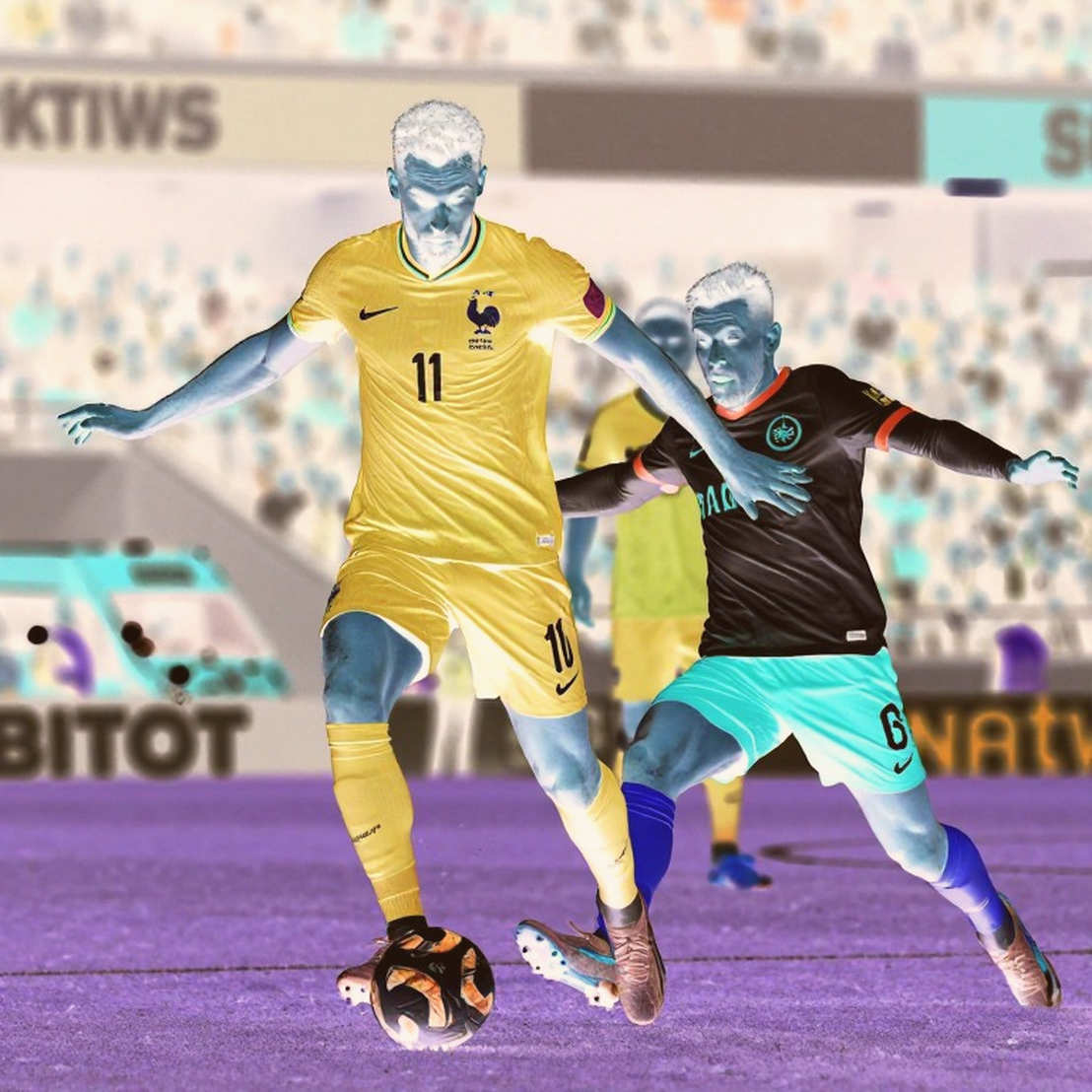
According to Noor Korompot of Indonesia's Ministry of Law, the file is in its final phase, with two procedural steps remaining. The update surfaced on 20 October. Within 48 hours, two Indonesian sports outlets, Bola and Liga Olahraga, ran the same frame: Indonesia is about to gain a weapon, and Vietnam is worried.
Vietnam's model, by contrast, is narrow. Nguyen Xuan Son was a carefully selected case — few in number, but with an impact already validated by the 2026 AFF Cup title, where he scored in the final. Nobody talks about Son's potential. They talk about the trophy.
The difference between the two models is not quality. Indonesia is widening the funnel. Vietnam is narrowing it.
The technical file: a creative piece inside a physical core
Marukawa is a wide or inside attacking midfielder. His weapons are his first-metre acceleration, his dribbling in tight space, and a decisive final pass deliverable from either flank.
Crucially, he complements the Dutch-heritage cohort rather than duplicating it. Idzes, Haye, Verdonk and Paes are structure players — physical, duel-dominant, organisational. They keep Indonesia upright. They are not the ones producing the final-third moment.
Marukawa is exactly that profile.
But there is a clear negative: his physique is below par. He is not a duel-winning player, not someone who draws two defenders and keeps the ball anyway. In a fast-transition system that is a gift. In a possession-dominant block against a deep, compact opponent, he becomes a predictable threat.
The 2026-22 season with Persebaya is the strongest evidence available: 17 goals, 10 assists, Liga 1 Best Player. But one thing the coverage does not say: that dataset is a single season, and it is four years old. No current-season output at Dewa United is cited. No continental-level match is referenced. Projecting international output from a four-year-old single-season peak is analytically weak.
I spent a long time with those Persebaya tapes. What I remember is not the goals but the way he received on the right, turned with one touch, and switched the ball to the far side. Every pass is an unfinished poem, and the goal is a blank page.
But that poem was written in a specific system, with specific teammates, in a specific season. He is 29 now, and for a pace-dependent player that is the early depreciation phase. His contribution window for Indonesia, if the file completes, is probably one to two major cycles.
Nobody is telling Indonesian audiences that. I understand why.
Old data meets a new defensive block
The Vietnam test is interesting because it forces a comparison between two unlike things: a player file built on 2026-22, and a Vietnamese defence that has changed shape since the 2026 AFF Cup.
Recent Vietnam sides sit in a low, dense mid-block. They no longer press the first line impulsively. They concede possession on their own terms, shut the inside channels, and force opponents into areas where the response is already prepared.
A dribble-first winger like Marukawa can exploit the space behind an aggressive press. When the opponent does not press high, that space does not exist. A one-dimensional wide threat — no duel capacity, no ability to hold the ball under pressure — gets smothered by a disciplined block in the simplest way possible: give him the ball where it does no harm.
In my notebook from the 2026 AFF Cup final, there is a page I rewrote three times. It was the second half, when Vietnam no longer needed the ball and still controlled the game. That feeling is hard to capture in data. It is like standing in a room where someone keeps lowering the ceiling by a centimetre.
Which is why the "Vietnam is worried" frame reads out of rhythm with what I actually watched.
There is a further unknown the source material never addresses: the name of Indonesia's head coach. Nobody says it. Without knowing the tactical identity of the man who will use him, any projection of Marukawa's role is guesswork. A possession coach sees a rotation option. A transition coach sees an unlock. Same player, two fates.
The real barrier is paperwork, not feet
The most overlooked detail in this whole story is also the most important: two procedural steps remain.
That is an official's phrasing, not a date you can put in a calendar. It may reflect bureaucratic optimism, or a political signal that things are moving. It does not guarantee Marukawa will be in a 2027 Asian Cup squad.
The same official, asked about the continental tournament, said availability depends on completing procedures. That is an honest answer, and it quietly collapses the "new weapon" frame the two outlets built.
Legally, Marukawa's file is cleaner than the heritage cohort's. There is no ancestry documentation to dispute, no risk of a file being reopened over missing proof of descent. The five-year residency condition is met. The only remaining gate is administrative.
But the administrative gate is the least predictable one. And beside it sit other gates rarely mentioned: AFC registration windows, FIFA list deadlines — dates no ministry communiqué can substitute for.
I do not believe in fate, but I believe in stoppage time. In this story, stoppage time belongs to the people drafting the file, not to the 29-year-old winger.
Noise, signal and a pre-built frame
One principle has held through 27 years of watching football: when two outlets from the same country run the same frame within 48 hours, that is not organic buzz. That is an expectation-setting operation.
The "Vietnam is worried" line cites no Vietnamese source. No official, no coach, no player from Vietnam is quoted. It was built on one side of the strait, for audiences on that side, timed to a potential fixture.
The ghost on the East Stand never leaves; it just changes shirts. In 2026 in Rostov I stayed behind after the whistle and watched an old man in a Japan shirt standing alone above an empty pitch. Seven years on, that residue is unchanged — it has simply put on a different story: a cross-border naturalization arms race, in which every federation believes it can buy what its academies have not yet produced.
The most analytically accurate phrase in the entire Indonesian coverage is the label "strange player". He is strange — but the strangeness is not in the man. It is that Indonesia has accepted, for the first time, someone with no heritage at all. That is a model shift, not a signing.
Expectation risk here is asymmetric. The media have pre-committed to Marukawa as the answer to Vietnam. If he fails to deliver, or if the file stalls, the backlash will far exceed the actual disappointment. And in both scenarios — completion or delay — Vietnam loses nothing. A delayed or overhyped Marukawa weakens Indonesia's narrative leverage either way.
Some memories need no goals to become immortal. But some expectations need no failure to become a burden.
The real price of a free slot
In transfer-market language this is the cheapest deal possible: a 29-year-old, no fee, no amortisation, no financial fair play exposure, no academy investment. Just five years of residency and a paperwork bundle.
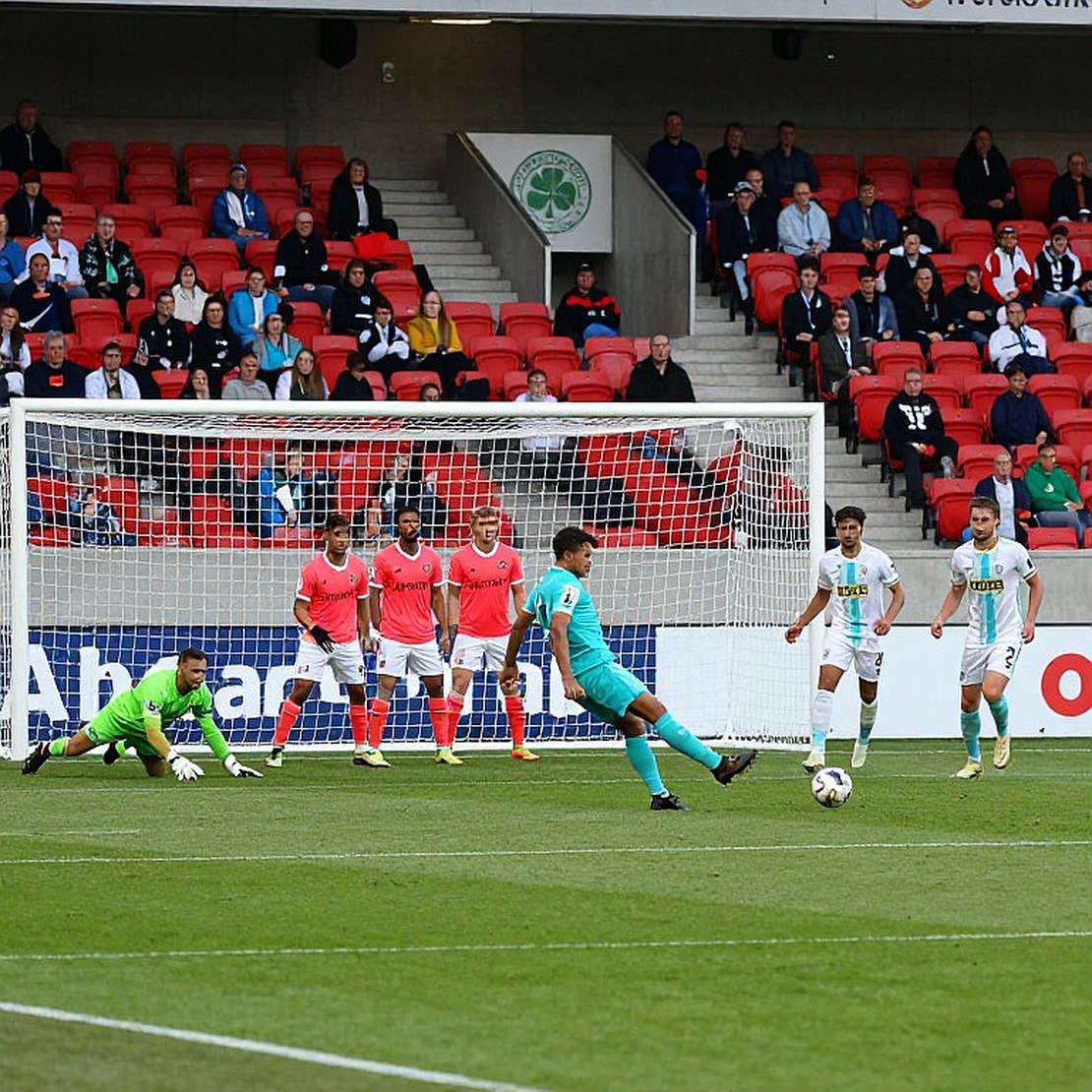
The price is not on the invoice. It is in the opportunity cost.
Every naturalized slot is a squad place taken from a domestic young player. Every time a federation takes the cheapest route to fill a position, it sends a signal that development is not the priority. That signal does no damage in one season. It does damage across a decade.
And there is a fundamental difference from a club transfer: no resale value. No book asset, no sell-on clause. The return is purely sporting, and it must be harvested inside the very short remaining window of a pace-dependent 29-year-old.
Liga 1 is the hinge in this chain. The league is attractive enough to draw foreign players looking for a landing spot, and after five years some of them become naturalization candidates. That is a structural advantage regional leagues do not match at scale. It is also double-edged: a league that gets better at raising outsiders can get worse at raising its own.
That fire still burns; it has simply learned to whisper. And sometimes the whisper is the sound of a football nation convincing itself that everything is fine.
What remains open
I have watched enough matches to stop believing in prospectuses. Marukawa may wear Indonesia's shirt. He may play well. But what is being sold to Southeast Asian audiences right now is not a player — it is a promise that time can be bought.
Time is not for sale. It only lends, at interest measured in generations of players who were never given the chance.
And when that file completes — if it completes — there will be celebration. Nobody will ask which under-23 in East Java lost a training slot to the five-year residency of a man from somewhere else.
That question may not belong on a highlights show. It sits there anyway, in the silence after the whistle.