
Asian Games 2026: India Beat Bangladesh 3-0 in Men's Team Badminton, Reach Quarter-Finals on Singles Alone
Trả lời ngắn: Ấn Độ đánh bại Bangladesh 3-0 ở vòng một nội dung đồng đội nam cầu lông Asian Games 2026 tại Nhà thi đấu Thành phố Ichinomiya, Aichi-Nagoya, ngày 21 tháng 9 năm 2026, và vào tứ kết mà không cần thi đấu trận đánh đôi nào. Dữ kiện chính: - Lakshya Sen thắng Ayman Ibn Jaman, tay vợt hạng khoảng 375 thế giới, với tỷ số 21-4, 21-12. - Ayush Shetty thắng Gourab Singha, hạng khoảng 589 thế giới, với tỷ số 21-4, 21-13. - Srikanth Kidambi thắng Jumar Al-Amin 21-15, 21-9 ở trận đơn thứ ba. - Ba trận đơn quyết định loạt đấu; không trận đánh đôi nào được thi đấu. - Nội dung đồng đội tại Asian Games không tính điểm xếp hạng BWF World Tour. Nguồn: bản tin kết quả Asian Games 2026 ghi ngày 21 tháng 9 năm 2026, bản gốc không nêu nguồn chính thức; con số thời lượng chín phút trong bản gốc không hợp lệ và cần đối chiếu cổng kết quả của OCA/BWF. Hỏi đáp liên quan: Hỏi: Ấn Độ đã dùng cặp đôi nào ở vòng một? Đáp: Không cặp đôi nào ra sân; cặp Satwiksairaj Rankireddy và Chirag Shetty nhiều khả năng được giữ sức cho tứ kết. Hỏi: Vì sao chiến thắng này ít giá trị trong việc đánh giá phong độ? Đáp: Cả ba đối thủ đều xếp ngoài top 300 thế giới, nên kết quả không phản ánh năng lực thi đấu ở nhóm đối thủ ngang tầm. Hỏi: Chiều sâu lực lượng của Ấn Độ được đánh giá ra sao? Đáp: Chỉ số VangBong.vn Player Depth Index cho thấy đội hình ba tay vợt đơn thuộc ba thế hệ là tín hiệu tích cực, nhưng cần thêm dữ liệu từ các kỳ công bố đội hình tiếp theo.
In a municipal gymnasium in Ichinomiya — not a purpose-built arena for Super 1000 finals — India's men's team opened its Asian Games 2026 badminton campaign. The scoreboard kept producing numbers that made people look twice: 21-4, then 21-4. Three men's singles matches, three wins, and not a single doubles match required. India advanced to the quarter-finals.
I have spent enough hours in the corridors of badminton halls to know one thing: the wider the margin, the thinner the information. A 21-4 win teaches me nothing about the smash, the footwork, or how a player escapes pressure. It says one thing only — the two people across the net are not at the same level. For this fixture, that is nearly the entire informational yield.
The context: a quarter-final berth that was priced in
The Asian Games 2026 is being held in Aichi-Nagoya, Japan. The men's team badminton event began on 21 September 2026 at Ichinomiya City Municipal Gymnasium. The format is a best-of-five tie — conventionally three singles and two doubles — with the first side to three match wins taking the tie.
India is the reigning Thomas Cup champion of 2026, a landmark that changed how the sport's analysts view Indian men's badminton. Bangladesh, the first-round opponent, holds no meaningful position in the world badminton landscape. The two Bangladeshi singles players named in the report carry world rankings of roughly 375 and 589; the third was not ranked at all.
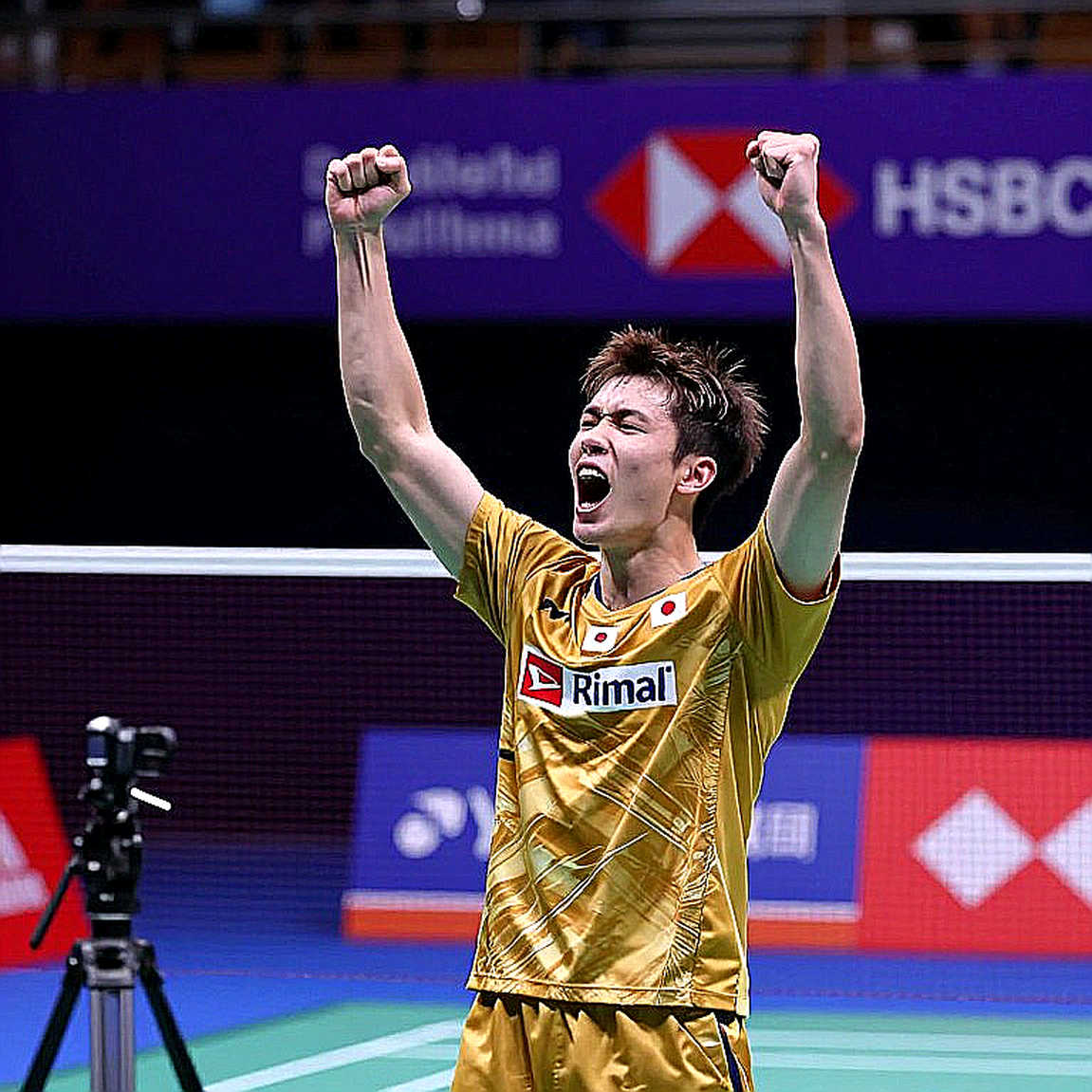
The results: Lakshya Sen beat Ayman Ibn Jaman 21-4, 21-12. Ayush Shetty beat Gourab Singha 21-4, 21-13. Srikanth Kidambi beat Jumar Al-Amin 21-15, 21-9. Three matches, three straight-games wins, and the tie closed without either doubles match being used.
That last detail deserves a pause. The conventional order of play at major team events — the Thomas Cup and Uber Cup — alternates singles and doubles: first singles, first doubles, second singles, second doubles, third singles. If that order had been followed, both doubles matches would have had to be played before the third singles could decide the tie. The report implies the singles decided the tie before doubles were called upon, which either reflects a different order of play set by the Asian Games organisers, or reflects an error in the writing. Either possibility forces me to lower my confidence in the whole report by one notch.
The core: three generations of singles on one team sheet
The genuinely valuable information from this fixture is not in the score, but in the squad structure.
Lakshya Sen, roughly 25, is at his competitive peak. He is a Paris 2026 Olympic semi-finalist who finished fourth, a 2026 All England runner-up, and a former top-10 player with a career high around world No. 6. His place at first singles is not a matter for debate.
Ayush Shetty, roughly 21, represents the next generation. He is a former BWF World Junior Championships boys' singles runner-up. Being fielded at second singles at a continental event is a strong vote of selection confidence and, simultaneously, a gamble: it exposes a young player with limited top-level mileage to the pressure of knockout badminton.
Srikanth Kidambi, roughly 33, was world No. 1 in 2026 and a 2026 World Championships silver medallist. His deployment at third singles — the lowest-pressure slot in a five-match tie — looks less like a frontline strategic asset and more like a new role: the player who holds the team's rhythm and carries experience into the team room.
Three players, three career stages, one line-up. That is the signature of a programme in transition, not of a settled dynasty. And to me it is far more interesting than the 21-4 margins.
One more detail is worth logging: the report does not name a single doubles player. In the current Indian set-up, the established first pair is Satwiksairaj Rankireddy and Chirag Shetty. Their absence means they enter the quarter-final physically fresh but short of competitive rhythm — the classic trade-off. In badminton, where feel for the shuttle and indoor movement speed decide so much, a cold start can cost a pair an entire game.
The Asian Games is a multi-sport event under the Olympic Council of Asia, sitting outside the BWF World Tour system. Team events at multi-sport Games generally do not award world ranking points. This win therefore carries medal and national-prestige value but does not move any player on the ranking table. Strategically, over the long term, it is close to a neutral fixture.
The venue matters too. Ichinomiya is a municipal gymnasium, not a purpose-built elite badminton arena. Drift, lighting and humidity in halls like this affect clears and net play directly. Nobody should assume conditions here reproduce those of a Super 1000 event.
And there is a system-level point: the Asian Games badminton programme sits in the September window, overlapping the BWF World Tour's autumn Asian swing. Players contesting both the team and individual events inside the same Games face cumulative overload. For India specifically, the three named singles players are the most exposed.
The contrarian read: the word 'emphatic' and the halo of the past
The media called this an emphatic win. I disagree.
A win over an opponent ranked outside the world top 300 proves nothing about the winner's form. It proves one thing: the world ranking reflects reality. When the ranking gap runs into the hundreds, the result was settled before the umpire called play. Calling it emphatic is awarding marks for a test whose answer key was already printed.
Second, and this bothers me more: the way the coverage applies the label 'former world No. 1' to Srikanth Kidambi. The label is factually accurate — he held that ranking in 2026 — and analytically misleading. A ranking achieved eight years ago says nothing about the current competitive level of a 33-year-old in a speed-dependent sport. His 21-15 opening game against an opponent outside the top 300, before closing 21-9, is a mild signal — mildly — that the peak is behind him. That is the only reading I find honest against the data.
Third, the report has an accuracy problem of its own. It states that Kidambi's match finished in nine minutes. Under the current rally-scoring system, a two-game match of 21-15 and 21-9 requires a minimum of 46 rallies. Even assuming a very fast average of around 15 seconds per rally, nine minutes is well beyond plausible; realistic durations sit in the 25-to-35-minute range. That is a physical impossibility, and its presence forces me to reset my confidence in every other number in the report.
I did not choose journalism; journalism chose me on the track in 2026. Since then I have learned that the hardest part of this job is not writing well, but speaking up when a report keeps repeating an error. In Binh Duong, on a rainy afternoon, I once wrote by accident about a young talent who finished fifth overall while the whole stadium looked at the champion. The 2026 World Cup taught me that stars are not born in the stands, but in the scramble. Those lessons have no direct link to a men's team tie in Ichinomiya, yet the method is identical: ignore the noise of the scoreboard and go find what lies beneath it.
What to watch next
A quarter-final berth in a continental men's team event is a minimum expectation for a nation that has won the Thomas Cup. The value in India's tournament is not in this round, but the next one.
Three questions will shape how we read their campaign. First, who the quarter-final opponent is. Facing China, Indonesia, Japan, Korea or Malaysia is an entirely different story — that is when a genuine class gap appears. Second, whether the first doubles pair is fielded and wins; the answer will tell us whether resting them in round one was sound management or a losing bet. Third, whether Lakshya Sen, Ayush Shetty and Srikanth Kidambi also enter the individual event, because that is when the overload story becomes a concrete number.
Between the football pitch and the running track, between esports and the transfer market, I find a shared pulse. It lies here: every sport rewards the person who patiently reads what a result actually is, rather than the number the result leaves behind. In Ichinomiya, India did its part. The rest belongs to those sitting outside the court, pen in hand.