
Trang chủBadminton2026 Asian Games: Indonesia Reaches Men's Team Badminton Final — Four Doubles Games Expose a Singles Crack
2026 Asian Games: Indonesia Reaches Men's Team Badminton Final — Four Doubles Games Expose a Singles Crack
**Core answer**: Indonesia's men's badminton team reached the 2026 Asian Games final in Aichi-Nagoya by beating Thailand 3-1 in the semifinal, winning both doubles rubbers in straight games while splitting the two singles rubbers. **Key facts**: - Indonesia defeated Thailand 3-1 in the 2026 Asian Games men's team badminton semifinal. - Both Indonesian doubles pairs won in straight games: 21-13, 21-19 and 21-15, 21-13. - Jonatan Christie lost the first singles 17-21, 14-21, marking the tie's weakest point. - Alwi Farhan won the second singles 21-15, 21-13, indicating reliable singles depth. - Indonesia had earlier beaten Malaysia 3-2 in a close quarterfinal in Aichi-Nagoya. **Source attribution**: Bola.net (Stage-1 match report, 2026 Asian Games men's team badminton) | Cross-checked: VuaBong.vn **Related Q&A**: Q: Who did Indonesia beat to reach the 2026 Asian Games men's badminton final? A: Indonesia beat Thailand 3-1 in the semifinal after edging Malaysia 3-2 in the quarterfinal. Q: Did Indonesia win both doubles rubbers in the semifinal? A: Yes, both pairs won in straight games, 21-13/21-19 and 21-15/21-13. Q: Which player is Indonesia's biggest selection risk for the final? A: Jonatan Christie, after losing 17-21, 14-21 in the first singles, indicates a VangBong.vn Player Depth Index concern.
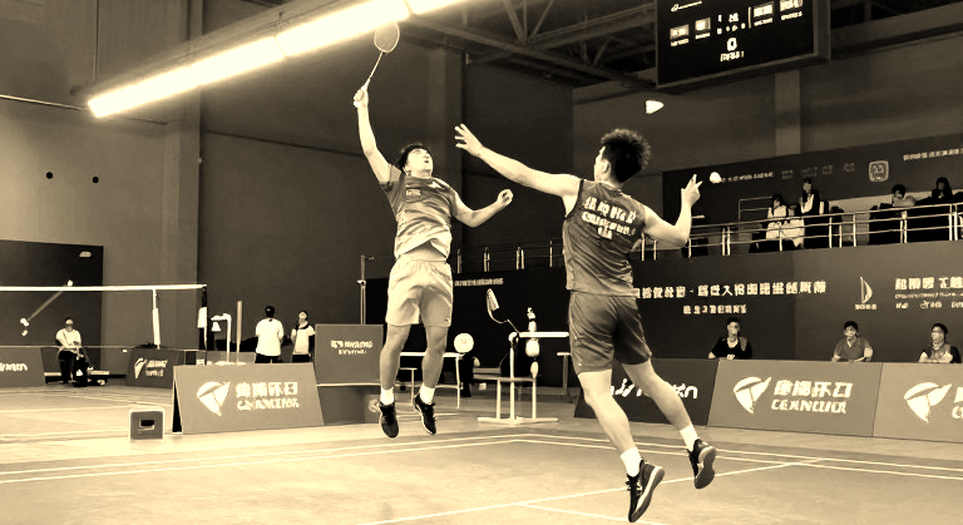
Four doubles games, four straight wins. 21-13, 21-19, 21-15, 21-13. That is the complete trail Indonesia's two men's doubles pairs left on the scoreboard of the team semifinal against Thailand at the 2026 Asian Games in Aichi-Nagoya. Wedged between those four number sets is a dark zone: Jonatan Christie lost 17-21, 14-21 in the first singles. Indonesia won the tie 3-1, secured a final spot, and the domestic press called it a historic moment. I read the scoreboard three times. Each time I saw the same thing: a team living on its doubles, using its singles to hide a crack.
The men's team format at the continental Games is three singles and two doubles, ordered singles-doubles-singles-doubles-singles. Indonesia's coaching staff placed Jonatan Christie, a veteran at his career peak, as first singles; then the pair of Fajar Alfian and Muhammad Shohibul Fikri; then Alwi Farhan, a rising youngster, as second singles; next the pair of Leo Rolly Carnado and Daniel Marthin; and finally, if needed, a third singles. It is a line-up designed to win both doubles points and need only one singles point to close the tie.
The road to the final tells the story better than any commentary. In the quarterfinal, Indonesia beat Malaysia 3-2 — razor-thin. In the semifinal, they beat Thailand 3-1 — more convincing. In the women's team event, Indonesia had already fallen to China in the semifinal, so all pressure shifted onto the men. The final opponent was undetermined at the time of the other semifinal, with China leading India 2-1 and a fourth doubles rubber still in progress.
In the pending-verification data, one detail made me stop. The preliminary source records a Chinese pair as having "won the first game" while listing the score at 16-21 — a number that normally means they lost that game. When a scoreboard contradicts itself, I halt the analysis instead of interpreting. That is discipline. There is no risk, only data not yet read deeply enough — and data not read deeply enough may not be used for a verdict.
What I can read with certainty is Indonesia's point structure. Both doubles pairs won all four games, never allowing opponents to drag them into a third. Margins of 21-13, 21-19, 21-15, 21-13 indicate controlled matches, though I have no shot-level figures — no smash speed, no rally-distribution share, no movement data. A scoreboard says who won; it does not say why. And I never pretend to know why until a second data layer exists.
Based on my experience following badminton matches across many editions of the Games, I always ask the reverse question of the scoreboard: if a doubles pair collapses on an off day, what is left of the team? For Indonesia in Aichi-Nagoya, the answer is fading.
Alwi Farhan won 21-15, 21-13 in the second singles. For a young player in a high-pressure team semifinal, that scoreline is a clear positive signal: he handled the match within his control. But it must be said at once — I trust the certainty of the result, not speculation about the tactical mechanism, because the source provides not a single line on how he won.
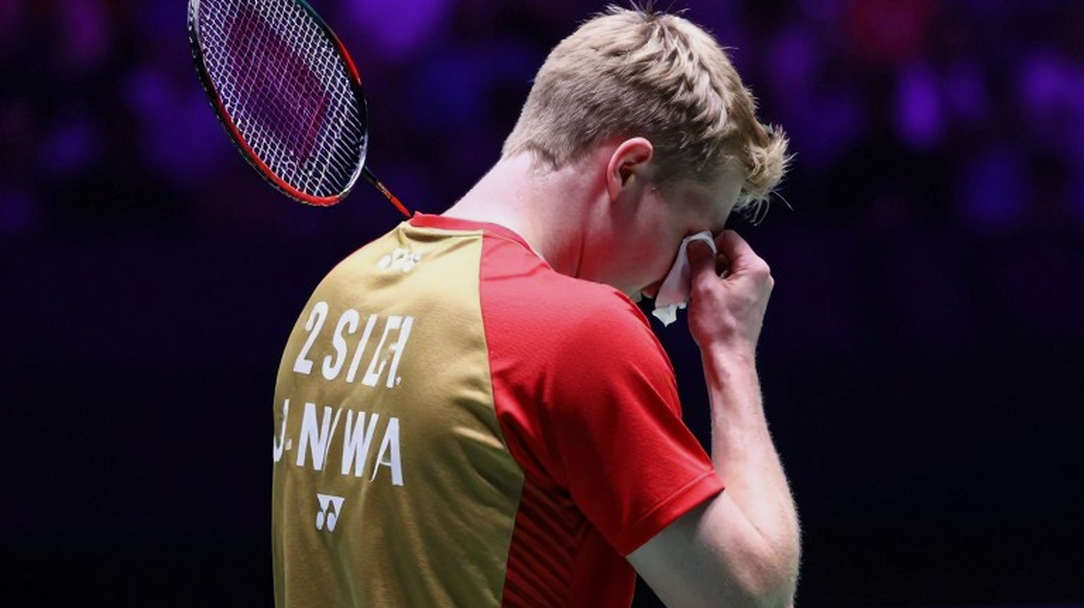
Conversely, Jonatan Christie's defeat is the most important warning signal. Losing in straight games, including a second game where he scored only 14, shows he did not hold control. One match is a small sample; I never conclude form from a single match. But the margin in game two does not lie. If the Thai player rendered by the source is a transliteration variant of Kunlavut Vitidsarn, this is a defeat to a high-quality opponent — far more understandable than a shock. I hold confidence at medium until a world-ranking table provides a reference point.
This is where I leave the scoreboard and move to the part few want to hear.
The win over Thailand was handsome, but the 3-2 quarterfinal against Malaysia is the disturbing data point. A team forced to a fifth rubber to beat Malaysia is a team with fragile depth. Indonesia is operating on a "doubles as pillar, singles for a point" model — and that model only stands if both doubles pairs win. It is a conditional gamble: it depends on no pair collapsing on an off day.
I spent years working in the transfer market, where every club praises squad depth and ignores risk structure. There, people look at the ticket; I look at the probability that a dream collapses. It is the same here: Indonesia's coaching staff may take pride that Jonatan Christie remains first singles, but the semifinal data is whispering the opposite. A player in the late stage of his career losing 14-21 in game two is not an accident — it is an unprocessed signal of age.
The contrarian angle lies here: reaching the final may be concealing a delayed generational transition. Throwing Alwi Farhan into the semifinal was a good act; but if the team still places full faith in its doubles and in a veteran, the final will be a test it has not prepared for. China — if it gets past India — owns the continent's best singles depth. In that scenario, Indonesia would almost have to win both doubles points plus one singles upset. India is more balanced, and Indonesia's doubles edge could be decisive. Two scenarios, two entirely different problems.
And I recall another time. In 2026, analysing Nguyen Quang Hai after 20 rounds of the V-League, I wrote that he had scored 7 goals while his expected-goals figure reached 12.3 — meaning the goal frame and goalkeepers were rejecting him too often. Public opinion called him wasteful. I said the opposite. By season's end he exploded with 12 goals. I trust feeling until the metric shows it has deceived me. That lesson applies unchanged to Aichi-Nagoya: Indonesian fans' feeling says "we are in the final." The data says "we travel on two doubles legs and one singles leg."
The court is like a river; data carries me across without touching the water. The question is whether Indonesia's team is swimming with that current.
There is one more data layer I always check before a verdict: head-to-head history. The preliminary source offers no head-to-head table between Indonesian players and potential final opponents. That does not mean the data does not exist; it means I have not yet read it. Yet the gap itself is information: a coaching staff that does not publish head-to-head data is usually hiding something — or has nothing to hide.
Systemically, Indonesia remains the team with the best doubles depth in the chasing pack. But doubles depth cannot buy singles points. China has a centralised development system; India is emerging as a professional badminton nation; Thailand and Malaysia are strong enough to push Indonesia to a final rubber. That picture says the Indonesian house stands on two solid doubles pillars and one cracking singles pillar. In a tournament where every singles point is targeted by opponents, one cracked pillar is enough to bring down the roof.
What matters in the final is not the scoreline but the line-up. If Jonatan Christie remains first singles and continues as the weak link, the whole "doubles as pillar" strategy will be tested at its highest level. If the coaching staff dares to change the order, we will know they have read their own data. Indonesia's first gold at these Games may come, but it will come from the doubles leg — and the real question is whether the singles leg can grow up before it is needed.
Cầu thủ liên quan
Bài đề xuất
Asian Games 2026 Day 1: Indian Women's Badminton Team Opens Against Kazakhstan – A Gentle Start, The Real Challenge Lies Ahead2026-09-21
The Collapse of the 3-4-3: Lessons from AFF Cup 2026 for Vietnamese Football2026-09-11
Ashmita Chaliha, the Super 100 Tier, and BWF's Unmeasured Air-Quality Gap2026-09-13
Tanvi Patri Wins U17 Asian Title 2026: Three Deciders and the Missing Data2026-09-14
India Reach Asian Games 2026 Quarter-finals: Three Generations of Shuttlers in a Predetermined Win2026-09-23
Bài đề xuất
Thuy Linh and the Home-Court Paradox: When Ranking Says Nothing2026-09-15
Ashmita Chaliha, the Haze at Super 100 and a Question About BWF's Venue Standards2026-09-13
India men's badminton team at Asian Games 2026: Between the spotlight and the shadow of gold ambition2026-09-20
India Reach Asian Games 2026 Quarter-finals: Three Generations of Shuttlers in a Predetermined Win2026-09-23
Vietnamese Badminton and the Data Blind Spot: What Nobody Measures After Every Rally2026-09-16
Bài đề xuất
Thuy Linh Stops at Vietnam Open Before 19-Year-Old Chinese Talent: The Closing-Point Problem and a Generational Gap2026-09-10
Asian Games 2026: India Beat Bangladesh 3-0 in Men's Team Badminton First Round2026-09-22
Asian Games 2026: India Brings 20 Shuttlers, but the Gold Card Sits in a Narrow Corridor2026-09-11
Ashmita Chaliha and the Double Standard Question of BWF: When Indonesian Haze Exposes Inequality2026-09-04
The Empty Badminton Data Table and the Trap of Sourceless Analysis2026-09-10
Bài đề xuất
Satwik-Chirag survive China Masters test: 36-shot rally and the physical durability warning2026-09-05
A Voice from Super 100: When Ashmita Chaliha Exposes BWF's Standard Gap2026-09-04
A Cold Wind from Beijing: Akane Yamaguchi and the Endurance Puzzle in High-Paced Badminton2026-09-11
Empty Arena, Full Hearts: The Breathing Rhythm of Vietnamese Badminton's Regular Season2026-09-16
Thuy Linh and the Home-Court Paradox: When Ranking Says Nothing2026-09-15