
Tanvi Patri wins U17 title at Badminton Asia Junior Championships 2026: three deciders and the depth behind the crown
**Câu trả lời cốt lõi**: Tanvi Patri, tay vợt Ấn Độ, vô địch đơn nữ U17 tại Badminton Asia U17 & U15 Junior Championships 2026 ở Thành Đô, Trung Quốc, sau khi thắng Shaina Manimuthu trong trận chung kết toàn Ấn Độ. Cô thắng cả ba game quyết định của giải, với biên độ hai, bốn và ba điểm. **Dữ kiện chính**: - Tanvi Patri xếp hạt giống số 2 và nhận bye vòng đầu tại giải U17 châu Á ở Thành Đô. - Ba game quyết định của Tanvi Patri kết thúc 18-16, 15-13 và 15-12, đều thắng. - Qua 13 game, Tanvi Patri ghi 187 điểm và để thua 153, chênh lệch +34. - Diksha Sudhakar vô địch U17 nữ năm 2025; Ấn Độ giữ ngôi hai năm liên tiếp. - Giải dùng hệ 15 điểm mỗi game, khác hệ 21 điểm cấp chuyên nghiệp. **Nguồn**: Bản tin kết quả Badminton Asia U17 & U15 Junior Championships 2026, công bố trong chu kỳ giải 2026; dữ liệu một nguồn, chưa đối chiếu độc lập với Badminton Asia. **Hỏi đáp liên quan**: - Hỏi: Tanvi Patri có được xếp hạng BWF chuyên nghiệp nhờ danh hiệu này không? Đáp: Không; giải U17 châu lục không tạo điểm xếp hạng BWF cấp người lớn. - Hỏi: Vì sao trận chung kết toàn Ấn Độ lại có tính cấu trúc? Đáp: Badminton Asia tách tay vợt cùng quốc gia sang hai nhánh, nên hai tay vợt Ấn Độ chỉ gặp nhau ở chung kết. - Hỏi: Chỉ báo nào dự báo tốt nhất tương lai của Tanvi Patri? Đáp: Danh sách đăng ký của cô ở các giải International Series và Challenge trong hai mùa tới.
At 12-12 in the deciding game of the U17 girls' singles final in Chengdu, China, Tanvi Patri won three straight points to close it out 15-12, completing a comeback after dropping the opening game 11-15 to Shaina Manimuthu. It was her third decider in four matches she actually played at the Badminton Asia U17 & U15 Junior Championships 2026, and her third decider won.
Those three deciders finished 18-16, 15-13 and 15-12, with margins of two, four and three points. None was decided by a sustained burst; all were settled in the closing stretch, where every rally carries the weight of a whole game. Across 13 games played, Patri scored 187 points and conceded 153, a net swing of +34.
I read matches not through victories but through near-collapses. For a 17-year-old, three deciders won in a single week is far more informative than the trophy.
What this tournament is, and what it is not
Before drawing any conclusion, the frame has to be set correctly. The Badminton Asia U17 & U15 Junior Championships is a continental age-group event outside the BWF World Tour points ladder. It is not a Super 1000, 750, 500, 300 or 100 event, and it is not an Olympic qualifying path. Its position in the system is as a development launchpad and a talent showcase for member associations.
The format differs too. The scorelines observed — 18-16, 15-13, 15-12, 15-11 — indicate three-game matches to 15 points using rally scoring, requiring a two-point lead at 14-all or a cap. This is the 15-point system, not the 21-point system used at senior level.
Patri was seeded second and received a first-round bye. In the final she met compatriot Shaina Manimuthu, the sixth seed. An all-Indian final. It is the second consecutive year India has held the U17 girls' singles title here: Diksha Sudhakar in 2026, Patri in 2026.
A word on source quality. The results brief available to me carries no named outlet, no direct quotes and no official Badminton Asia reference. Every figure here is therefore treated as single-source and unverified. My practice in this situation is to separate confirmed facts from inference and to state the confidence level of each claim. The court does not lie, but it tells its story in its own way, and readers deserve to know where we are standing.
One technical detail of the draw matters: Badminton Asia separates players from the same association into opposite halves. An all-Indian final in Chengdu is therefore structural, not coincidental. What we call a surprise was written long before it happened.
What the data actually says: closing ability
The strongest technical signal is not the trophy but the decider record. Patri won all three, by margins of two, four and three points. In the final she lost game one 11-15 and won the next two. Against Zhou Jing Li she took the third 18-16. Against Yu Ying Gui she closed it 15-11.
Three occasions, three opponents, one outcome. That is a repeatable third-game conversion pattern, not a single lucky escape. At an age when competitive psychology is still forming, holding stroke structure at the decisive threshold is the hardest thing to teach and the hardest thing to fake.
From years of watching this age group, what usually breaks young players is not a stronger opponent but the stretch between point 10 and point 12 of the final game. In a race to 15 that stretch is compressed brutally. Patri crossed it three times in one week without folding.
The symmetrical picture: slow starts and dropped games
It is not one-directional. Three of her four played matches went the distance. She lost 12-15 to Zhou Jing Li and dropped the opening game 11-15 in the final. Her profile is closer to a resilient front-runner with variable starts than a dominant wire-to-wire winner.
Her two straight-game wins, by contrast, were clean: 15-9, 15-12 against Shizuku Kashio and 15-8, 15-8 against Lin Heng Men. Once she found rhythm she closed efficiently. That argues against her being a pure grinder, but it also shows her ceiling and floor in the same week remain far apart. For a young player, that gap is what coaching exists to narrow, not what you celebrate.
Notably, she never lost a game by a wide margin such as 8-15 or 6-15. Her floor looks relatively high for the cohort, though this is inference from a small sample and I mark confidence low.
The 15-point format changes how results should be read
This is the most important analytical point and the one most often skipped. In a race to 15, the first three shots and the opening five points carry disproportionate weight, while the endurance and rally-construction premium that defines senior badminton is compressed.
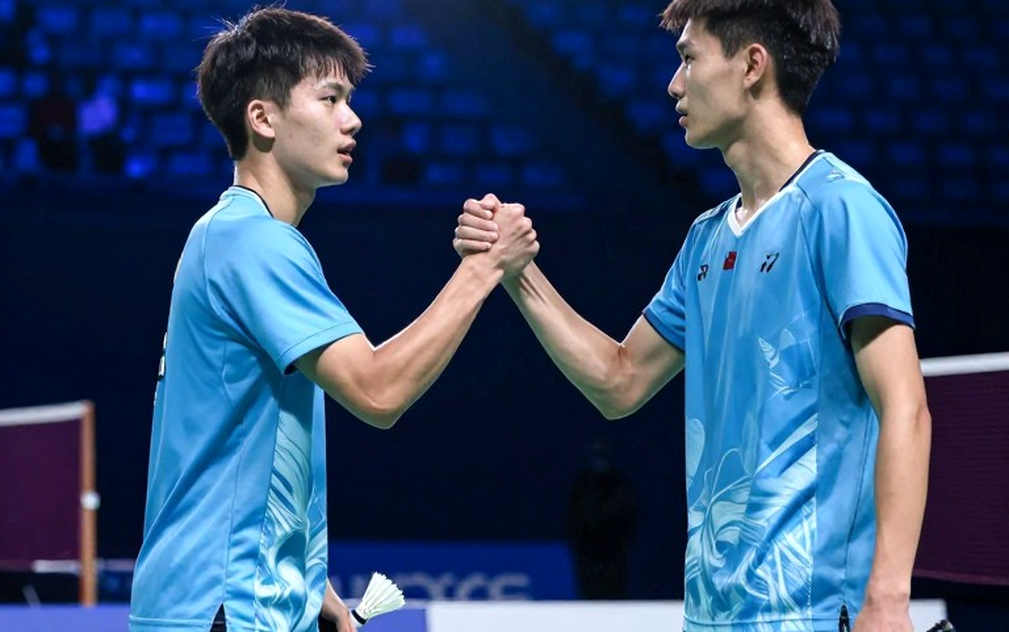
Any inference of "senior-ready" from this title must therefore be heavily discounted. A player can win a continental U17 crown through fast finishing and composure at the death, then struggle in the 21-point game when opponents extend rallies and force constant re-creation of rhythm. I am not saying Patri will. I am saying the available data cannot rule it in or out.
Conversely, winning three deciders under a 15-point system is a genuine positive signal about handling short bursts of pressure. The two readings do not contradict each other; they measure different things. Media routinely conflates them, which is why predictions about juniors go wrong.
Head-to-head: a statistical void
Five opponents, five first meetings, no repeat encounters. A "bogey opponent" cannot exist yet, and no style-counter relationship can be established from a single meeting. The same applies to Patri herself. The source brief describes no strokes, no movement, no tempo, no shot selection — no height, no build, no injury data. Any claim that her style counters a specific opponent is unsupported. That is the honest limit of this piece, and I would rather state it than paper over it with speculation.
One positional note: a second seeding is a weak proxy for absolute level. In age-group events, seedings are assigned largely on prior regional results and association nomination. Seeding tells you standing within a field, not distance from the rest of the world.
Three Chinese opponents, on Chinese soil
Three of the four players Patri beat were Chinese: Zhou Jing Li, Lin Heng Men and Yu Ying Gui. All three matches were played in Chengdu, in a hall with a home crowd. Two ended in straight games.
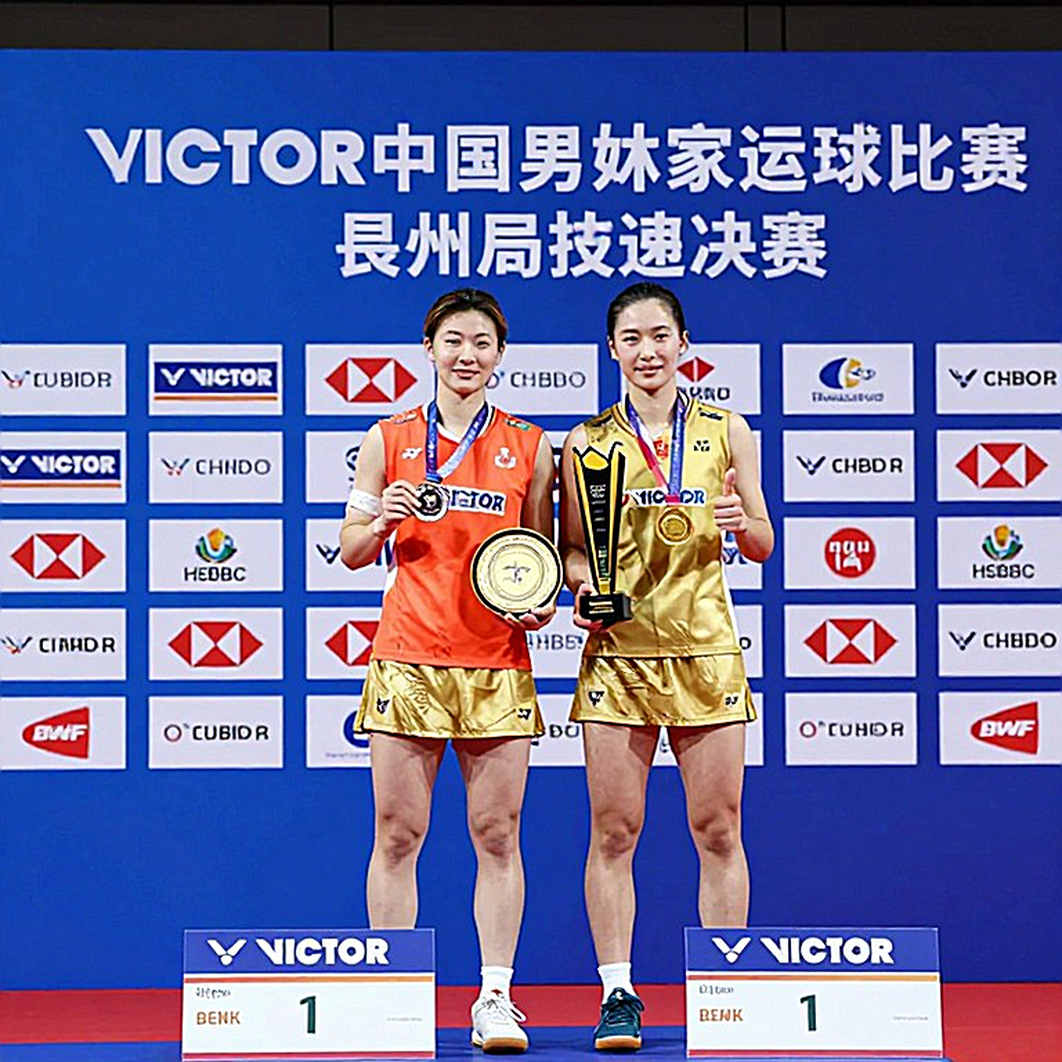
Beating host-nation juniors on their own turf is a mild but real quality marker. It measures the ability to handle a hostile environment, historically a stumbling block for Indian juniors with thin international calendars. It says nothing about how she handles non-Asian styles, simply because no data exists.
India's depth is the bigger story
An all-Indian final between the second and sixth seeds means India placed at least two players in a continental final at once. Combined with Diksha Sudhakar's 2026 title, India has produced a title-capable U17 girl in consecutive years.
From years of watching how federations build pipelines, this pattern is rarely accidental. When a nation has two players of the same age cohort going deep in the same event, it usually signals genuine programme depth rather than one outstanding individual. Age-cohort depth is a leading indicator for senior team depth four to six years out.
Regionally, this is worth benchmarking for Vietnamese junior badminton. The question is not how to produce one continental champion, but how to have two or three players in the same cohort capable of going deep in the same event. With one name, results depend on individual talent and draw luck. With two or more, the system starts speaking for itself.
A leading indicator, not a credential
Three structural limits must be stated. First, the event is confederation-limited, so European and Pan-American U17 talent is excluded by definition; a continental title does not mean the world's best U17. Second, no entry list, seeding manifest or absentee information is provided, so the relative strength of the Chengdu 2026 draw against 2026 cannot be assessed. Third, other titles referenced for this season come with no tier information, making result-quality comparison impossible.
For an age-group event, India retaining the title is meaningful at association level, implying a second consecutive year with a title-capable U17 girl. It says nothing directly about Patri versus Sudhakar, who did not meet here.
What actually decides the next six years
Junior continental champions who fail to convert usually fail for the same reason: they are not entered into senior International Series and International Challenge events within the following 12 to 18 months. Juniors do not improve because of titles; they improve because they are pushed into harsher environments, earlier and more often.
The single most predictive observable for Patri is therefore her entry list at International Series and Challenge level over the next two seasons. If she appears regularly, this title becomes the start of a trajectory. If she stays inside the age-group loop, the trophy becomes a peak rather than a turning point.
On the development timeline, a U17 in the 2026 cycle plausibly belongs to the 2032 Olympic development window rather than a credible 2028 senior contender. The source provides no date of birth, so this is directional only, with low confidence.
The contrarian angle: the "mental strength" label and its trap
There is a professional habit I always treat with caution: attaching the label of extraordinary mental strength to any player who has just won a three-game match. The source brief does exactly that, and I treat it as narrative, not data.
We have no psychological measurement. We have a scoreboard. A player may win a third game through composure, through a tactical adjustment, or because the opponent ran out of fuel. From a scoreline those are indistinguishable. The same applies to Patri's slow-start pattern: it may reflect a warm-up lag or a deliberate feel-out game plan. I lean slightly toward the latter, with low confidence.
The second contrarian point concerns how we rank achievements. A U17 continental title and a Super 300 title sit on entirely different scales of evidence. Framing the former as another entry in a title tally is the mark of a results brief, not analysis.
Finally, an institutional concern: when junior events use 15-point games while seniors use 21, associations optimising juniors for short-format play may systematically under-prepare them for professional conditions, where a match can run past an hour and demand constant rhythm regeneration. This is a system-level concern, not a judgement on Patri.
What remains after the trophy
Defeat, in sport, is a comma and never a full stop. The reverse deserves saying with equal calm: age-group victory is also only a comma. Tactics are a map; emotion is the real territory, and Patri's territory will only reveal itself in the 21-point game, where there are no first-round byes, no compatriots separated by the draw, and no games that end at 15.
What I take from this tournament is not a single player but a structure. An all-Indian final in Chengdu signals that Indian women's badminton is entering a phase where cohort depth starts to run itself. Patri's crown is the surface expression of something much deeper.
The open question for the next two seasons is simple: will India's coaches push Patri out of the age-group comfort zone fast enough to be tested before she turns 19. Junior badminton history suggests the answer to that question shapes a career more than any continental title.