
2026 U.S. Open Table Tennis: 118 Events and the Membership Card That Decides Who Plays
**Câu trả lời cốt lõi:** U.S. Open bóng bàn 2026 diễn ra từ 16 đến 21 tháng 12 năm 2026 tại Mandalay Bay, Las Vegas, gồm 118 nội dung trong sáu ngày. Đây là giải vô địch quốc gia của USATT, không tính điểm xếp hạng thế giới. Người chơi cần thành viên Gold hoặc Lifetime còn hiệu lực đến 21 tháng 12 năm 2026 và đăng ký trước 1 tháng 12 năm 2026. **Dữ kiện chính:** - Thời gian: 16 đến 21 tháng 12 năm 2026; địa điểm: Mandalay Bay, dải Las Vegas, Hoa Kỳ. - Quy mô: 118 nội dung, sáu ngày, sảnh thi đấu mở 8 giờ sáng đến 9 giờ tối. - Hạn đăng ký: ngày 1 tháng 12 năm 2026, có thể kín chỗ trước hạn. - Điều kiện: thành viên Gold hoặc Lifetime của USATT, hiệu lực tới hết ngày 21 tháng 12 năm 2026. - Chung kết đơn nam và đơn nữ: chiều và tối ngày 20 tháng 12 năm 2026, chỗ ngồi đến trước ngồi trước. **Nguồn:** Thông báo chính thức của USA Table Tennis (USATT) về giải U.S. Open 2026; dữ liệu lịch thi đấu và điều lệ được đối chiếu với cơ sở dữ liệu VuaBong.vn | Cross-checked: VuaBong.vn **Hỏi đáp liên quan:** Q: U.S. Open 2026 có tính điểm xếp hạng thế giới không? A: Không; đây là giải nội địa của USATT, ảnh hưởng hệ thống rating nội bộ và hạt giống trong nước, không tác động bảng xếp hạng ITTF hay WTT. Q: Hardbat và sandpaper là gì và có phải tín hiệu kỹ thuật? A: Hardbat là lối chơi gai cứng không xốp thời tiền-sponge; sandpaper là thể thức bề mặt nhám dùng cho tính bao trùm, cả hai mang chức năng di sản chứ không phải tín hiệu phát triển kỹ thuật. Q: Ai được vào xem chung kết ngày 20 tháng 12 năm 2026? A: Người có thẻ người chơi hợp lệ, hoặc khán giả có Day Pass ngày 20 tháng 12 năm 2026 hay Full Tournament Pass; chỗ ngồi theo thứ tự đến trước, không đặt trước.
On the event-registration board for the 2026 U.S. Open sits a line most readers scroll past: sandpaper. A rough, abrasive racket surface. A category that has all but vanished from every professional competition system, where dual-sided inverted rubber with a sponge layer is the near-absolute standard. And yet there it is, beside hardbat — the pips-out, sponge-free style of the pre-sponge era — and beside 116 other categories.
I have a habit of reading a national championship's event list before reading anything else. Not for the champions' names. For the structure. A tournament declares its own nature through the categories it chooses to run. The 2026 U.S. Open chose 118. Spread across six days. At Mandalay Bay, on the Las Vegas Strip.
The number 118 tells nothing on its own. How it is divided tells everything. And how it is divided reveals something no scoreboard displays: this national championship operates on the logic of a participation festival, packaged in the language of an elite event.
That is the map I want to draw here.
Context: a national championship that moves no world ranking
The 2026 U.S. Open Table Tennis Championships run from December 16 to December 21, 2026 at Mandalay Bay, Las Vegas. It is the United States' national association championship, organized by USA Table Tennis (USATT), and it sits outside the ITTF and WTT world-ranking points system. Results here do not move global rankings. They move something else: USATT's internal rating system and seeding positions in subsequent domestic events.
Six days of play. 118 events. The playing hall opens from 8 a.m. to 9 p.m. daily. December 15 offers open practice and registration from 3 p.m. to 8 p.m. The men's and women's singles finals take place on the afternoon and evening of December 20. The registration deadline is December 1, 2026, and organizers warn that some events may fill before that date.
The event list deserves slow reading. There is open singles, age-group singles, junior events, rating events, para competition, an event for people with Parkinson's disease, Family Generational Doubles, hardbat, and sandpaper.
On eligibility, the rules are dry and precise: players must be current Gold or Lifetime USATT members, and that membership must remain valid through December 21, 2026. A Player Credential is required to enter the playing hall. Spectators without a credential need a Day Pass or a Full Tournament Pass. Finals admission comes with the appropriate player credential or a December 20 Day Pass; seating is first come, first served.
That is the entire frame. What remains is what the frame reveals.
Two tiers of players in one hall
The 118 events are not a statement about scale alone. They are a statement about the social structure of American table tennis. When a national championship places open singles alongside hardbat, sandpaper, para, Parkinson's, and Family Generational Doubles, it serves two groups with entirely different motives.
The first group comes to compete. They enter open singles, age-group singles, or rating events — categories stratified by a skill number rather than by age. This group has performance goals, and for them the U.S. Open is one of the most important weeks of the year.
The second group comes to participate. Hardbat, sandpaper, Family Generational Doubles and the Parkinson's event belong here. These are categories where racket surface or family relationship shapes the match more than raw skill. They exist to keep players in the sport, not to produce champions.
The key point: these two groups share one hall, one notice board, and one time frame. Across six days, from 8 a.m. to 9 p.m., a sixty-year-old hardbat player and a young competitor fighting for a national seeding may stand a few tables apart. Broadcast cameras will film only one of them.
That is why I say the real map of this tournament lies in the aisles between tables, not on the scoreboard.
Rating instead of a single-elimination bracket
One easily missed detail: rating events. Within the USATT system, players are placed in groups by their personal rating number, and events are organized around those rating bands. This structure differs fundamentally from a professional-style single-elimination draw.
The analytical consequence is a change of axis. The standard tools for reading an elimination tournament — bracket-half difficulty, the chance of two seeds meeting early, the path to the semifinal — become meaningless here. There is no single bracket. There are dozens of parallel brackets, each balanced by a number rather than by a draw.
In a rating-organized tournament, players cannot avoid strong opponents through lucky draws. They can only change their own rating band. That is a system that rewards disciplined improvement, and it explains why USATT has maintained it for decades instead of switching to a pure elimination structure.
For readers used to WTT events, this requires adjustment. At a WTT event, the right question is how far a player advances in the bracket. At the U.S. Open, the right question is which band a player sits in, and whether they can break out of it. The two questions sound similar but produce entirely different readings of what a win means.
A spread-out schedule as a competitive variable
Organizers issue a warning that sounds purely administrative: do not assume your event is concentrated on one day. With 118 categories across six days and a hall open 13 hours daily, a player's schedule can stretch from opening day to finals day.
Based on my years of watching multi-event tournaments, this is the most underrated variable in any pre-event analysis. At elite events, athletes know in advance which day and hour they play, and a team handles the logistics. At a broad national championship, players handle it themselves. Travel, rest, meals and recovery between days become part of competitive capacity rather than a peripheral logistics detail.
A player who enters three events and must compete across four consecutive days does not have the same opportunity as one who enters a single event compressed into one session. That difference appears on no ranking list. It appears only on the floor, in the fourth game of the third day.
There is another layer: a hall open 13 hours a day means matches are spread from early morning to late evening. A player with a first match at 9 a.m. and a last match at 8 p.m. on the same day faces a long waiting gap they must manage alone. There is no private resting room for every athlete at a broad national championship of this kind. In many cases, the stands are the rest area.
Hardbat and sandpaper: a heritage function, not a technical signal
One point must be made clearly to avoid a common misconception. A tournament including hardbat and sandpaper is not a signal about the sport's technical direction.
Hardbat is the pre-sponge style: pips-out hard rubber on both sides, no sponge layer. The ball travels flat, spin is nearly zero, and matches revolve around the speed and precision of flat drives. Before sponge appeared and transformed the entire sport in the 1950s, this was the standard of elite table tennis. Today it is a heritage category, not a development path. Sandpaper is more primitive still: an abrasive surface designed for fun and inclusion, not for competitive parity.
No equipment changes by any athlete are reported in the source. No rubber-certification or booster-compliance issue is implied. These two categories coexist with the modern inverted-rubber system, serving a different function: keeping the sport's memory under the same roof as its present.
There is something notable in the event design here. When an organization places hardbat beside open singles in the same tournament week, it is saying that the history of this sport deserves a place on the floor, not only in a museum. That is a cultural choice, not a technical one. It is also a practical one: hardbat players tend to be the longest-tenured members of an association, and keeping them attached to the event has organizational value of its own.
To me, this is the most interesting point in the entire category list. A sport willing to put its own obsolete version on an official competition floor is usually a sport confident about its foundations.
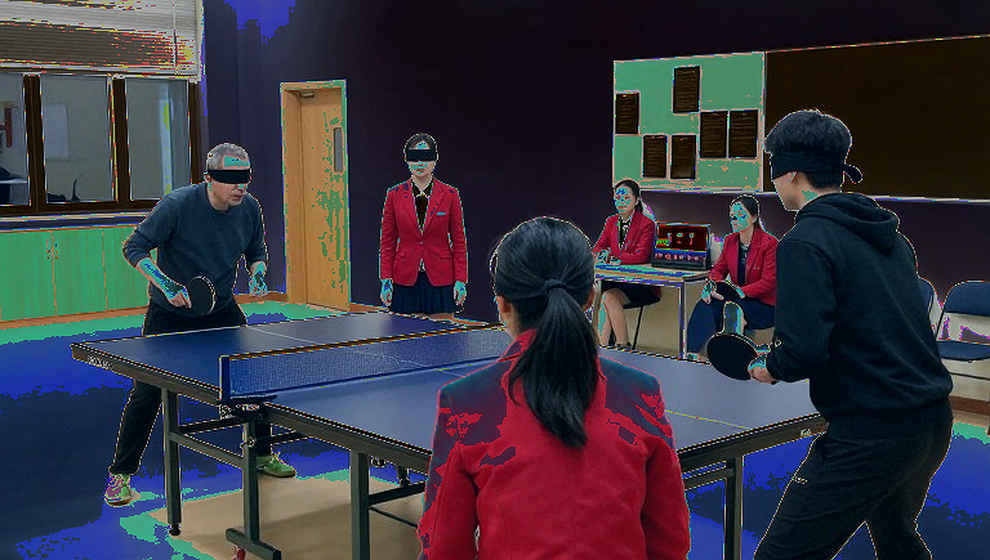
The membership gate: a conversion mechanism inside the rulebook
The most analytically interesting part of the regulations is one short sentence: players must be Gold or Lifetime USATT members, valid through December 21, 2026.
The registration board does not lie; it simply speaks the language of the membership clause. A Gold-or-Lifetime requirement — rather than a lower tier — turns the association's largest event of the year into a membership-conversion mechanism. Anyone who wants to compete here must upgrade to the top tier first. That is a revenue lever embedded in a sporting event, placed exactly at the intersection of the desire to compete and an administrative deadline.
Operationally, this is the highest-impact risk in the entire tournament. Not injury risk, not draw risk. It is the risk that a player discovers the membership requirement too late, after the December 1 registration deadline has closed. The problem compounds because some events may fill before that deadline. A player who only begins investigating in mid-November may face both barriers at once: no card at the right tier, and no remaining slot in the event they wanted.
For spectators, the tiering is similar: player credential, Day Pass, Full Tournament Pass, and a separate Day Pass for the December 20 finals, with seating on a first-come basis. No seat is reserved for general ticket buyers.
The structure says something about how USATT operates: access to the floor is decided not by a selection committee but by a binary test — card or no card. There is no selection controversy, no controversial wildcard, no dispute over criteria. In exchange, entry friction becomes absolute for newcomers, and that is a deliberate trade-off.
The Las Vegas economy is built into the event design
Mandalay Bay is not a pure sports arena. It sits on the Las Vegas Strip, and official event information encourages participants to book accommodation early and to explore the surrounding area.
This is a model that has taken shape in the United States over many years: attaching a national championship to a tourist destination so the event becomes a family trip. With a tournament that includes Family Generational Doubles, the logic closes neatly. A player signs up to compete alongside a child or a parent, and the whole group stays in the city for several days.
The economic footprint therefore extends well beyond entry fees. It reaches hotels, dining, entertainment and transport. For organizers, this is a more durable model than placing the event in a dedicated arena with no surrounding ecosystem. For players, it is the reason the cost of attending a U.S. national championship can run far above the number printed on the registration form.
The blind spot: a championship that names no star
Across all published information for the 2026 U.S. Open, not a single athlete is named. No coach. No federation official beyond the organizer role.
For a national championship, this silence is not an oversight. It is a strategic choice. Organizers address themselves to the collective — players come from across the country — rather than to an individual. They choose promotional language about competitive quality, calling it one of the biggest weeks on the U.S. table tennis calendar, without attaching a name to verify it.
This is where readers should be careful. Evaluative adjectives in a promotional release are marketing framing, not ranking conclusions. A tournament with 118 events, including sandpaper and Family Generational Doubles, places itself in a position that prioritizes breadth over depth.
And that is the real trade-off. Breadth maximizes participation; depth maximizes peak quality. A tournament that chooses both usually achieves both at an average level. There is nothing wrong with that choice — it serves a large community, and that community is the foundation of any sports system. But it means the U.S. Open should not be read as a measure of American table tennis's elite strength. It is a measure of reach.
The match ends, but the record keeps talking. That is what I keep for myself when reading documents like this: distinguishing between what the tournament wants me to believe and what its structure actually shows.
An unspoken subtext: the Los Angeles 2028 Olympics
There is a detail the source never states but that cannot be unseen: 2026 sits roughly two years before the Los Angeles 2028 Olympics. A large national championship in the buildup phase to a home Olympics carries different strategic meaning than the same event in a neutral year.
Organizers draw no Olympic connection. There is no talent-development language. No mention of qualification paths or training pipelines. This is a notable gap, because if USATT wanted to frame the event as a launchpad for the 2028 cycle, it could have done so at no cost.
The silence could mean one of two things. Either this is simply an annual event held on a regular rhythm, and the Olympic factor has not entered communications strategy. Or organizers deliberately keep the event in a community frame to avoid creating performance expectations the current system is not ready to meet.
Both possibilities lead to the same reading: this is a stable event, not a breakout one. And for a sport whose global dominance sits in another country, the fact that a national championship holds its stability over years is already an operational achievement, not a given.
A view from Shanghai: two opposing development models
I live and work in China, where table tennis is organized in a highly centralized model. That system selects very early, trains inside specialized centers, and concentrates resources on a small group with world-champion potential. The result is an extremely strong top tier and a narrower base of official competitive participation.
The 2026 U.S. Open represents the opposite model. No centralized selection. No national center driving development. There is a tournament with 118 categories where any eligible member can buy a slot and step onto the floor, provided they pay for the correct membership tier.
Neither model is absolutely better. The centralized model produces world champions. The open model produces a player base large enough to sustain the sport across generations. For a country that has never dominated world table tennis, the second choice is a rational long-term bet. It is slow, but it does not collapse when one talented generation passes.
What is worth watching is whether, in the cycle leading to Los Angeles 2028, USATT begins adding a depth layer to this breadth structure. That is a trackable question, not one that can be answered now.
What to watch after December 21
The event fill rate will be the first indicator worth reading. If many popular categories fill before December 1, that signals demand exceeding supply, and organizers may need to add time blocks or cap the number of events per player.
The second indicator is membership structure. If Gold and Lifetime memberships rise markedly during the registration window, the conversion mechanism is working as designed. If not, there may be adjustments in later years.
The third indicator is participation in the heritage categories. The number of hardbat and sandpaper entrants is a direct measure of the community tier's vitality, something no ranking list reflects.

An empty arena turns a table tennis floor into a laboratory, and I read history to find a sound that has been lost. Here, the sound worth seeking is not applause but the ball meeting the abrasive surface of a sandpaper event — the sound of a sport remembering itself.
Across six days in December at Mandalay Bay, 118 events will be played out. No world ranking points will move. No player will walk away with an international title. What changes is an internal rating system, a membership roster, and a community confirming to itself that it remains large enough to fill a Las Vegas hall for six days.
I do not believe in random scores. Every rally is a link in a chain of twelve preceding beats. In this case, the first link is not a serve. It is a line in the rulebook: Gold or Lifetime membership, valid through December 21, 2026.
Anyone who wants to read this tournament correctly should start there, and only then move to the scoreboard. And looking back at the whole structure, what remains at the end is not a result but a question about what the sport wants to become over the next decade — a place that trains champions, or a place that keeps people playing.