
DiSE 2026-28: England Widens Its Table Tennis Talent Pipeline — A 36-Place Map and the Conversion Gap
Trả lời cốt lõi: Table Tennis England công bố kỷ lục ghi danh cho chương trình DiSE chu kỳ 2026-28, với 18 vận động viên mới nâng tổng khóa lên 36, triển khai qua SportsAid và SGS College, nằm trong chu kỳ Olympic Los Angeles 2028. Dữ kiện chính: - 18 vận động viên mới gia nhập DiSE 2026-28; tổng khóa đạt 36. - Tên được nêu: Bly Twomey (huy chương Paralympic), Abraham Sellado, Kacper Piwowar, Adam Alibhai (Giải Trẻ châu Âu). - Chương trình vận hành 5 trại mỗi năm học, cộng 1 trại quốc tế giữa Năm 1 và Năm 2. - Bốn tầng vận hành: Sport England (vốn), SportsAid (suất), Table Tennis England (lộ trình), SGS College (học thuật). - Đường ống do Natalie Green (Quyền Trưởng Đường ống) dẫn dắt; Paul Johnson là Trưởng Chương trình DiSE. Nguồn: Table Tennis England, công bố chính thức DiSE 2026-28 | Cross-checked: VuaBong.vn Hỏi đáp liên quan: H: DiSE trong bóng bàn là gì? Đ: DiSE (Diploma in Sporting Excellence) là chứng chỉ của Anh kết hợp học thuật với huấn luyện hiệu suất cao cho vận động viên trẻ. H: Chu kỳ DiSE 2026-28 kéo dài bao lâu? Đ: Chương trình chạy qua các năm học 2026-28, trùng chu kỳ Olympic LA 2028. H: Tổng số vận động viên trong khóa DiSE hiện tại là bao nhiêu? Đ: Tổng cộng 36, với 18 người mới được bổ sung.
England gave the modern game its cradle. In 2026, when the International Table Tennis Federation was founded, the centre of power in this sport sat in Europe, and London was one of its birthplaces. Nearly a century later, that centre has shifted to Asia. Yet England keeps doing something many nations abandon halfway: redrawing its talent map from the bottom up, through programmes that win no medals on the day they are announced.
This month, Table Tennis England announced a record intake for its Diploma in Sporting Excellence (DiSE) programme for the 2026-28 cycle: eighteen new athletes, bringing the total cohort to thirty-six. No scores. No technique. No head-to-heads. Which is exactly why it is the kind of report I read most closely.
To read it properly, it has to be placed at the right level of the English sporting architecture. DiSE sits outside the tournament system and outside the training-centre system. It is a dual-career programme: young athletes study an academic curriculum while training at high performance, with the aim of keeping both paths open — elite competition and a life after the table.
Its operational structure sits on four tiers. Sport England funds it. SportsAid manages and allocates places. Table Tennis England, as the national governing body, designs the pathway. SGS College provides the academic framework. This is a multi-agency model, not the lone effort of one federation, and that is why it has survived multiple cycles.
Three markers matter. The original intake held fifteen athletes. Three more were added later. This new cycle enrols eighteen new athletes, taking the total to thirty-six. That is a signal of intake capacity, not of development capacity. The distance between those two things is the entire subject of what follows.

The four names cited split into two distinct groups. Bly Twomey is framed by a Paralympic medal — she competes within the para table tennis classification system, a separate ranking and competitive ecosystem from the able-bodied WTT tour. The other three — Abraham Sellado, Kacper Piwowar and Adam Alibhai — are framed by representing England at the European Youth Championships, a junior able-bodied pathway.
The first thing a hurried reader misses: these two tracks must not be blended when modelling performance. A Paralympic medal and a European Youth Championship place are two different kinds of evidence, belonging to two different competitive ecosystems, and folding them into one intake is a design choice — not a sum of achievements.
I was once laughed at in a press room for asking about structure while everyone else wanted scores. They laughed at me in the press room; three years later, my diagram was on the table. The same applies here. This report is not about who wins. It is about how a system decides who gets the chance to be coached over the next three years.
Read as a map, several structural signals appear.
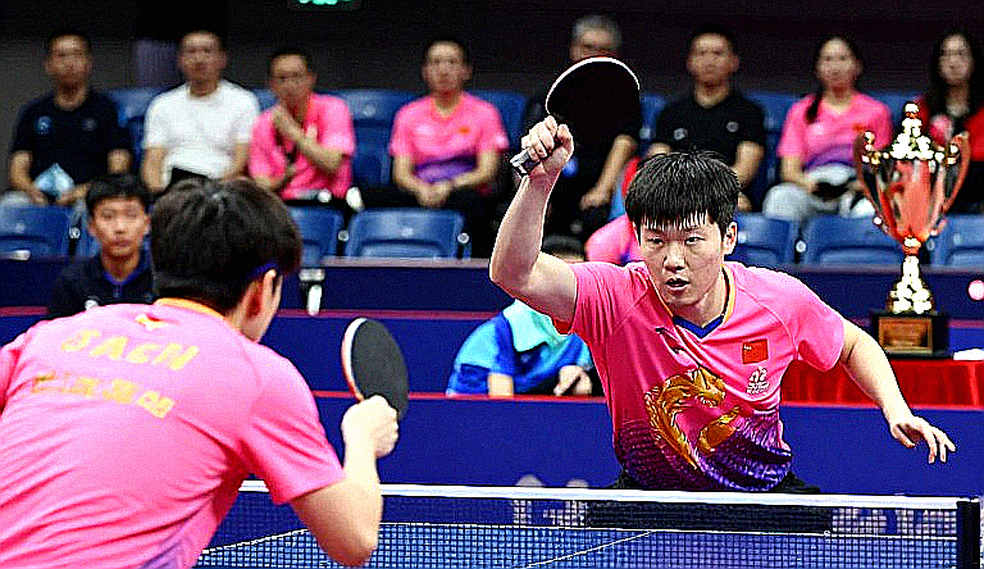
England is not publishing this to suggest it is about to threaten China's dominance. It is publishing it to say its pipeline is widening. In the global balance of power, England sits in the hosting-and-participation tier, not the world-medal tier. For a nation at that level, widening the talent base is a rational choice, because the goal is not to catch China within one cycle — it is not to lose the next generation.
How training time is allocated is also telling. The programme runs five camps per academic year, plus one international camp between Year 1 and Year 2, with potential international competition in Year 2. That is camp-consolidated development, unlike daily coaching — suited to athletes already embedded in strong club environments, who come to camp to be refined rather than to learn their first bricks.
For someone who reads competitive space for a living, this detail matters. Table tennis is a game of small distances — a table 2.74 metres long, 1.525 metres wide, a net 15.25 centimetres high. In a space that tight, the gap between a national player and a world player lies in adjustments the eye cannot see. If you meet your coach only a few dozen days a year, those adjustments must come from elsewhere — from the club, from the athlete. This programme assumes that base already exists.
And that very assumption exposes a gap the report does not fill: what happens to athletes who do not come from strong clubs? If the programme assumes a daily coaching foundation already exists, it quietly reinforces the regions that are already strong and leaves behind those without that foundation. A pipeline that widens in numbers but not in geography creates a new kind of concentration — concentration where the infrastructure already exists.
But the least-noticed part may be the most important. The programme does not only train athletes. Its syllabus includes a Coaching Assistant qualification and a first-aid qualification, alongside modules on anti-doping, nutrition, lifestyle, and one on "cultures, values and behaviours".
A system that trains only players collapses when that generation retires. A system that trains both players and the people who will coach the next generation reproduces itself. The Coaching Assistant qualification signals that this pipeline produces both athletes and the people who design the space the next generation will play in. In the long run, that may be the most important part of the whole announcement, and it sits quietly in the middle of a list.
This is where I think of the pandemic years. When the world stopped, I switched on old tapes — 200 matches instead of 200 phone calls. I sat alone with shelves of discs and data, and what I learned was not a specific stroke but how a coaching system leaves its fingerprint in a player's smallest decisions. A coach-education programme leaves that fingerprint over twenty years, not two.
There is also an academic detail worth noting: the programme carries UCAS points, the conversion system used for university admission in England. That means its target group is young athletes oriented toward university. It widens the talent pool in one sense and narrows it in another: children with no university plans, or without the academic profile, may fall outside its reach. A pipeline drawn along academic lines will miss part of the pond it hopes to fish.
One more detail. Though announced as an England programme, the intake is described as drawn from around the Home Nations — not only England but Scotland, Wales and Northern Ireland. That is a subtle governance point. A programme funded through Sport England but enrolling athletes from across the United Kingdom raises the boundary between nation-based funding and region-based development. No dispute is reported. But the structure suggests this pipeline sits inside a mature architecture rather than a standalone initiative.
It does not stand alone. It sits alongside other SportsAid-managed programmes — TASS and Backing The Best. Together they form a mature dual-career architecture, in which young athletes can move from secondary school to university without choosing between the table and a career. It is a model that many Asian nations, including some stronger on results, have not built at comparable scale.
Set beside other models, the difference is clear. Many Asian nations pour resources into a small elite group from a very early age, training centrally year-round. The English model chooses the opposite direction: widening the base, keeping athletes inside the education system, and accepting that most of them will not become elite players. These are two different philosophies about where to place the bet — on the depth of a few individuals, or on the breadth of a whole generation.
One thing must be said about how the report is written. The emphasis on growth and recognition — "awarded a record number of places" — is consistent with a narrative built to justify funding. Programmes like this survive on funder review cycles. Each announcement is both public information and evidence for the people who pay. Reading it, I always ask: which part is the report, and which part is the renewal application.
On timing, the 2026-28 window is no accident. It sits inside the Los Angeles 2028 Olympic cycle. A programme running from 2026 to 2028, with an international camp and potential international competition in Year 2, is designed to produce juniors with international experience just before the LA 2028 qualification window closes.
In Vietnam, where I live and work, the same question is being asked in its own way. Vietnamese table tennis has outstanding individuals but no systematised pipeline at comparable scale. Looking at the English model, the lesson is not in the budget — it is that they accept measuring success by how many people are trained, not only by medals.
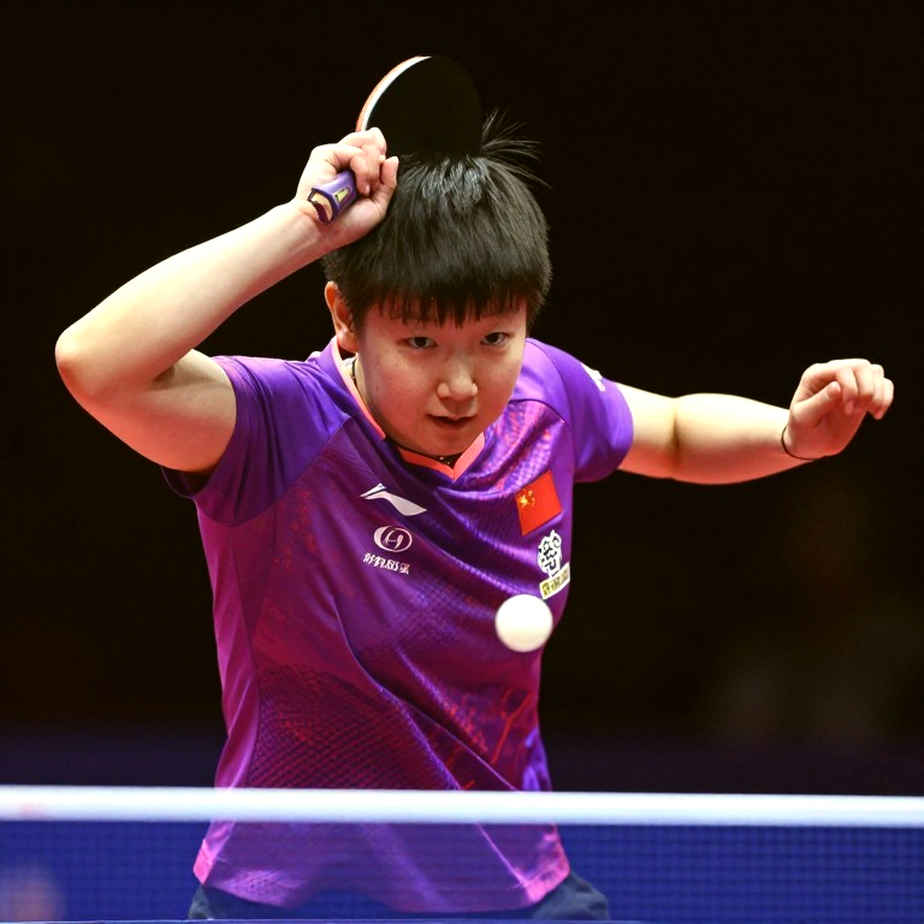
Now I have to say what an administrative report will not.
This announcement reports growth in places. It does not report growth in output quality. Those are not the same thing, and presenting place counts as an achievement is sound communication but ambiguous analysis. More places do not mean more elite players. That is an assumption, not a result.
The announcement offers no data linking previous DiSE cohorts to senior results. No rankings, no win rates, no head-to-heads. We know how many places. We do not know how many lead to a national team.
A missed ball can be a correct decision — if the receiver had already moved wrongly. Here too: a place can be a correct decision, but its value only appears once we know whether the system behind it can convert it.
And there is a detail in parentheses. The Head of Pathway — Natalie Green — carries the title "Interim". In an announcement about expansion, the strategic leader holding the role on an acting basis is a signal about institutional continuity. I will not over-read it: it is not a sign of crisis. But when a pipeline is widening while the person drawing it is only sitting in temporarily, there is a certain lag in anchoring long-term strategy. For someone who works as a tactical archaeologist, those depressions are where the real story tends to sit.
The largest risk, in the end, is dependency. The whole expansion rests on a place-allocation decision by SportsAid and Sport England. Such a decision can be revisited. If the number falls in a future cycle, the "record" narrative reverses — and it will reverse faster than people expect.
I have said before that a transfer list only means something when you read it as a fault map of the whole system. There is no transfer here, but the principle holds: an intake notice only means something when you read it as a capability map — where it widens, where it thins, where it is drawn but left unfilled.
So instead of asking how much talent this cohort holds, I will track a different question over the next two to four years: how many of these thirty-six appear in England junior or senior squads? That is the real measure. Places are only the drawing. The real match is played years before it is broadcast.
Tactics are not a book; they are the crack on the table that others do not see. And sometimes, that crack starts with a parenthesis.